Porches Inn Gets OK to Proceed With River Street Demolition, New Restaurant
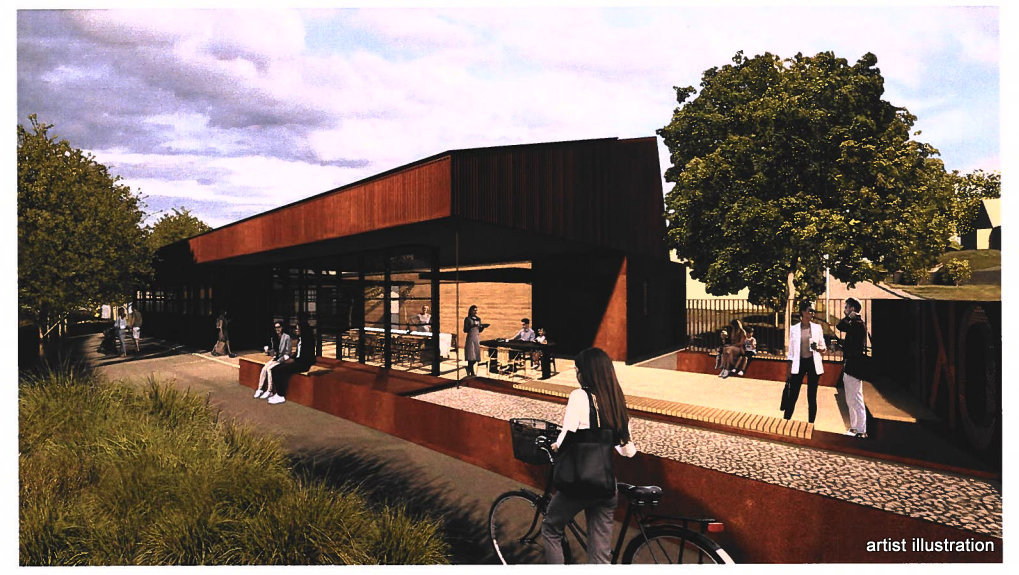
An illustration of the proposed restaurant on River Street. It was been approved by the Planning Board and ZBA.
The project by Berkshire Hill Development Corp., parent company of Porches inn, had already been approved by the Planning Board in June. It received permits and variances (largely dealing with parking) from the Zoning Board of Appeals on Monday and the OK to demolish a building, reluctantly, from the Historical Commission on Friday.
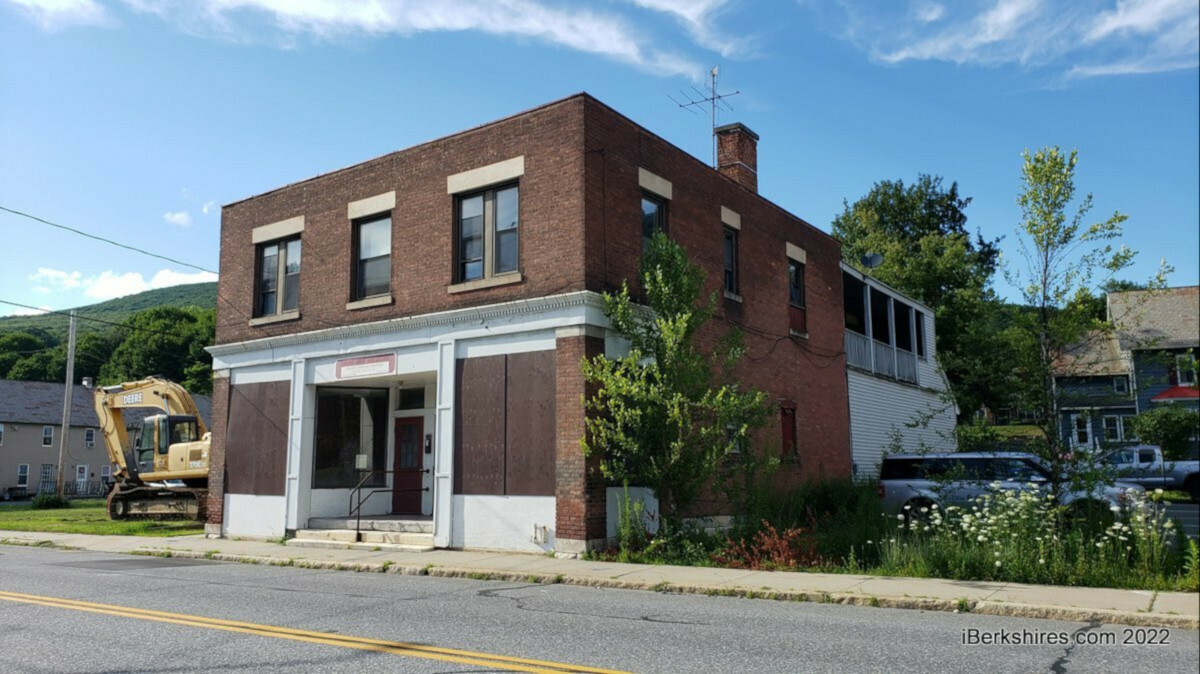
Commissioners had initially opposed the demolition of 273-275 River St. to make way for a new building. The commission, which meets a few times a year, alerts members of demolition permits so they can individually review the buildings and then email whether they approve or not within the required 15 days.
The response on the two-story River Street building was a resounding no.
The 1901 storefront and apartment building was the site of a fatal fire in 1958 that killed a child and saw the top two floors removed afterward. It housed a number of different entities over the years including a plumber, a grocer and, lastly, a soup kitchen. Ely Janis, a history professor at Massachusetts College of Liberal Arts, provided a history of the building, which is on the city's historic survey, to the ZBA and the commission's Justyna Carlson and Peter Siegenthaler also attended that meeting to indicate their body's opposition.
At best, the commission could have voted for a one-year demolition delay to see if an agreement on how to reuse the building could be reached. Berkshire Hill's attorney, Jeffrey Grandchamp, had said repeatedly that the company was willing to wait out the delay if imposed.
On Friday, the commissioners voted to approve the demolition after Grandchamp said there would be an effort to incorporate the structure's lintels into the new building in some way as well as a history of the building and neighborhood in terms of signage or accessible links. Historical Commissioner Paul Marino had done a great deal of work on the area's history and Grandchamp said the company had engaged Janis to do a history of the site that includes the new building.
Marino voted for the demolition "with misgivings" because he felt it would happen anyways. But if asked if it were possible Berkshire Hills could reconsider the contemporary architecture of the new restaurant.
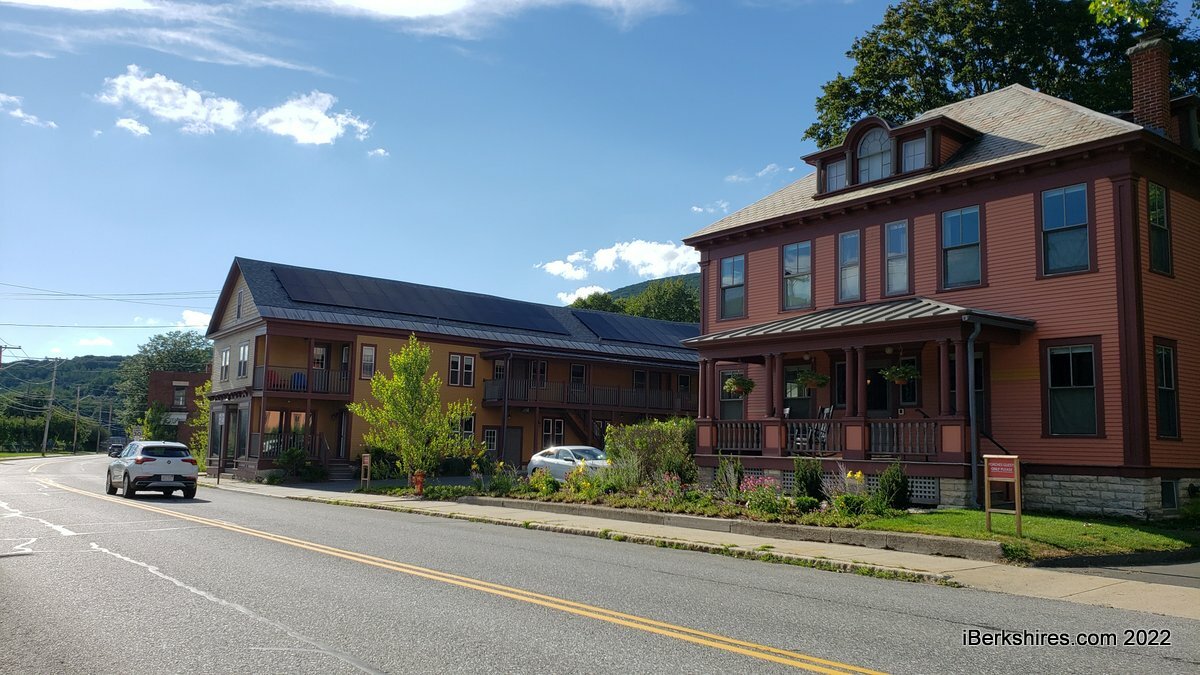
"If the building were in somewhat the same architectural style as the Porches or if it were like a classic house with two sides," said Marino. "If it was designed to look like that so would blend in with the neighborhood."
Siegenthaler thought reuse of the current structure with its big front windows would offer a more inviting aspect than the proposed building with its stone wall separation from the sidewalk that seemed "less friendly" to the neighborhood.
Commissioner Christopher Wondoloski, however, disagreed.
"I thought I voted to let River Street go," he said. "My heart is with the [older] building but when I see what their plan is, I kind of like it."
The plan was also backed by developer David Moresi, who is renovating the nearby Johnson School as high-end apartments, and Kristy Edmunds, the new director of the Massachusetts Museum of Contemporary Art. Both wrote letters in support of the project to the ZBA, with Edmunds saying, she was convinced it will be an asset to the city and the museum.
"Mass MoCA and our visitors embrace the historical and contemporary in architecture as well as in art," she said. "New and old is Mass Moca's DNA," she wrote. "The contemporary building envisioned by Berkshire Hills and the adjacent historically preserved Porches will provide a view that reflects the spirit of Mass MoCA."
Grandchamp said the building was designed with pedestrians in mind since it is to serve not only Porches but the surrounding community.
"As far as the design of the building goes, I think that I will defer to the architects and the owner to decide what looks best," he said. "I think it's clearly different than most of the other buildings in that neighborhood. But it's, I think, as the director of MoCA said, that contrast can be appealing."
Not everyone is going to like the building, he acknowledged, just like not everyone likes every style of art. This is a different phase of the Porches campus, which has restored and preserved a number of historic buildings. Plus, he added, it's not going to be a Taco Bell but a structure by award-winning Canadian architects MacKay-Lyons Sweetapple Architects.
"The building that's there now is different than the buildings which preceded it," Grandchamp said. "So I think change is inevitable and becomes part of the historical fabric of the city."
Siegenthaler said it was the role of the Historical Commission to preserve the past.
"You're absolutely right that life is change, and preservation can seem like it's standing in the way of change," he said. "I like to think that it's a matter of balance. ... It's about how you can maintain as much of the atmosphere as possible."
The Historical Commission also confirmed demolition permits for four Wheel Estates mobile homes at 2 Seneca, 4 Seminole, 17 Alan, and 14 and 22 Apache; 2438 Mohawk Trail, a barn at 440 East Main, the former rectory at 12 Union, 738 and 752 Curran Highway (two long vacant houses near Ocean State Job Lots), and 76 Tyler.
The commission also approved the demolition of residential properties at 22-24 Veazie and 28 Veazie. While also owned by Berkshire Hills, Grandchamp said they are not part of the restaurant project.
The ZBA approved three special permits for Berkshire Hills: one for the building's roof canopy to intrude into the setback, making the building less nonconforming than the current structure; a permanent easement for seven parking spots for Scarafoni Trust on land it is purchasing from Scarafoni; and for alterations of a parking lot on Lot 106 on Veazie Street that it is being purchasing.
It also received four parking waivers: for 22 parking spots (based on restaurant square footage that does not include storage and offices); sharing nine spaces with Porches using them during the day and the restaurant in the evening; reducing setback from the walls from 5 to 4 feet; and to allow the paved parking on Lot 106. Berkshire Hills says it expects its patrons to largely arrive by foot or bicycle during the warmer months, which are its busiest seasons.
The project is made up of several lots to the west of Veazie and along River Street.
Tags: ZBA, demolition, historical commission, restaurants,