Clarksburg Planners Continue Cannabis Dispensary Hearing
CLARKSBURG, Mass. — The Planning Board has approved continued a hearing on a special permit submitted by New England Regional Dispensaries (NERD) to operate a cannabis dispensary on Cross Road.
The board granted the special permit did not have a quorum at its meeting on Wednesday because one member was absent and another abstained.
The board will meet Wednesday, Dec. 14, at noon at the Community Center.
However, Chad Cellana, the founder of NERD, said if all goes well, he expects to be ready for operation in March.
"We've already signed the local host community agreement and have been provisionally licensed with the state, pending the special permit and a commission inspection," he said.
Board Chair Karin Robert said she was concerned about potential parking issues. Robert also asked if NERD got permission to operate on Sunday, which Cellana said was something he would consider and look into in the future.
"The [police] chief addressed [parking concerns] in his letter, saying if traffic becomes an issue, we can make it a right turn only out of that driveway or put up some mirrors and or get a detail," he said.
Cellana said the state Department of Environmental Protection and the Conservation Commission have already approved site plans for an accompanying cultivation facility. He explained, however, it is unlikely that part of the operation will be ready for next year.
"So once the funding shows up, we can get that rolling. It's a 2024 project at this point," Cellana said.
The greenhouse would be on property owned by John Cellana, Chad's business partner and uncle, and board member Erin Scott, who recused herself from the vote to approve the permit. Scott's father, Clebe Scott, is the chair of the Conservation Commission.
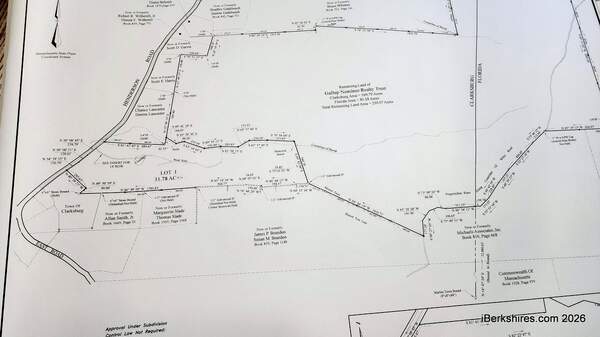
In other business, the board approved a land subdivision submitted by BEK Associates on behalf of Mary and Gus Giron. The board had planned to review the town's subdivision bylaws but waited as board member Ron Boucher could not attend the meeting.
Update on Dec. 8: the board apparently could not approve the permit on Wednesday and has scheduled another meeting.
Tags: cannabis, Planning Board,