Pittsfield Celebrates Kwanzaa, Reflects on Principles
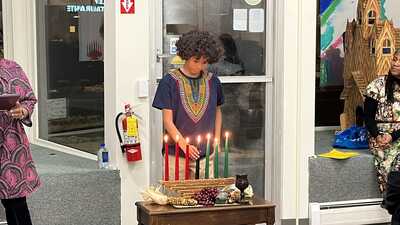 |
| Spencer-Mathias Reed lights the Kwanzaa candles. |
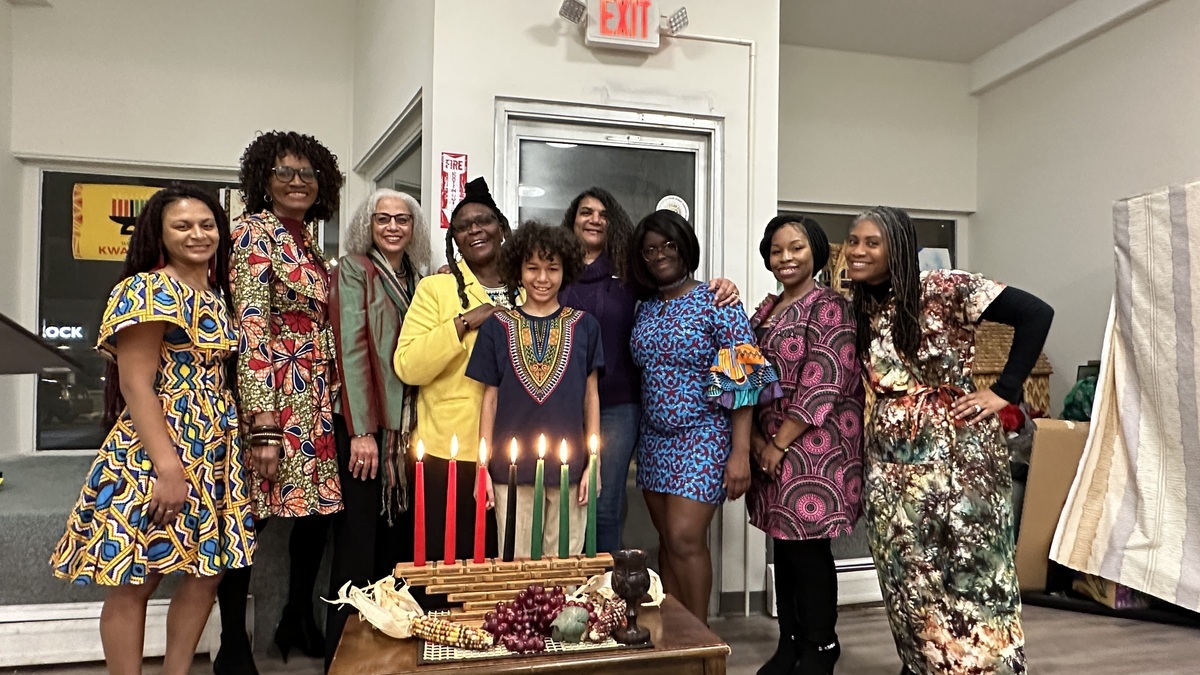
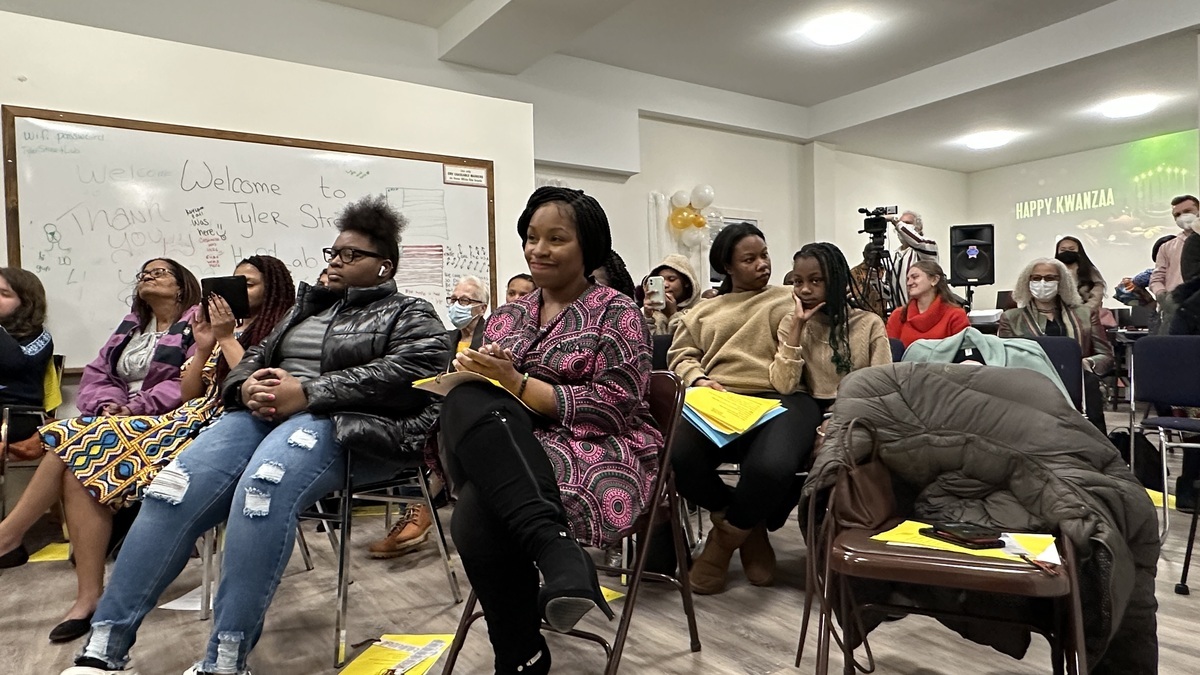
PITTSFIELD, Mass.—Community leaders, residents, and scholars gathered at Tyler Street Lab to celebrate Kwanzaa Thursday evening.
Throughout the night attendees danced, sang, and cheered throughout the ceremony and honored and celebrated the African diaspora’s seven principles including Umoja(Unity), Kujichagulia (Self-Determination), Ujima (Collective Work and Responsibility), Ujamaa (Cooperative Economics), Nia (Purpose), Kuumba (Creativity), and Imani (Faith).
The Women of Color Giving Circle and Rites of Passage and Empowerment (ROPE) organized the event designating this year's theme Umoja.
ROPE provides mentorships and emotional support to adolescent girls of color and young people identifying as female or non-binary so that they can develop their own voices through learning from professional women of color.
Organizers lit candles followed by Women of Color Giving Circle member Leah Reed reading names of local organizations that embodied the principles, including Black Lives Matter, Multicultural Bridge, The Divine Nine, Berkshire Black Economics, and more.
NAACP President Dennis Powell said before ROPE Founder and Director Shirley Edgerton started organizing Kwanzaa celebrations 5 to 6 years ago not many people knew what Kwanza represented
"We celebrate black history. We celebrate the principles that the African diaspora created that we all live by," Powell said. "As Dr. Edgerton said, we need to operate these principles 365 days a year, not just one day a year."
City Councilor Pete White said how events like this help fulfill the community’s need for unity.
"A night like this is so important because it's bringing together unity. It not only brings together the Black and African American community but all of us celebrating together, regardless of race, regardless of how we look on the outside," White said. "We're coming together as a unified community and celebrating the things that have been accomplished and also the things that still need to be done for us to get to where we want to be."
Speakers noted that African American history has been erased and minimized but education, which is now more readily available due to technology, can be used as a tool for empowerment.
The speakers at the celebration not only educated the audience on African American and black history but pointed to those who demonstrated it.
Keiana West, ROPE alum and Senior Coordinator of Community Engagement Center for Policing Equity embodies Kwanzaa principles by founding the Justice League at Reid Middle School.
The Justice League provides the opportunity for middle school students to learn about their community and social justice.
Through her work, West said she has come to question what it means to be unified with respect to advocacy movements and efforts to drive meaningful change that empowers black communities.
She said she learned that although the civil rights movement does not look as it did in the 50s and 60s, the practice of unity is still needed and can be accomplished by bringing organizations together and recognizing the work they are doing to make things better.
"Although Dr. Martin Luther King was certainly an extraordinary galvanizing force when he added the groundbreaking contributions to the desegregation and civil rights movement he did not achieve these milestones alone," West said.
She said the foundation that previous civil rights leaders set provided practices to make a difference.
"Unity is a key ingredient in racial justice movements, but it's not a given. It's a practice that we must work very intentionally towards achieving every single day. For instance, by being inclusive, and by making sure we can find our history and encourage systems thinking in our young people and adults," West said.
"Of course, and strive for unity. We must not erase the uniqueness and the intersectional identities that we as black people have so I'm very thankful to be with you all today to practice unity."
The keynote speaker Esq. of The Griffin Firm Aimee D. Griffin added to this idea saying that change can be made through collaboration and supporting black businesses in an effort to lessen the wage gap.
Griffin founded the mostly black-run law firm Life and Legacy Counselors which works to educate, collaborate, and strategically plan with individuals, families, and communities to build multi-generational wealth.
To give support ROPE visit their website.