After 'Spirited' Debate, Williamstown CPC Sends 5 Requests to Town Meeting
WILLIAMSTOWN, Mass. — The Community Preservation Committee on Wednesday voted to send town meeting five of the six applications for fiscal year 2024 funding.
But the last substantive votes of the night were preceded by a lengthy debate among committee members about how to balance the funds sought in the largest applications against the panel's stated goal to carry over 10 percent of its available funds to FY25.
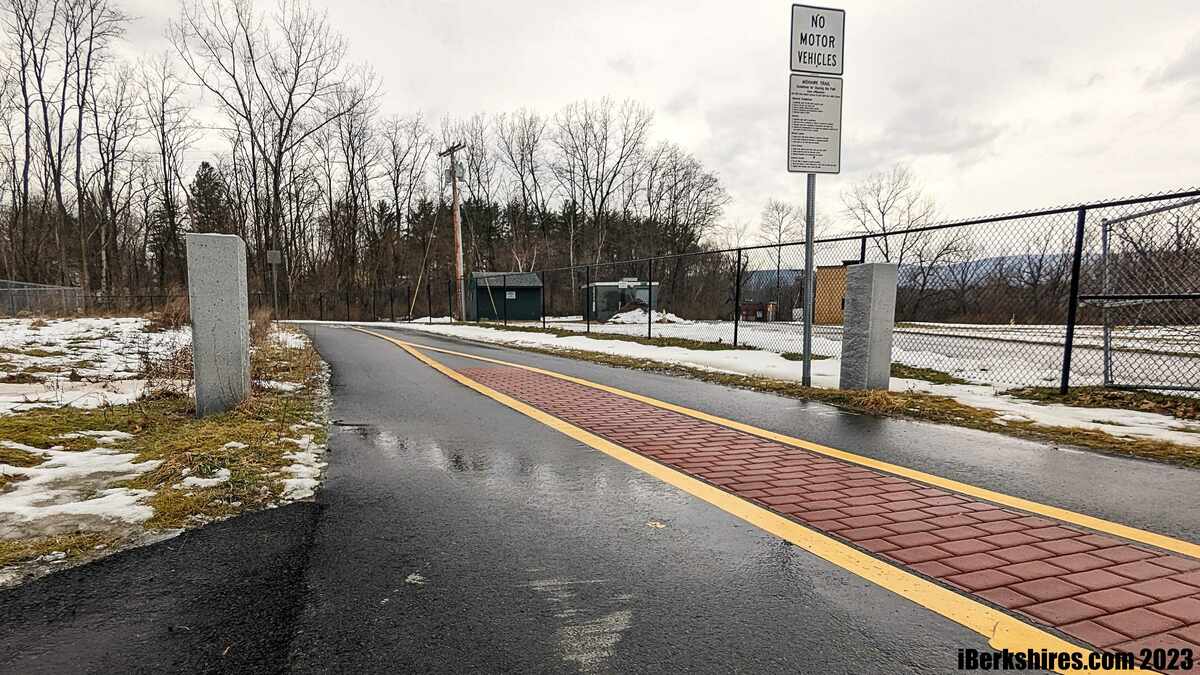
Most of the committee's votes were unanimous, including one to reject an application from the town for $100,000 in CPA funds to defray an unexpected $1.3 million town liability for overruns in a $5.3 million pedestrian/bike trail project.
Town Manager Bob Menicocci, who filed the application and is a voting member of the CPC, ultimately abstained in a vote to reject his own request. But first he had a chance to explain the reasoning behind the application, which was filed in accordance with the CPA's open space/recreation provision.
"What we're trying to do is be responsible, as we wrap up this issue, to say we've turned over every rock and really looked at every possible source for funding," Menicocci said. "To that extent, we're also seeking ARPA funds to help fund the project."
Menicocci inherited the trail and the bill when he arrived at Town Hall in July 2022, when the trail was substantially completed. In November, he notified the Select Board of the liability, attributing the overrun to increased costs associated with the COVID-19 pandemic and change orders signed by his predecessors during the life of the project.
Groundbreaking for the project was in the spring 2021, about the time the town was transitioning from then-Town Manager Jason Hoch to interim Town Manager Charlie Blanchard, who served until June 2022.
"It was a perfect storm of what was happening with COVID and transitions in the community," Menicocci said of the overrun.
Under the contract with the Massachusetts Department of Transportation, the state agency is responsible for the first 10 percent of overage in the $5.3 million project; the rest falls to the town. Menicocci told the CPC that he continues to engage MassDOT to see if the agency can share more of the excess cost, and he has engaged state Rep. John Barrett III to help lobby on behalf of the town.
None of the other members of the CPC expressed an interest in sending the town's $100,000 or a portion thereof to May's annual town meeting for approval. Some members questioned whether CPA funds can or should be used to pay for projects that already have been completed.
After removing that request from consideration for this funding cycle, the committee quickly agreed to recommend to town meeting three of the smaller "asks" on the table: $10,000 to the Williamstown Housing Authority; $35,000 to the Williamstown Historical Museum and $50,000 to the Williamstown Meetinghouse Preservation Fund, which volunteered to slash its original request by $100,000 at the CPC's January meeting.
That left two six-figure requests: a $100,000 request from the Mount Greylock Regional School District to help pay for an eight-lane track and athletic field and a $120,000 request from the town's Affordable Housing Trust.
After taking out the combined $95,000 in grants it advanced in its prior votes, the committee was left with a balance of available funds of about $235,000 — enough to fully fund the school district's request and the AHT but only if the committee backtracked on a prior vote to carry $30,000 into the next fiscal year.
Joe Finnegan defended the notion of sticking to the plan of preserving a 10 percent carryover, as the committee agreed in January.
"Unlike Phil [McKnight], who would like to give everyone as much money as we can, I am in the opposite camp," Finnegan said. "I would like to give everybody as much money as we think we should. But I would also like to leave some money for next year in case there is a recreational space application.
"We've carried huge sums forward in the past. The last couple of years we have not."
McKnight and Roger Lawrence suggested that one way to address the issue would be to recommend town meeting fund each of the two remaining requests at $15,000 below what the applicants sought, so $85,000 for the school district and $105,000 for the housing trust.
"I would argue the opposite," Finnegan said. "The Affordable Housing Trust is the only applicant that we green light every year. The high school has not been here for money, that I'm aware of, ever. And we haven't built a new field in this town ever.
"I feel differently, that the high school should get all the money they're asking for, and then we can talk about the Affordable Housing Trust. I'd like to leave more money for next year, but if most of you feel we should leave less, we can still fund the entire Affordable Housing Trust."
Ultimately, Finnegan and Chair Jane Patton voted in the minority of back-to-back 6-2 votes to both recommend the Affordable Housing Trust's full $120,000 and reduce the FY25 reserve from the previously agreed upon level.
Both Patton and Finnegan stressed that they support the Affordable Housing Trust and, more broadly, the town's efforts to address affordable housing needs in town. But each appeared to bristle at the notion that reducing the trust's application without doing the same for any other applicant was unfair.
Steven Dew vigorously defended the idea of keeping the AHT funding level as requested.
"I'm worried that this committee is getting ready to nickel and dime the Affordable Housing Trust to make a point about the lack of public recreation facilities in Williamstown," Dew said. "I think that point has been eloquently made by a number of people on this committee tonight. We all understand it's an important need.
"At the end of the day, however, housing is a need that human beings have. Recreation is important, but you can live without it. You can't live without housing."
Dew said his preference was to recommend both applications with the requested amount and not worry about how much was carried over to FY25. Nate Budington agreed, characterizing the amount carried over to the following year as "arbitrary."
Patton took exception to Dew's use of the phrase "nickel and diming" in regard to a potential cut in the housing trust's application.
"I don't want to get into a thing ... but when you give people upward of $450,000 over the course of four years and an additional $220,000 from ARPA funds and $100,000 right now, you're not nickel and diming anyone," Patton said, referring to past year's CPA allocations to the Affordable Housing Trust.
"This is the core problem. We have a functional inability to look at things other than the thing that's most important to us. We have greenlighted these things every year. We've given an enormous amount of money [to the trust]. They're going to get six figures again next year if the funds are there. To suggest that saying 'One time, you take a little bit less,' is 'nickel and diming' — no."
Finnegan was the first to reference a $220,000 allocation in American Rescue Plan Act funds the housing trust received from the Select Board and later responded to a suggestion from Affordable Housing Trust board Chair Andy Hogeland that the CPC could do with a little less carryover than the previously agreed to 10 percent.
"I appreciate you telling us how much we should save for next year," Finnegan told Hogeland. "How much do you have in the bank right now?"
After Hogeland replied that the trust's current balance stood at about $200,000, Finnegan continued.
"You have $200,000 in the bank," he said. "You look like you're getting $220,000 from the Select Board in the ARPA funds. You're asking us for $120,000, and you think we should save $15,000 for next year. I think that's where the misperception is.
"We want to save money so there is a rainy day fund for a good project for next year. No one is trying to cut the Affordable Housing Trust."
After an 8-0 vote to recommend the school district's request and the 6-2 votes on the housing trust and the lower FY25 reserve, the two-hour meeting quickly adjourned.
But first Patton, who repeatedly expressed concern that her statements and votes would be taken out of context, thanked all who engaged in the process.
"These aren't always easy, but I appreciate and value everybody's perspective," Patton said. "And, even on days like today, this is still my favorite committee. Thank you for your patience and the spirited discourse."
Hogeland, who serves with Patton on the Select Board in addition to his service on the AHT board, agreed and thanked the CPC for its support of the trust.
"I don't want anyone to think that voting against this was voting against affordable housing," Hogeland said. "You've been supportive for a long time. You just have different fiscal ideas. I think it was a good discussion to have."
Tags: CPA,