Clark Art Hosts Conversation on 'Outsider Art'
 |
WILLIAMSTOWN, Mass. — On Sunday, June 4 at 2 pm, the Clark Art Institute hosts a conversation between scholars Kaira M. Cabañas and Raphael Koenig, who address art and mental health in a global context, in conjunction with the exhibition "Portals: The Visionary Architecture of Paul Goesch."
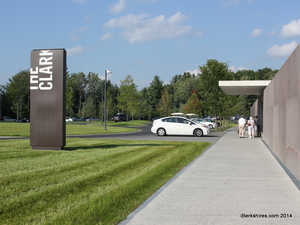
The program takes place in the Clark's auditorium, located in the Manton Research Center.
Free; no registration is required. For more information, visit clarkart.edu/events.
According to a press release:
Cabañas and Koenig examine how the categories of "outsider art," patient art, and art brut relate to one another, and our understanding of the creative process. Cabañas is the associate dean of academic programs and publications for the Center for Advanced Study in the Visual Arts at the University of Florida, and Raphael Koenig is the visiting assistant professor in comparative literature at the University of Toulouse II and co-author of the Portals publication.
Paul Goesch (1885–1940) suffered chronic illness and was isolated from his classmates, retreating into himself. Still, tutored by an older student, he developed a love of art and literature, as well as architecture. At the age of twenty-four, Goesch began a session during which he experienced his first psychotic break, and entered a sanatorium for treatment. His curiosity about the world led him to theosophy and the teachings of Rudolf Steiner, with their focus on the connections between the outer, natural world and the inner spiritual one.
Goesch produced one of the most inventive, peculiar, and poignant bodies of work to emerge from Weimar Germany. An artist and architect, he made both fanciful figurative drawings and visionary architectural designs. The latter, which drip with eclectic ornament and resemble little made then or since, are the subject of Portals: The Visionary Architecture of Paul Goesch, the first dedicated to Goesch's work in North America. The exhibition is on view in the Clark's Eugene V. Thaw Gallery for Works on Paper through June 11, 2023.
Tags: Clark Art,