Clark Art Hosts Morningside Student Poets
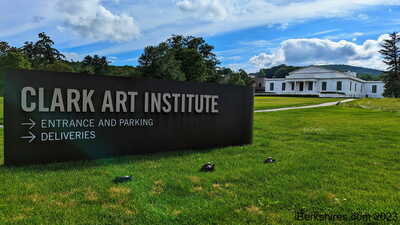 |
WILLIAMSTOWN, Mass. — On Saturday, Dec. 2 at noon, the Clark Art Institute hosts student poets from Morningside Community Elementary School, Pittsfield, Massachusetts, who will recite their work during a celebratory reception for a student poetry project that is currently installed on the Clark's grounds. The reception is free and open to the public.
The event takes place in the Clark's Michael Conforti Pavilion.
On Nov. 27, fifty-one tree tags embroidered with lines of student poetry were placed on trees along the Clark's trails, near Analia Saban's Teaching A Cow How to Draw (2020) fence that borders the Clark's pasture, and along the trail up to Thomas Schütte's Crystal (2015) atop Stone Hill. The poems were written by third-graders from Morningside Community Elementary School during a November field trip as part of the poetry-in-schools program, Fireside, facilitated by The Mastheads, a public arts and humanities project. Inspired by their tour of the Clark's galleries and a walk up Stone Hill, the students reflected on the ways art and nature interact while writing poems during their visit.
"This project is a great model of how the Clark can partner with other arts organizations and support our local schools. What's not to like? Poetry, written by third graders, inspired by the Clark, and installed on our beautiful grounds," said Ronna Tulgan Ostheimer, director of education at the Clark. Sarah Hobin, Manager of Community Engagement Programs at the Clark, collaborated with The Mastheads to organize the project as a part of the Clark's community outreach initiatives.
A highlight of each semester's Fireside project is a surprising, site-specific public text installation of student poetry. Lines of student poetry have been engraved on park fences, painted on sidewalks, plastered on billboards, and now, wrapped around tree trunks at the Clark. The poetry tags will be on the Clark's trees through December 4.
"Students intuitively love poetry—it's like making art with words," said Sarah Trudgeon, literary director at The Mastheads. Kids who don't love writing in other capacities often love writing poems. It also helps students connect with each other and their teachers."
Tessa Kelly, the Mastheads' design director explains, "Knowing that the outdoor walking trails are a major part of the local community's relationship to the Clark, we wanted the project to add a new element of interest and excitement to already beloved routes through the campus. The selection of tree straps as a medium came about because we want to work with a true horticultural product, which both functionally and aesthetically could be mistaken as part of the landscape maintenance. But when you get close enough, the text delivers a surprise! The project overall builds on The Mastheads' commitment to bringing the voices of Pittsfield youth into the fold of the cultural life of the Berkshires."
Tags: Clark Art,