Housing Planned for Former St. Joe's High School
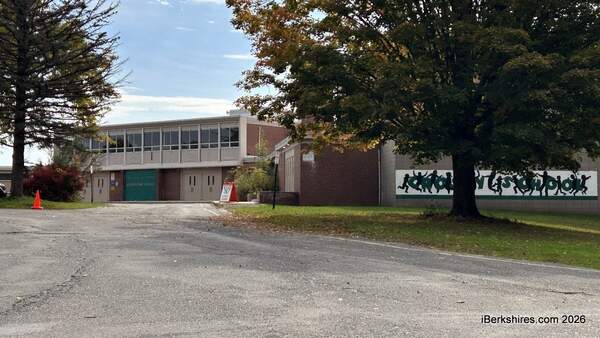
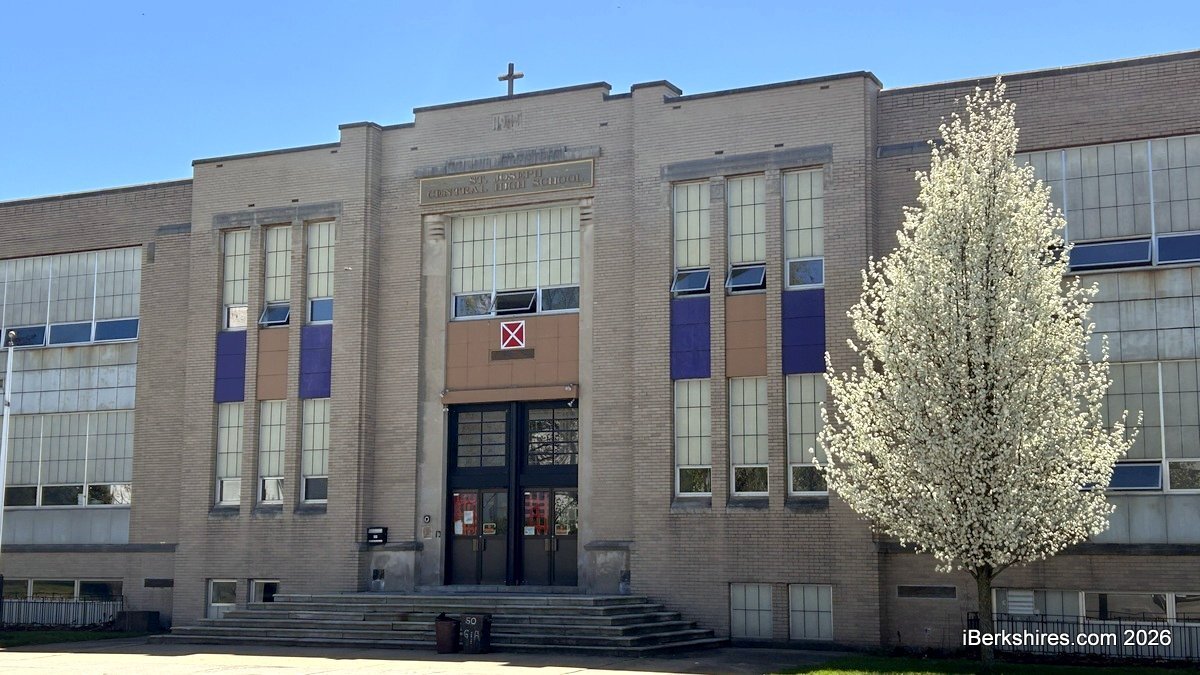
PITTSFIELD, Mass. — Nearly a decade after the facility last operated as a high school, the former Saint Joseph's is staged for new life as housing.
Last week, the Community Development Board determined that subdivision approval was not required for a plan of land the Roman Catholic Bishop of Springfield submitted for 22 Maplewood Ave.
CT Management Group is under contract to purchase the property for conversion into market-rate housing, developer David Carver confirmed on Monday when contacted by iBerkshires. The closing date and related matters are in process.
In 2017, the then 120-year-old St. Joseph Central High School ceased operations. After the COVID-19 pandemic hit, it sheltered people without homes before The Pearl, a 40-bed downtown shelter, was finished a few years ago.
Brian Koczela of BEK Associates, who submitted the plan on behalf of the diocese, explained to the board that the diocese is conveying out the former St. Joseph's High School. (The bishop is listed as owner on deeds on behalf of the church.)
The high school is comprised of four parcels with different owner in the middle, he said, and they need to be combined for the conveyance. This refers to the transfer and assignment of a property right or interest from one individual or entity to another.
"At the very southerly end, at the back of the high school, there's a 66-foot-wide strip, I believe, and that strip goes all the way from North Street to Maplewood, and it includes a rectory," Koczela explained.
"In essence, what we're really doing is just separating out that small parcel from the rectory."
The board also discussed getting ahead of data centers and agreed to consider a moratorium or regulations to protect Pittsfield from the emerging, controversial facilities. A data center is a large group of networked computer servers typically used for the remote storage, processing, or distribution of large amounts of data.
City Planner Kevin Rayner said this issue has been popping up across the state, and it is important to consider if and/or how data centers should be regulated in Pittsfield.
"How they kind of pop up quickly, and they take up a large portion of the municipal resources, energy, electricity, and water, and they also emit a lot of heat as well that can heat up the local atmosphere," he said.
"There's a large caution going around the state of how to deal with these and how to not have them sap municipal resources, and I think that there's a unique danger for Pittsfield in Berkshire County when it comes to data centers, because there's not a large quantity of infrastructure like there is in eastern Mass.
"The county only has so much power and water infrastructure, and I think that a big data center in Pittsfield could have impacts not only in Pittsfield, but the rest of the county."
At the last City Council meeting, a petition from Ward 1 Councilor Kenneth Warren requesting to explore implementing a moratorium on the establishment and siting of data centers was referred to the Community Development Board.
Warren, in his request, wrote that "This is one of those uses that the public would best be served by careful oversight of the City. A moratorium would allow the city to prevent any businesses from taking
advantage of the lack of any zoning regulations."
Rayner looked at other state planners and created draft regulations to begin with, recognizing that the city doesn't want to be scrambling with no governance for data centers if a proposal came up.
Chair Sheila Irvin said data centers are drawing a "huge" amount of electricity and water from American communities, increasing utility rates and putting pressure on the grid. She is personally leaning toward a moratorium.
"Would the data center be taking power away from the community at the cost of the community?" she asked.
Irvin pointed out that this would buy Pittsfield some time in the sense of saying, "We don't know this at all, but let us take some time to look at, if we did decide to have it, how would we deal with it?"
Rayner will come up with a draft moratorium and sharpened regulations, and the board will consider them next month. He pointed out that the moratorium would be a simple zoning amendment for consideration.
It was suggested that the Pittsfield Economic Development Authority, which oversees the William Stanley Business Park, be consulted in this process to see if they are exposed to the data center industry.
Tags: housing, Planning Board, st joe,