Pittsfield Officials Tour ServiceNet's Vocational Farm
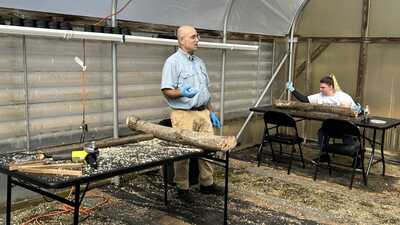 |
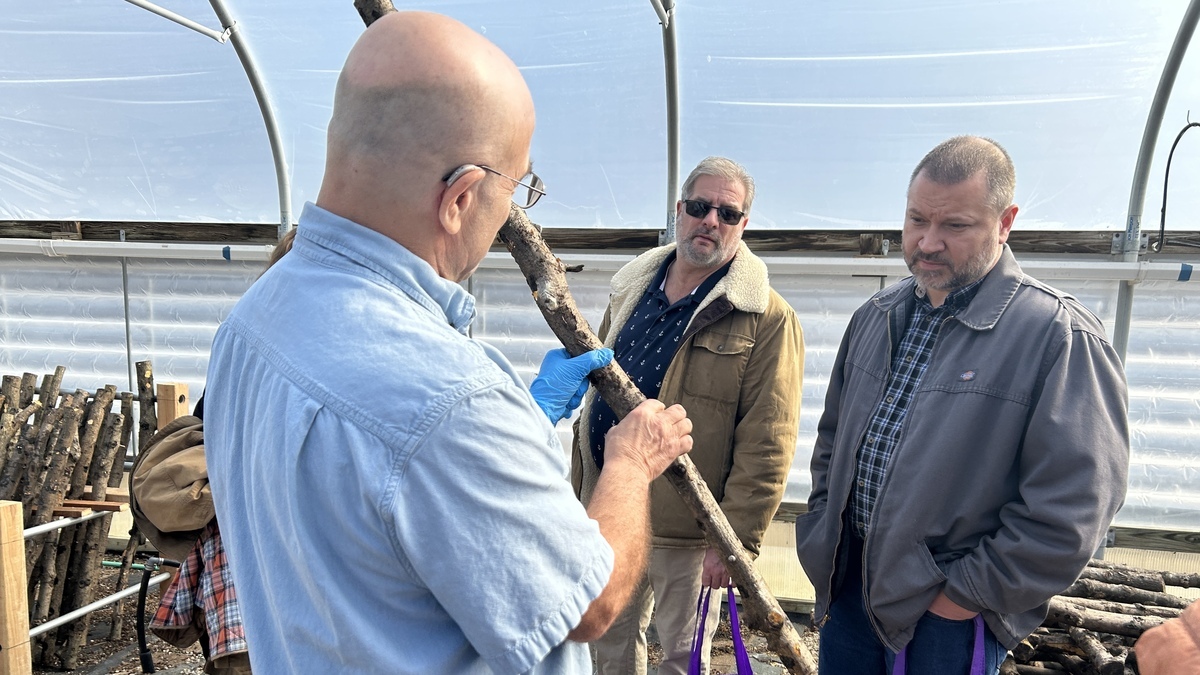
| Volunteer Jim Seltzer, who started the mushroom production ten years ago at the Hatfield location, went through the process of producing them by inoculating logs. |
PITTSFIELD, Mass. — Officials got a first look at ServiceNet's therapeutic vocational farm in the former Jodi's Seasonal on Friday.
"I think it's a great reuse of a property with both a training and education piece and a community development piece," Mayor Peter Marchetti said.
Early this year, the nonprofit human service agency closed on the property when former owners Dave and Andrea Blessing sold Jodi's after 40 years in operation. Prospect Meadow Farm Berkshires is an expansion of ServiceNet's first farm in Hatfield that has provided meaningful agricultural work, fair wages, and personal and professional growth to hundreds of individuals with intellectual and developmental disabilities since opening in 2011.
Vice President of Vocational Programs Shawn Robinson, who helped spearhead the farm from day one, said they aim for a similar operation in Pittsfield.
"The model has been incredible. Families love the work that their loved ones are doing for a variety of reasons. A lot of folks we serve are folks on the spectrum and what we've seen is being outdoors, physical work, and connection with animals have tremendous benefits for that population," he explained.
"And then also, there's a significant population of young people coming through right now where your traditional program just doesn't seem like a good fit for whatever reason that might be and it might even be just the amount of space that that person needs. Being in a building isn't necessarily for everyone."
The 16-acre flower farm on Crane Avenue includes greenhouses, a few buildings, and a great deal of land. An open house is staged for May and the hope is to have goat and chicken houses completed as well as a full-scale mushroom operation, tomato plants, and cucumbers if weather permits.
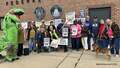
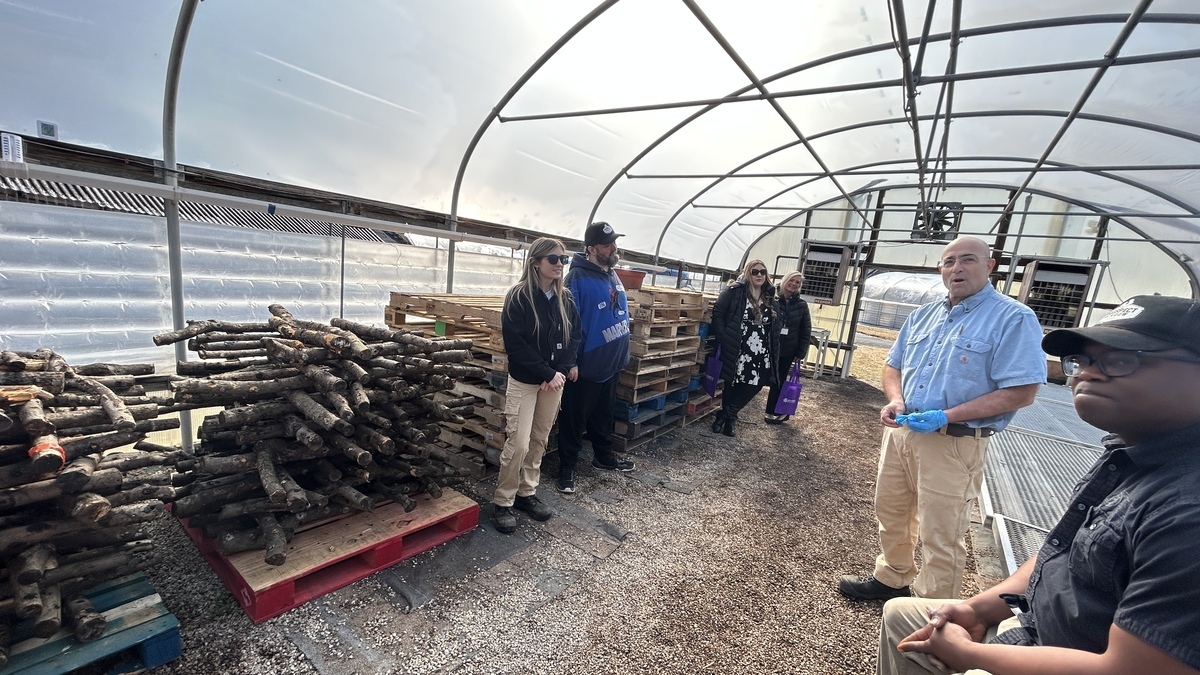
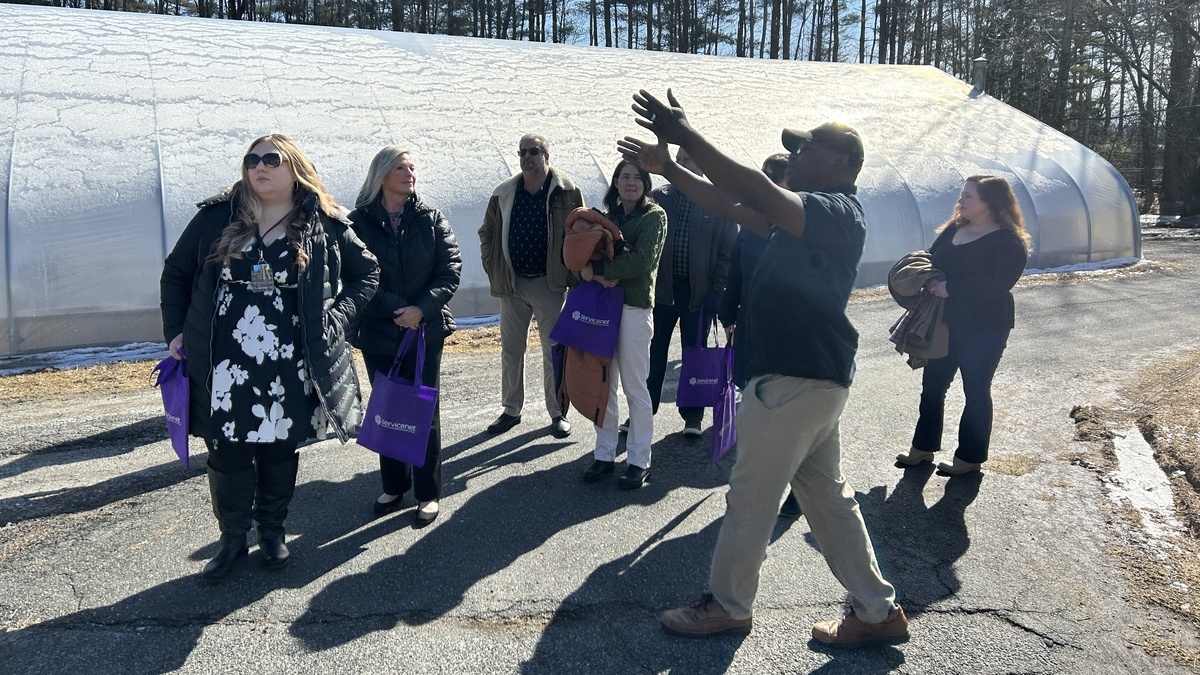
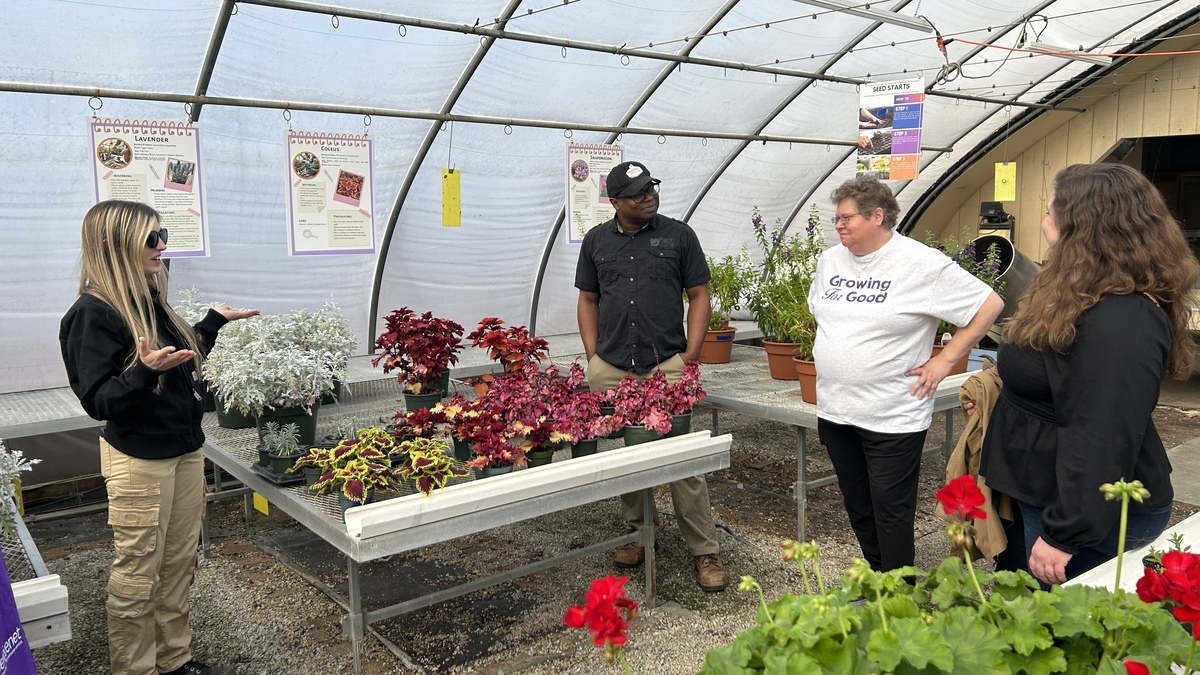
A group of city officials were taken through greenhouses with flowers and shiitake mushrooms to get a glimpse of what was to come.
Prospect Meadow Farm is one largest growers of shiitake mushrooms in the region with about 5,000 logs in production between the two sites.
"What's cool is we've only been able to do those mostly during this standard summer and spring. Now with all of these greenhouses, we will be able to extend our season and do shiitakes year round, which is great because we also provide them to local restaurants," Robinson said.
"So I imagine a lot of local Pittsfield restaurants will be using them at some point and they can be processed in our commercial kitchen and Hatfield in our commercial dehydrator so we envision once we can get some legal stuff settled to be able to ship them because dehydrated they ship very light and there's actually a huge market for it."
Volunteer Jim Seltzer, who started the mushroom production ten years ago at the Hatfield location, went through the process of producing them by inoculating logs.
As a retired psychologist, he explained they use neuro-psychological principles, occupational therapy approaches, and learning theory to develop a work system that lets people gain self-esteem and develop work skills as rapidly as they can.
"We like to emphasize just right challenge, which is an occupational therapy concept, which is basically finding where people are at and giving them a little bit of challenge beyond that so they can learn without making a lot of errors," he said.
"Shiitake mushroom growing is fabulous for this approach because we can change the level of difficulty and complexity of tasks because some people can do it all, and some people just do certain steps. It's very useful for us but to really cut to the chase what we do is have a lot of fun and grow really yummy mushrooms."
The crew members drill holes in logs and insert mycelium into the holes so that the mushrooms can grow. After two months of resting, the logs can be reused in cycles until they ultimately decompose.
In the first year, the goal is to serve around 25 individuals with the farm. The agency has a contract with the Department of Developmental Services for therapeutic vocational training and with local school districts that choose to utilize the program for students with individualized education program plans.
The hope is to also collaborate with Berkshire County schools.
"Most of our folks will come, we imagine, through referrals from the Department of Developmental Services but we also take private referrals and we work with local school districts so school students," Robinson said.
"What's great is what we see a lot in our area is when you've got that student who was 19 or 20 and the parents are so worried about what's going to happen on that 22nd birthday, it's so nice if you're able to begin that transition early and have them already coming to a place for the day that is also then supported by DDS when they turn 22."
All farmhands and trainees are paid at least minimum wage and have growth opportunities such as senior farmhands, peer mentors, and then job coaches.
"Our ultimate goal is to provide meaningful paid employment to people with developmental disabilities," Robinson said.
"So everyone gets paid when they're here. No one is working for cents on the dollar, doing piecework, or anything like that. You get paid $15 an hour whenever you are working."
He shared a success story about one employee who came to work for the Hatfield farm after high school about ten years ago and is now a job coach with a driver's license and his own car, has lived independently, and is saving for a home. Another employee was hired by Home Depot to work in the carpentry area for a higher salary than the farm could offer.
"In the future, the next step from here, which has already played out at our other farm, would be to develop a larger vocational training building," he said.
"Now we may do that with the current house or we may get rid of the house and put something there, and it would have a carpentry training center and a culinary training center, which would be a commercial kitchen and a huge carpentry studio. That's what we've built out at our Hatfield farm and we find that they are incredibly popular programs."
Program participants are already on site doing work, eager to show what the farm has in store.
Tags: farming,