Clark Art Lecture On Native American Burial Mounds
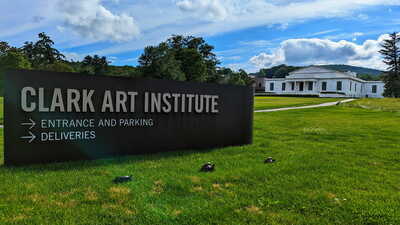 |
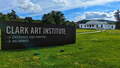
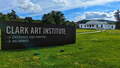
WILLIAMSTOWN, Mass. — On Tuesday, May 7 at 5:30 pm, the Clark Art Institute's Research and Academic Program presents "Putting The Mounds In Perspective," a lecture by Michael Gaudio (University of Minnesota/Clark Professor 2023–2024).
In it he explores a much-discussed feature of the nineteenth-century North American landscape: Native American burial mounds.
The talk takes place in the Clark's auditorium, located in the Manton Research Center.
According to a press release:
In 1899, the art historian Alois Riegl declared that the content of modern art, and of landscape painting in particular, was a scientific "mood" in which the chaotic world, seen from a distance, resolves into a sense of perspectival harmony. As elevated points in the landscape, burial mounds were frequently treated as ideal viewing platforms—sites from which to survey and understand the surrounding country—but as objects of a nascent archaeological discipline that placed the Indigenous inhabitants of North America into historical perspective, the mounds proved elusive. Belonging to none of the established categories for historical evaluation, the mounds disrupt the contemplative mood of both landscape art and nineteenth-century academic science.
Michael Gaudio is Professor in the Department of Art History at the University of Minnesota. His research interests focus on the intersections of artistic practice, science, religion, and cultural contact in the Atlantic world. He has written on topics including early modern costume studies, early American natural history illustration, and thirteenth-century cartography. He is the author of three books: Engraving the Savage: The New World and Techniques of Civilization (2008), The Bible and the Printed Image in Early Modern England (2017), and Sound, Image, Silence: Art and the Aural Imagination in the Atlantic World (2019).
Free. Accessible seats available; for information, call 413 458 0524. A reception at 5 pm in the Manton Research Center reading room precedes the event.
Tags: Clark Art,