North Adams Schools Talk Final Budget Numbers for Public Hearing
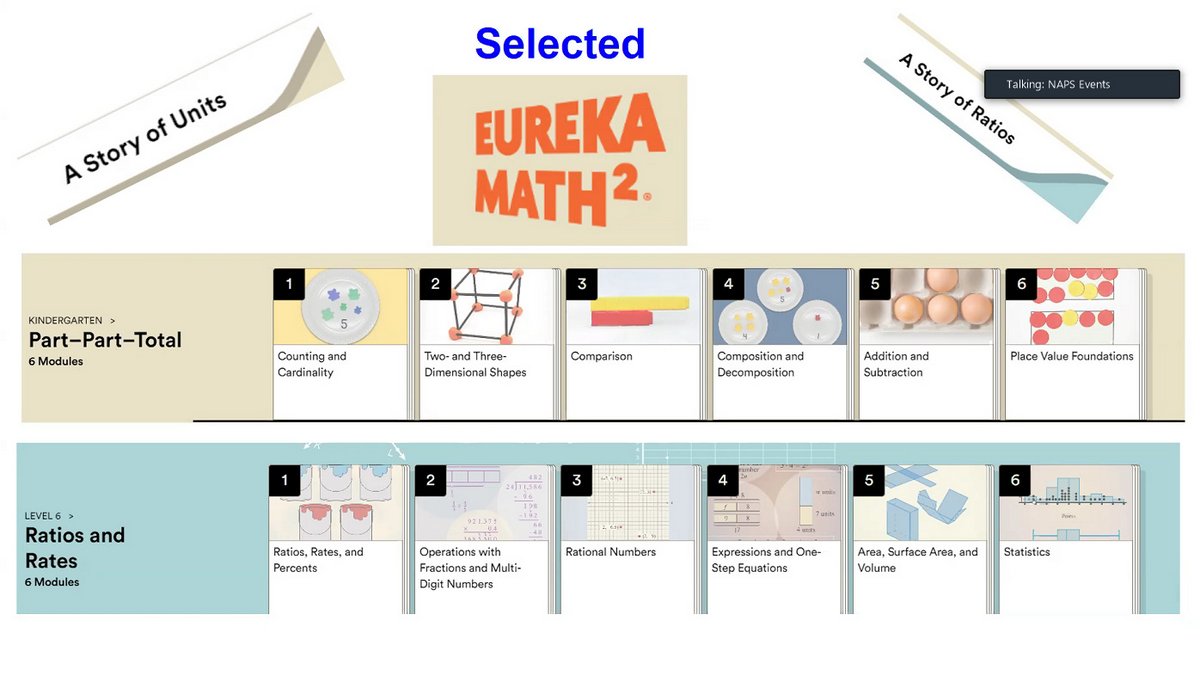
The elementary schools will be phasing in a new math curriculum over the next two years.
The subcommittee is recommending the budget of $20,357,096, up $302,744 or 1.51 percent over this year. This was expected to be funded by $16,418,826 in state Chapter 70 education funds, local funding of $3,938,270 (up $100,000 over this year) and a drawdown of school funds of $575,237. This will also include the closure of Greylock School at the end of this year and the reduction of 26 full-time positions.
A hybrid public hearing on the budget will be held on Thursday, May 23, at 5:30 at Brayton School, with a vote by the School Committee to immediately follow.
The extra $100,000 from the city will likely not be part of this funding package, warned Mayor Jennifer Macksey, chair of the School Committee.
"Going through all my process on the city side, so to say, with the rest of my departments, it's going to be really hard for me to squeak out the additional $100,000," said the mayor, alluding to a budget gap of $600,000 to $800,000 for fiscal 2025 she's trying to close.
"I just want to be fully transparent with everyone sitting here, and as your School Committee chair, I don't know if the city budget is going to be able to squeak out that $100,000. That number will most likely change."
Director of School Finance and Operations Nancy Rauscher said the $100,000 had been a placeholder with administration understanding that it could change.
"We do have close to $2 million currently in school choice and we could essentially take $675,000 out of that total," she said. "And it wouldn't be a problem."
The school district had seen a bump in school choice funds anticipated for this year but it's not clear if that will continue.
The district's been buoyed over the last several years by federal Elementary and Secondary School Emergency Relief Fund to the tune of $6.7 million, along with another $300,000 provided for reopening schools. Those funds are expiring this summer and officials will now have to dip into school choice funds that have been banked untouched during that time.
Like many districts, North Adams is dealing with rising insurance, inflation costs exceeding the state Chapter 70 cost cap, and a sharp rise in out-of-district placements projected at $1.2 million.
Officials had been hoping natural attrition would take the sting out of the loss of 26 positions but Superintendent Barbara Malkas said no one has put in for retirements.
"I'm letting go of folks who worked this year on a licensure waiver, and that means that that they would have been let go anyway, because they would have to reapply for their position and we would have to demonstrate to the state that we did actively seek a highly qualified or licensed candidate," said Malkas. "But most of these positions will be receiving either a reduction in force or non-renewal letter. A non-renewal is based on performance. Reduction in force is usually conducted based on contractual obligation and so they would have been placed on a recall list for consideration for any open positions.
Malkas had spent Monday with committee member Tara Jacobs and David Sookey on Beacon Hill for Massachusetts Association of School Committees Day, a day to advocate for education with lawmakers.
"Everybody's kind of in the same boat," said Sookey. "And I don't think anybody wants to see anybody losing their position. But at the same time, you know, unfortunately we have to be fiscally responsible. With Chapter 70, which I do urge anybody who's listening to pick up the phone and call the state Rep. Barrett's office, call up Sen. Mark's office and have that conversation with them about, you know, this isn't getting any better.
"And if we keep going down this path, it's only gonna get worse. We're doing the best we can with what we have."
The committee accepted a report on K-6 math curriculum from Timothy Callahan, assistant superintendent curriculum, instruction and assessment, and Lisa Tanner, director of instruction at Greylock and also the elementary math coordinator.
Working with teachers, a curriculum council reviewed two math curriculums — I-Ready and Eureka Math Squared — recommending the Eureka.
"We needed a curriculum that encourages and brings about the process of students talking about what they're learning, so they're sharing, so they're helping each other understand," said Tanner. "We talked about how they needed to compare and students had to be able to verbalize their learning and demonstrate proficiency in grade-level standards."
Callahan said, "what we saw over the course of all of this feedback from teachers was that Eureka Math constantly outperformed i-Ready. So both are good curricula. One was obviously better and we saw that clearly through the feedback from the teachers."
Tanner explained how it will be phased in through 2025-26 school year and Callahan said he told the company it had to be affordable for the district. A state High-Quality Instructional Materials (HQIM) Implementation Grant will pay for program materials for the entire K-6 and a Turnaround Assistance Grant will pay for additional support and materials.
"So that will all be covered with grant funding for the initial year and should be sustainable for years beyond that, at least through two more years of grant funding," said Callahan.
• The committee approved a request to make June 10, 11 and 12 as half days for students and to give teachers time in the afternoon to pack. The elementary schools' last day is June 13 and Drury's is June 14 (with an extra day because of a water break.)
"There will be a reconfiguration for the district integrate span schools which basically means that almost everyone in the district will be packing up and moving their classroom," said the superintendent. "There's a lot of moving parts to this and logistical challenges we're preparing for but we do need the assist of our teachers to be able to pack and for that they need to have some time."
• The committee voted to participate in the school choice program; this will open 170 slots in all grades but 4 and 5, which are close the 24-student-per-class limit. Malkas said the district currently has 72 students choicing in and 140 choicing out, exclusive of students attending the charter school, McCann Technical or private schools.
• The committee accepted a donation of 15 adjustable standing desks from Clock Tower Partners. These were left behind by a business that vacated a property owned by David Carver. They will be used at the high school and have an approximate value of $1,140 each.
Tags: fiscal 2025, math, NAPS_budget, north adams_budget,