Clark Art Lecture: 'To Represent, or Not'
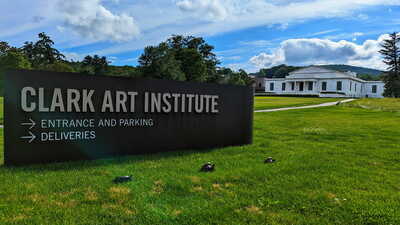 |
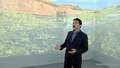
WILLIAMSTOWN, Mass. — On Thursday, Sept. 24 at 5:30 pm, the Clark Art Institute's Research and Academic Program presents "To Represent or Not: An Ideology of the Image in the Kingdom of Ethiopia," a lecture by Clark Fellow Claire Bosc-Tiessé of the National Center for Scientific Research and School for Advanced Studies in Social Sciences in France.
The talk takes place in the Clark's auditorium, located in the Manton Research Center.
According to a press release:
Bosc-Tiessé will look at what Ethiopians, depending on their position in society—rulers, high-ranking lay or religious dignitaries, parish priests or ordinary believers, women or men—did with their images and in their images: how they thought about them, how they made them or had them made, what they represented or what they did not represent, how they placed and moved them in space. Through a corpus of images dating from the thirteenth to the twentieth century, she will observe material transformations and changes in use, and how this tells us about the importance attached to a singular object, what might be expected of its visual effect, about the religious character ascribed to it, its use in strategies of power and, finally, about the status of the image in the Kingdom of Ethiopia more generally.
Bosc-Tiessé is a research director at the French National Center for Scientific Research (CNRS) and professor at the School of Advanced Studies in Social Sciences (EHESS) in Paris. Her research interests pertain to creation in the Christian kingdom of Ethiopia from the thirteenth century onwards. She has published Les Îles de la mémoire: Fabrique des images et écriture de l'histoire dans les églises du lac Tana, Éthiopie, XVIIe-XVIIIe siècle; Peintures sacrées d'Éthiopie: Collection de la mission Dakar-Djibouti with A. Wion, and Lalibela: Site rupestre chrétien d'Éthiopie with M.-L. Derat. More broadly, her work addresses the modalities of writing a history of the arts in Africa before the twentieth century and the issues at stake. She has also led an online mapping of the African collections in French museums. At the Clark, Bosc-Tiessé will complete an anthropological history studying the use and status of images in Ethiopia since the thirteenth century.
Free. Accessible seats available; for information, call 413 458 0524. A reception at 5 pm in the Manton Research Center reading room precedes the event.
Tags: Clark Art,