Williams College 'Pluriverse' Pavilion Example of Intersection of Disciplines
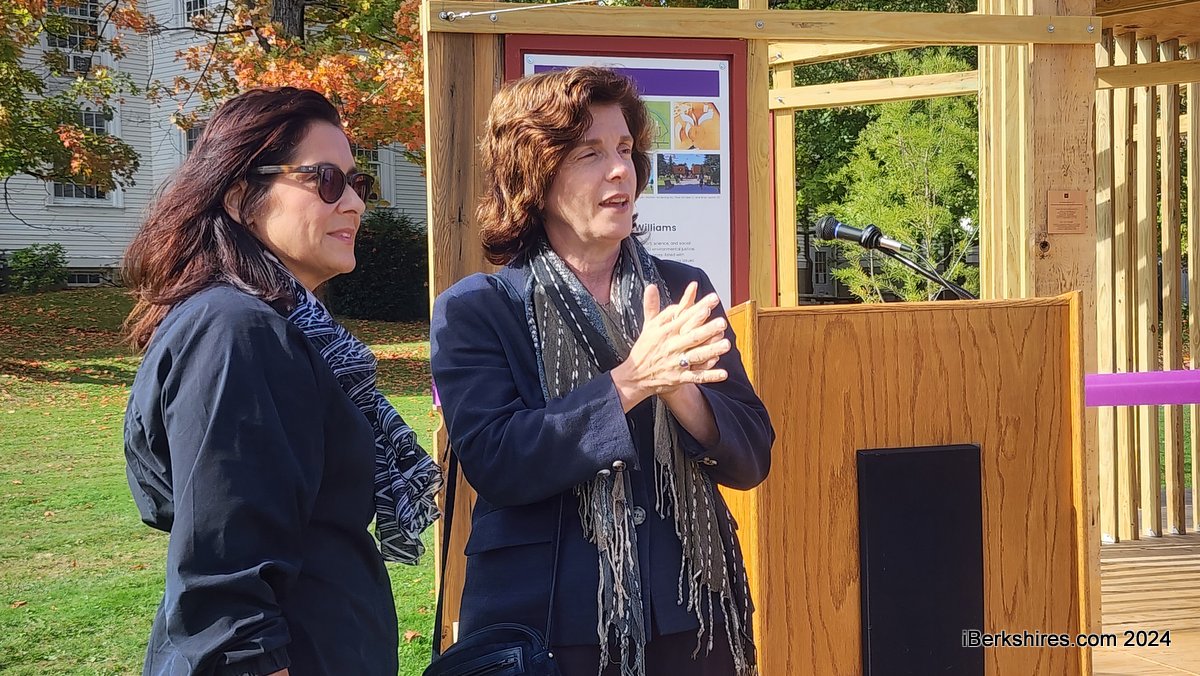
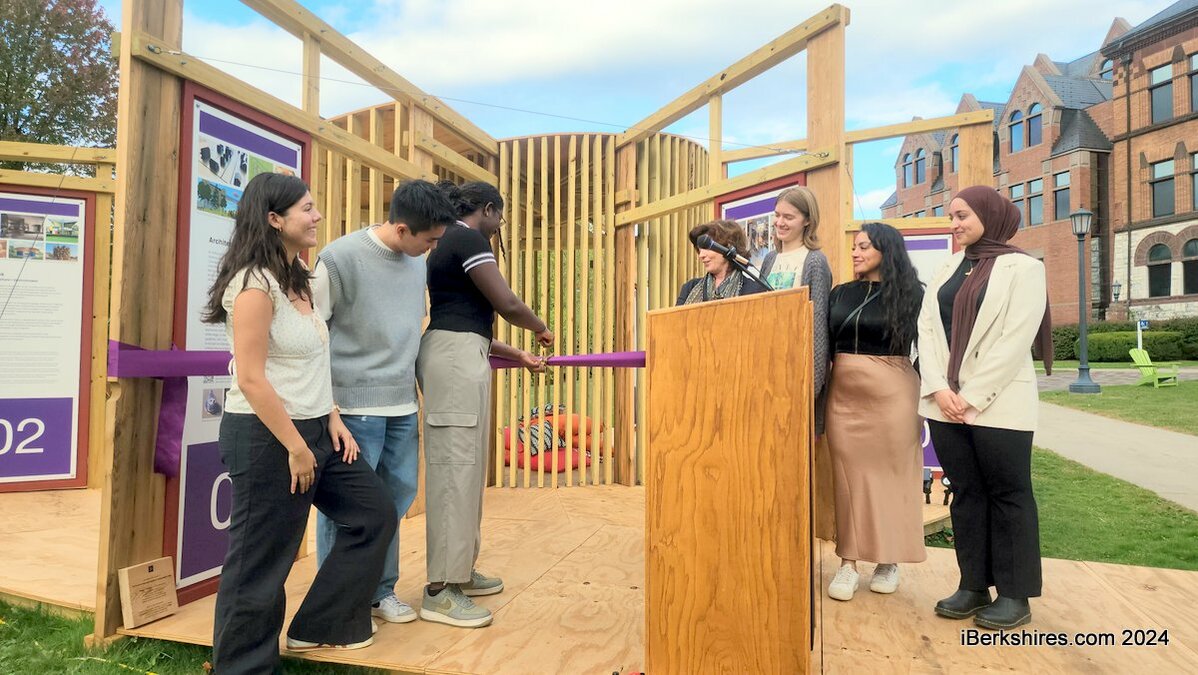
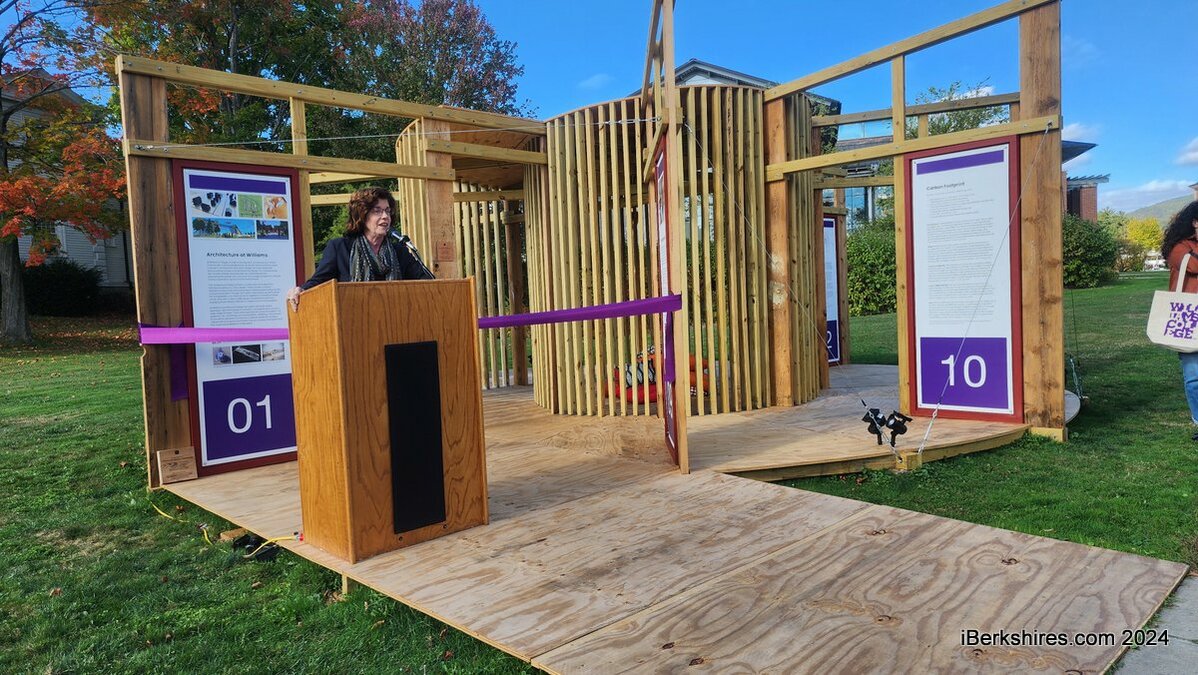
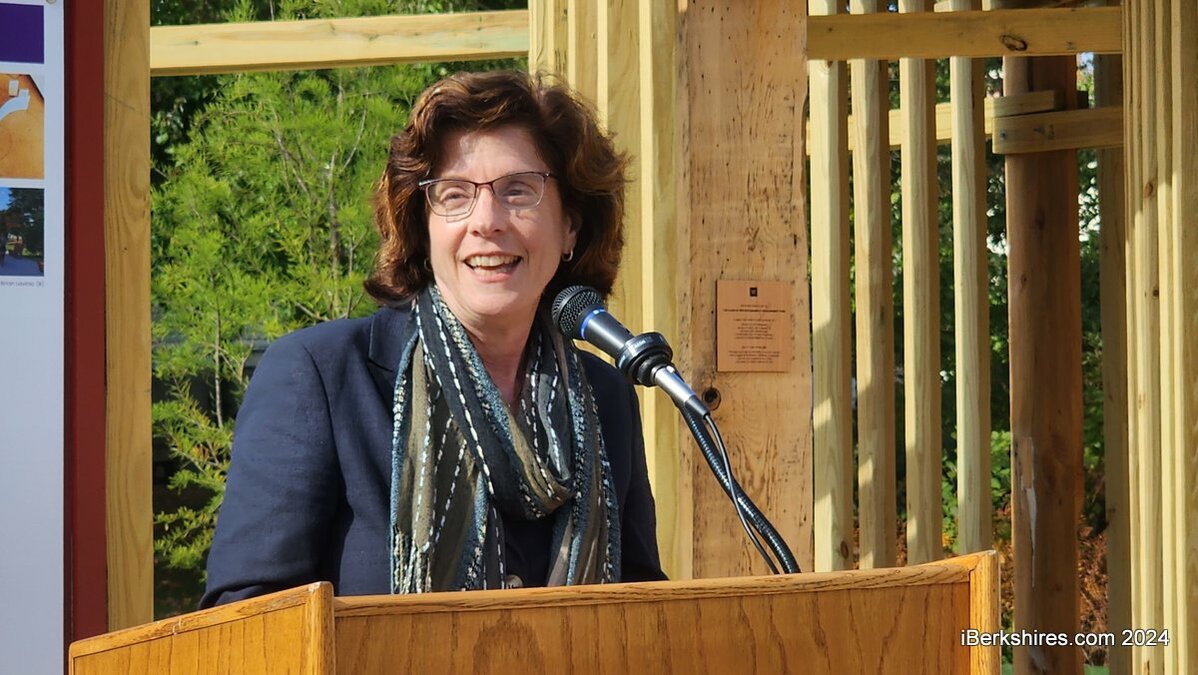
Course instructor Giuseppina Forte, left, and college President Maud Mandel at the ribbon cutting.
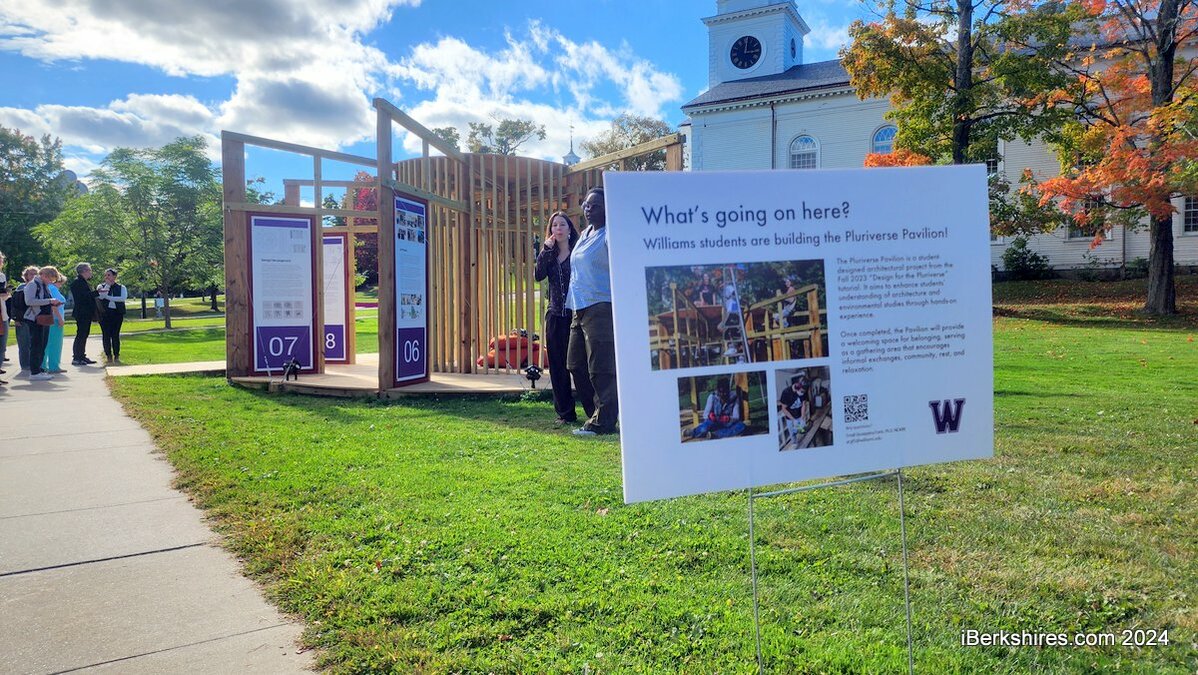
The product of professor Giuseppina Forte's fall 2023 class "Design for the Pluriverse" took nearly a year to design, model and construct and is meant to be a welcoming space to meditate and connect.
President Maud Mandel said she'd been getting quite a few queries about the little structure between First Congregational Church and Hopkins Hall.
"If you tell them you're building a pluriverse, they just kind of look at you like you're something out of a three-dimensional portal from 'The Matrix' movies, which so it's been it's been fun to say that," she laughed at last Wednesday's ribbon cutting.
It's based on anthropologist Arturo Escobar's work of bringing multiple perspectives into design.
"The pavilion embraces diverse forms of engagement and the pluriverse concept," said Forte. "The fact that multiple people were involved in the design and construction of this small structure, per se, already speaks to the fact that I do believe architecture should be a collective endeavor, and so there is no sole author here, something that we've been used to think in the 19th century and 20th century with this kind of sole authorship."
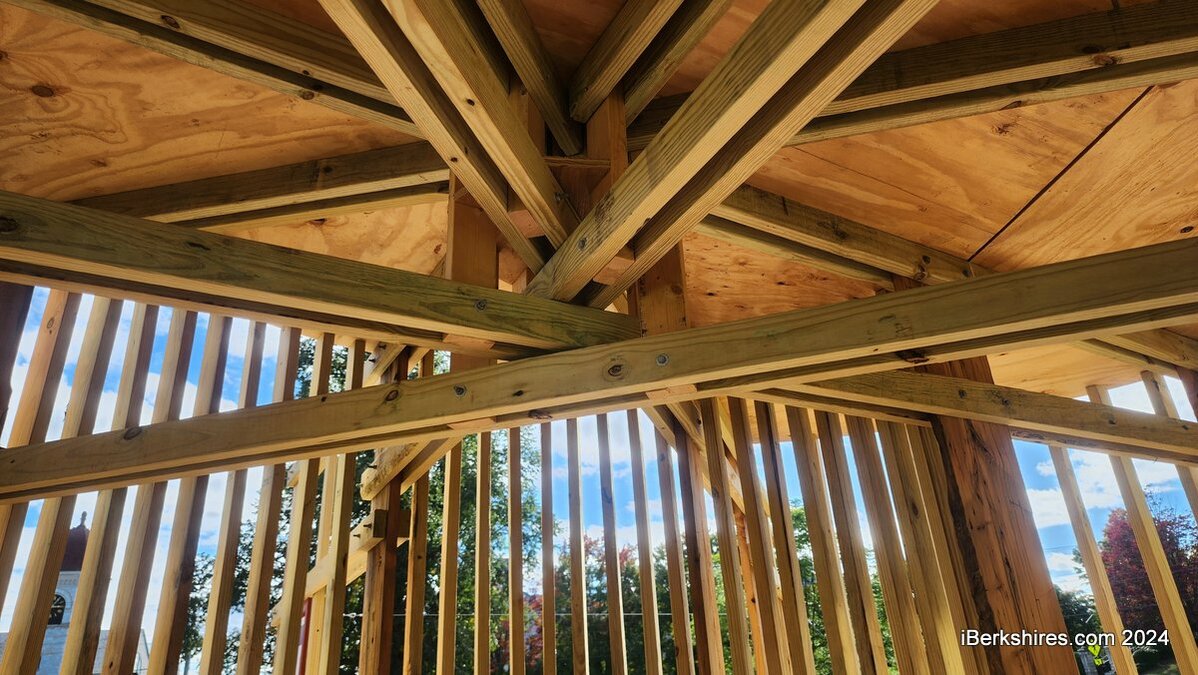
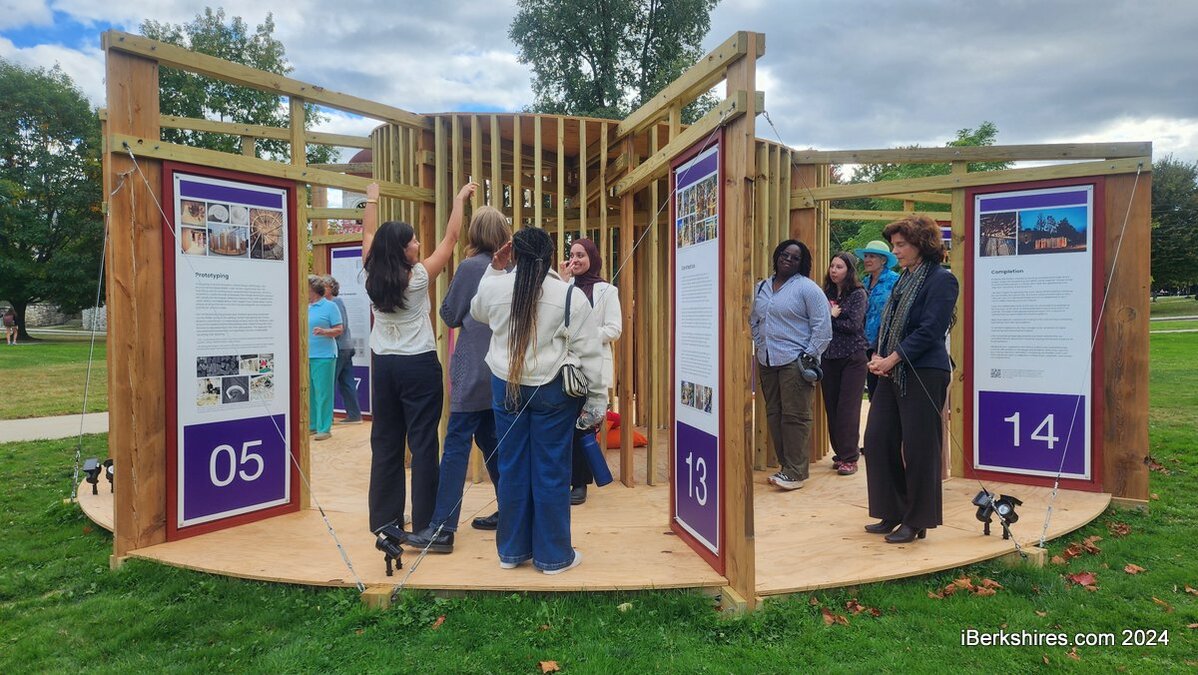
The pavilion is designed to be open and inviting while also creating a sense of coming together or shelter as it curls in. The materials were chosen based on sustainability, aesthetics and how their production impacted the environment. Because it is made of wood, its carbon footprint is negative.
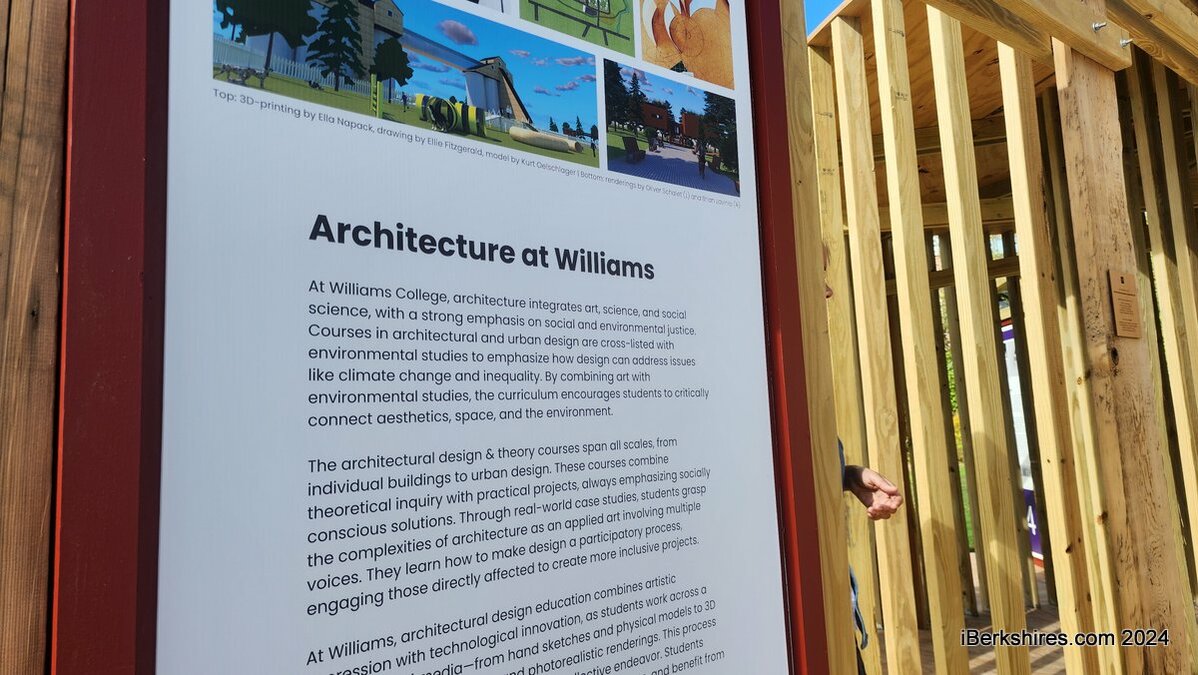
The larger structural pieces are reclaimed hemlock boards from the 1895 Jenness House so they carry history with them and the exterior panels are from a previous Williams exhibition. Sixteen panels along the exterior curve document the structure's history from conception to completion.
"It kind of embodies a lot of all the memories, because materials bring memories with them, and it is carbon negative. So you would say that this is a green architecture. This is a sustainable architecture," said Forte. "We like to invite people to think about sustainability as an extended concept, also including social sustainability. And so we hope that students will use this pavilion, maybe to discuss about social justice, you know, things that are actually involving not only like the environment, but also people."
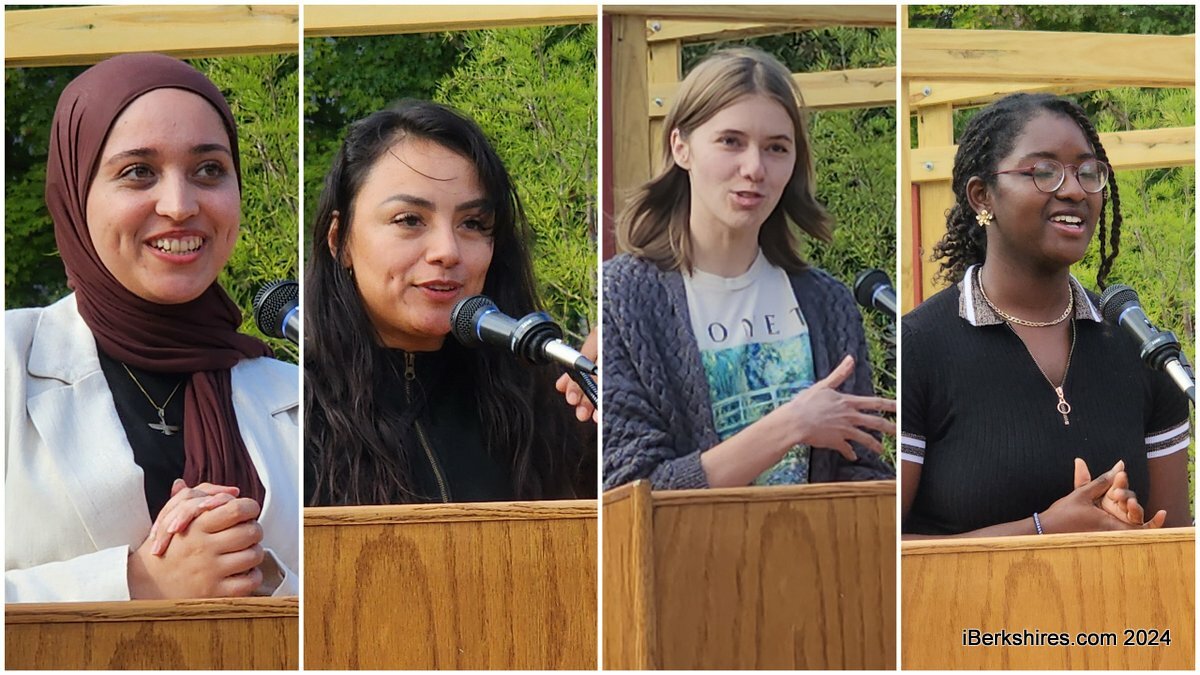
The project was largely women-led and constructed. Shadan Karimi of Bennington (Vt.) College, who participated through a cross enrollment program, said she was grateful for the experience.
"It generally gave me an amazing experience, not necessary regarding design, but also understanding how much design can shape a community," she said. "To be honest, it's one thing to learn in a classroom how to design, and it's another when you start putting your skills into practical and technical work. And I feel like this experience really helped me to understand how truly it is to be an architect."
Grace Espinoza, Forte's lead teaching assistant the last two years, said she was drawn to the details and dreamed about being stressed "because I couldn't make the geometry of the roof correct."
"Going from the design process to be, you know, modeling it three- dimensionally, and then actually building a scale model, and then it feels like it's gotten progressively more real, like it's stepped out of the realm of imagination and, you know, risen out of the ground towards us," she said.
Daisy Rosalez said when they were asked what they would building and design in a semester and she immediately knew what it should be — a space for students to go in time of need. She and some of her friends had struggled and she felt the college still isn't prepared to support the nontraditional and diverse student body.
"Things move slowly, but my hope is that this center symbolizes a need for integration, for the responsibility, for faculty, for administration, for the community, to take on that responsibility, not to just leave it to the 17, 18, 19, 20-year-olds to figure it out," she said.
Sam Samuel, a summer grant fellow for the college's Center for Environmental Studies, said it was crucial not just to learn how to design something but understand how it comes together.
"So it encompasses being outside in a very, very hot, hot sun in August and September. It required using drills and bolting for five hours, basically, and cutting wood," she said. "Maybe the floor is a little uneven, maybe we didn't cut one part right. Maybe we didn't do this and that because we had long days, because we were tired, because we were thirsty, because we were all this, but at the same time, regardless of those imperfections, there was a lot of grit and compassion and love and a lot of teamwork that came into building this pavilion."
Mandel joined Forte and the students in cutting the ribbon and invited the community into the building.
"You can build a beautiful, bespoke, sustainable structure like this one, but really, you could argue that a library carrell can also be a pluriverse, or a table in a dining hall, maybe, or a bench on the sidelines of a game," Mandel said. "So what you've done is to give us a model. You've demonstrated material consciousness, as it says in the project document. And I'm really delighted, therefore, to be among those who are celebrating this by cutting the ribbon today."
Tags: architecture , Williams College,