Geothermal Tests Warm Greylock School Building Panel
NORTH ADAMS, Mass. — The Greylock School site has produced positive results for the planned geothermal system for the new school.
Jesse Saylor of TSKP Studio, the school project designer, said the conductivity of the soils were comparable or better than three recent school completed in Connecticut.
"We were able to create a geothermal test well, and we were able to find the conductivity of the soils," he told the School Building Committee on Tuesday. "What matters is that you can see the conductivity at the Greylock site is actually pretty good."
The soil conductivity — it's ability to transfer heat — plays a role in how well a geothermal system works. Poor conductivity can mean more and deeper wells.
"So that was great to find out also the temperature was a little bit lower, which is what we're looking for," he continued. "It relates to the number of wells that you'll need, which relates to the cost of the system at schematic design."
The project has been estimated needing 70 wells, with possibility of up to 90 wells.
"I'm optimistic that that number will come down very close to the schematic design allowance of 70 wells, so we'll see how that plays out, but we're definitely in the ballpark, after all, with the geothermal system" said Saylor. "So I think that's generally good news"
Committee members have been concerned about using the technology, required by the state, and were pleased by the recent tests.
"Wonderful news, wonderful news," said Mayor Jennifer Macksey.
The geotechnical testing will also inform the schematics for the foundation as well as drainage. Other testing completed included acoustics and hazardous materials.
"They were able to go into the [closed] Greylock School and remove materials now, which we couldn't do back when students were there'" Saylor said. "And so we're developing our our cost estimate for the removal of those materials based on that kind of destructive investigation."
Working groups for the various elements of the project — facilities, education, security, etc. — have also held meetings since last month to go over an new issues.
Saylor said some things had to be adjusted "but in general, these meetings were good, and they were confirming the design, and we didn't have financial changes."
For example, he said prekindergarten layout was reviewed by teachers and adjusted to accommodate storage needs, the higher numbers of special needs children, and a furniture type changing table that will require modifications to the restrooms.
"These kinds of smaller details that we're receiving from the staff at this point, this was an easy adjustment to make," Saylor said, adding, "We're trying to get the biggest elements to have enough spatial clearance in this phase so that we know we have a workable plan, so that later in construction documents, when we put in all the details, that things will fit without having to change like roof height or something like a major change."
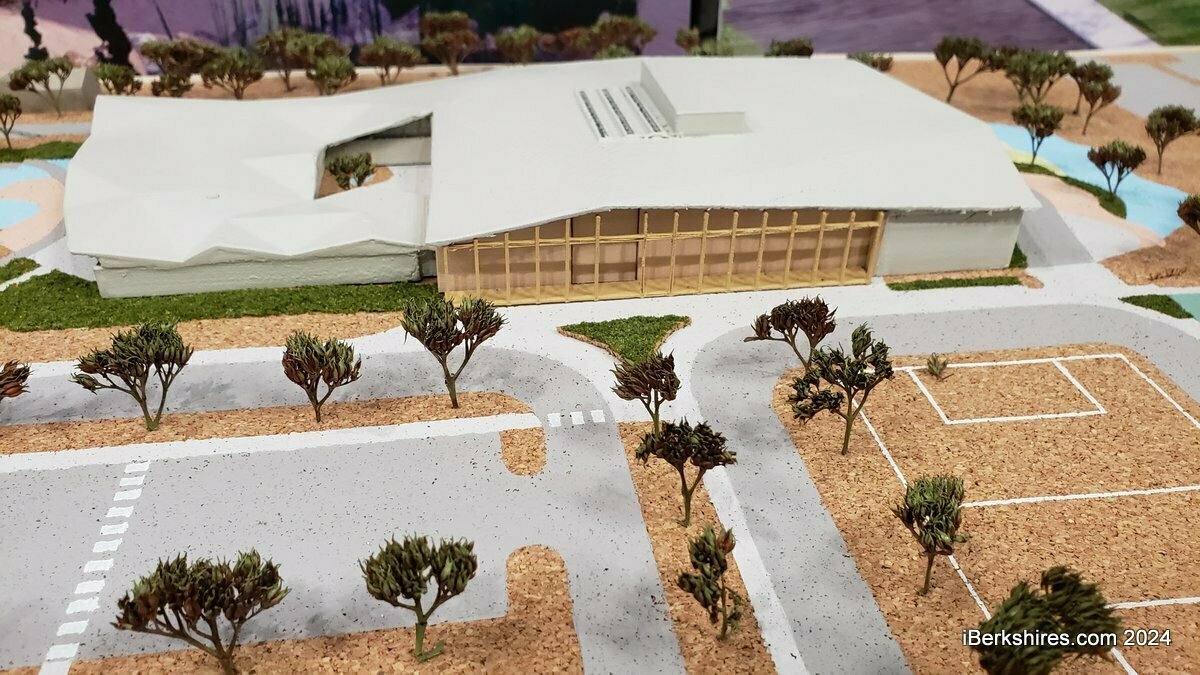
The mayor thought "there's more peaks and valleys than what I've seen before" on the roof line, expressing concerns about snow buildup.
Saylor didn't think the roof shapes had changed but said there have discussions with the roof manufacturer over snow loads.
"From a structural point of view, we're fine, and it's just making sure that we have the correct roof membrane there to to hold that snow until it melts off," he said.
Committee member Richard Alcombright asked if more consideration had been made for reusing some of the elements from the old Greylock School or signifying its past in the new school like the historic pictures at Colegrove Park Elementary.
While school doesn't have the historic cachet of century-old Colegrove Park, he said, "it still has a relatively significant historical reference to the time period. It was built postwar in part to accommodate the families that were moving into that neighborhood."
Saylor said a presentation was made to the Historical Commission with some ideas of saving some of the gym, cubbies, and the cross-corridor doors with their glass blocks.
"We're looking for those opportunities, and we're working them in to the project scope," he said, adding he could give an update at the next meeting. As for pictures, that could be done and there's also the opportunity to incorporate something into the mural that will be in the entrance lobby.
In other business, Tim Alix of owner's project manager Colliers International went over the timeline and the new budget spreadsheet. The next submission to Massachusetts School Building Authority is the design development plans for the end of January.
The committee's membership was also adjusted to fill vacancies by adding Administrative Officer Marya Kozik, after-school program coordinator Annie Pecor, early elementary teacher Jenna Gancarz, community member Paul Moriarty and Northern Berkshire Community Coalition representative Andrew Rosenburg.
Tags: geothermal, Greylock School Project,