North Adams Panel Recommends Sale of Sullivan School
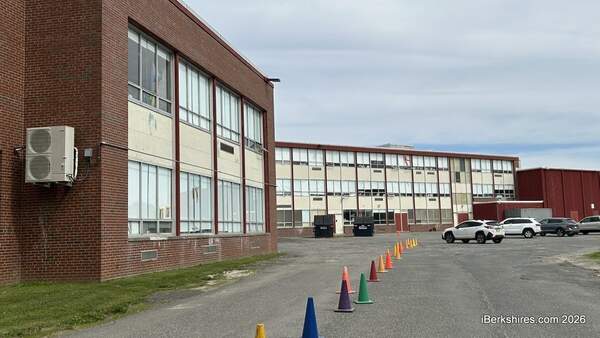
NORTH ADAMS, Mass. — The Finance Committee on Monday voted to recommend the sale of Sullivan School for $50,000 for use as housing.
"I think it's time to accept the reality of this space and put it back into taxation," said committee member Lisa Blackmer. "And although it will not happen immediately, it'll happen sooner than if we do nothing."
Massachusetts Museum of Contemporary Art Foundation plans to turn the long vacant school into affordable artists' housing and use classrooms on the lower level for music education in the summer. It will include short-term rental spaces and condominiums catering to artists, designers and production personnel along with single-family modular housing on the 12-acre property.
Mayor Jennifer Macksey had brought the purchase-and-sale agreement to the City Council two weeks ago hoping for an immediate vote so Mass MoCA could begin its due diligence but several councilors had questions and the matter was referred to Finance.
More than a dozen people attended the meeting including Councilors Peter Breen, Peter Oleskiewicz and Wayne Wilkinson.
Oleskiewicz said he had motioned the referral because he wasn't comfortable with the lack of concrete facts.
"This could be a very viable project for the city. It could have an economic impact. We're getting rid of surplus property," he said, but added, "when these projects have come forward before, we did have a visual. We had numbers. We had money numbers. Tonight, we really have nothing. ...
"We don't know the exact amount of units are coming. We have no actual numbers of the economic impact it will have on the city in the form of taxes."
The lack of detail had bothered Blackmer, who said she liked to have a visual representation, but was satisfied with an estimate of between of 20 to 40. This was half that of a prior proposal that the council rejected.
Blackmer also asked if, like that project, Mass MoCA would be asking for a tax exemption or abatement. Macksey said no and that it had not been part of discussions.
The proposal submitted by MoCA did have a sketch of where some single-family homes could be situated on the property. John Bedard, who owns property to the south of the school along Summit Avenue, objected that the plans show the museum will be cutting down trees and planting "campers" in the midst of the trail system.
Morgan Everett, MoCA's director of public initiatives and real estate, had responded earlier to a question about the modular homes, asserting they would not be mobile homes or on trailers but high-quality homes on foundations. He reiterated that to Bedard and noted that the drawing was a conceptual plan.
The museum has not done any testing or assessments at this point; these would not start until the purchase-and-sale contract was signed.
"We need time to begin to assess the property and understand how we can lay out the vision with residential unit to understand how many can fit. We haven't been able to do any tests on the property or any kind of meaningful evaluation," said Everett.
"Once we do that, we will be coming back, as the mayor said, through planning, through everything else, with more concrete plans, that we're going to be able to paint much more clear picture."
Bedard pressed Everett about the plans for the residencies, the forest, the hiking trails and range of aspects but committee Chair Ashley Shade cut off questioning.
"This is for the sales agreement. We don't have a visual plan. We won't have that until it goes through the Planning Board," she said. "Until we get to that point we don't know ... you won't get those answers tonight."
The proposal will have to go through the permitting and at least the Planning Board before any construction can take place. The purchase-and-sale agreement does not guarantee any construction would take place and it could take months for the sale to close and years before the project moves forward.
Committee member Andrew Fitch, who was ready to vote two weeks ago, said he was confident of the checks and balances and the vetting the project will go through.
It may take years to clear up an Article 97 issue, which Macksey said had been a large part of the eight-month delay in getting the sale offer to the council.
The amendment to the state Constitution requires legislative approval on a change of use for certain public land — in this case, Kemp Park.
Attorney Lee Smith of KP Law, participating remotely, said the act was passed after the school's driveway was laid over a slice of Kemp Park, a separate parcel. The mayor said the attorneys will be searching for another option and she will also be speaking to the delegation. There is also some commitment by the foundation on helping with legal fees.
Blackmer said she was disappointed the proposal wasn't "shopped" more — sent to housing developers to pique their interest.
"I would have liked to have seen this shopped out and several more housing people bringing in proposals," she said. "Having the hard task of deciding which one was the best, to rank them. But that's not what happened."
The mayor said prior respondents had been invited to resubmit but only Mass MoCA and the Rudd Foundation had responded.
"This offer was more attractive and would suit the neighborhood better," she said. "I think in the last three years, we've toured the property with close to 12 to 15 entities, whether it be a private school or different housing people. And again, the interest we received was I just ... ."
She described the school as an albatross that's attracted vandalism and unsavory crimes.
Tags: land sales, public buildings, Sullivan School,