Presentation on Benthic Macroinvertebrates to be Held at Williams College

Print Story | Email Story

WILLIAMSTOWN, Mass. — The Hoosic River Watershed Association, Williams College Center for Environmental Studies, and the Zilkha Center for the Environment will host a presentation titled "Turning Stones: a Presentation on Benthic Macroinvertebrates" with aquatic ecologist Declan McCabe on Tuesday, April 29, from 7:00 PM to 8:00 PM in Griffin Hall Room 3 at Williams College.

The program is free and open to the public, and families with children are welcome.

During the presentation, Declan McCabe will use a slide show and live aquatic macroinvertebrates to discuss several topics, including:

  • The properties of water that support life.
  • The differences in the characteristics and inhabitants of flowing and standing water ecosystems.
  • Adaptations of organisms that live on the water's surface.
  • Non-toxic methods for reducing mosquito populations near homes.
  • Low-cost ways to study macroinvertebrates locally.
  • Simple actions to protect watersheds and improve water quality.

Registration for this free program is required and can be completed by clicking the provided link.

Declan McCabe is an aquatic ecologist and a professor of biology at Saint Michael’s College. His book, Turning Stones: Discovering the Life of Water (2024, Down East Books), examines the biodiversity found in rivers. Mr. McCabe has experience communicating biological concepts to students and has also worked with high school audiences. His writings are featured in "Northern Woodlands" and "Connecticut Woodlands" magazines, as well as "The Outside Story" natural history series.
 

If you would like to contribute information on this article, contact us at info@iberkshires.com.

Mount Greylock School Committee Moving Superintendent Evaluation to Fall

By Stephen DravisiBerkshires Staff
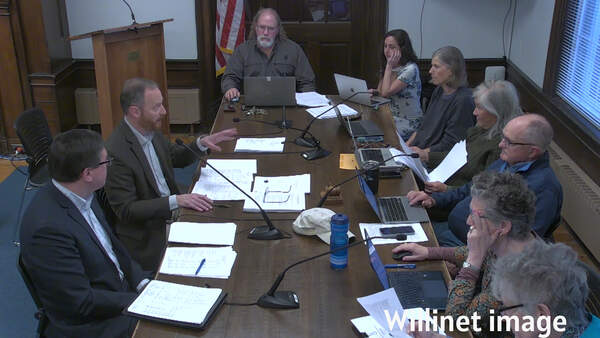
WILLIAMSTOWN, Mass.—The Mount Greylock Regional School Committee this month discussed moving its evaluation of the superintendent from the spring to the fall starting in 2027.
 
Chair Julia Bowen brought the idea to the table as part of her proposed calendar for the committee's work during the 2026-27 academic year, saying that a move to the autumn will allow the committee to factor data from the preceding year into its evaluation.
 
"To the extent that [Superintendent Joseph Bergeron's] goals are tied to school performance and, specifically, MCAS [scores], we don't get that or other end of school year summative information until the fall," Bowen said. "Many schools I've worked with and know of actually moved their school leader evaluation to the fall so they can take advantage of all the data that's actually available, rather than doing it in the June time frame.
 
"The other point on that is, as it is, we otherwise vote for Joe's goals in September/October and evaluate him in May, and that's not a year. If we can do it fall to fall, we actually get a full year of work from when we agree on the goals."
 
The committee's most experienced member, Carolyn Greene, raised a concern about breaking with the practice of completing the evaluation process in May and June.
 
"It feels natural to evaluate a superintendent at the close of a school year, not the beginning of a school year," Greene said. "We're still in it in May and June. We're still in it in terms of our mindsets. Sometimes we don't meet in July. We come back in August and do a ‘retreat.' We're now meant to hit the ground running with an evaluation in September based on the work of the previous school year. And the reason is we don't get all the data from the previous school year until September.
 
"The rhythm is off for me. But it could just be that I'm so used to the previous rhythm. I don't want to oppose it. I just do have some reservations about it."
 
View Full Story

More Williamstown Stories