MDAR Commissioner Visits Berkshire Dairy Farms

SHEFFIELD, Mass. — State Agricultural Commissioner Ashley Randle visited three dairy farms in Western Massachusetts on Monday to recognize National Dairy Month.
"It's an opportunity to learn about dairies, how they're diversifying ways that we can support them at the state level, and also to highlight the impacts of our investments at the state level," Randle said.
Randle visited three farms, Pine Island Farm and Maple Shade Farm in Sheffield, and Luther Belden Farm in Hatfield.
"So many of these farms have gone through the Agricultural Preservation Restriction Program and have protected their land in perpetuity," Randle said. "In the Berkshires, the land cost being so high, it's a way for dairies to remain viable and to protect the land that they're farming on. The dairy tax credit is another program that has really helped to sustain the overall viability of the dairy sector in Massachusetts, and so we heard from farms about the impacts of that program, and then our other grant programs that provide for infrastructure improvements on the farm, climate related, soil health related.
"It's been a great opportunity to hear directly from the farmers."
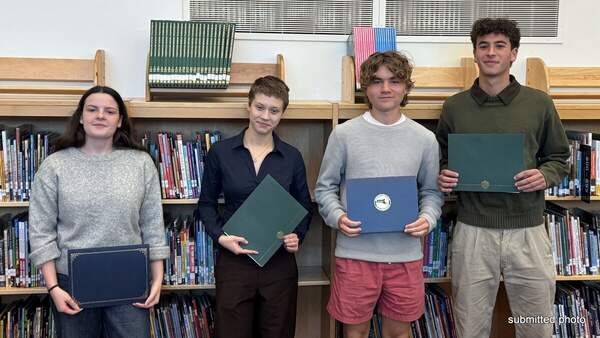
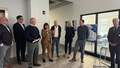
At Maple Shade Farm, also known as the Allen farm, father and son duo Morven and Ian Allen, hosted the Department of Agricultural Resources officials as well as some students as a part of the Massachusetts Agriculture Youth Council.
"For the students that came out today, it's an opportunity for them to see different styles of dairy farms. Certainly, from our first farm to this farm, there's different ways that they manage their land," said Randle. "The first farm had an anaerobic digester, which was unique for the youth to see, but it's also a way to position them to be more knowledgeable as they go through their careers and to help with their career exploration."
Randle said she loves to connect with dairy farmers as she grew up on a dairy farm, and it helps to know what her office can do to help them.
"I grew up on a fifth-generation dairy farm in Western Massachusetts, so for me to be able to connect with the dairy farmers is always really special. And every time we have an opportunity to visit the dairy farms and hear what's happening, it's a great opportunity for me to connect and learn about what challenges they're anticipating for the year ahead, how we can either adapt our programs or provide technical assistance to the farms, if it's weather related challenges or whatever it may be that they're experiencing," she said.
At Maple Shade Farm, the Allens showed everyone around and talked to the students about what they do.
Olivia Silvernail of Adams, a student at Hoosac Valley High School in Cheshire, is in the school's environmental science pathway. She loves animals and wildlife and said she is still figuring out what exactly she wants to do. Her tour of the farms are helping her to figure that out.
"Adams isn't a very big farming town, well it used to be but it's not really anymore, so I don't get to go around and see a lot of farms. This is a really good experience learning about how cows get milked, the processes for that and everything like that, and it's kind of just fun and I can get a smile on my face because I get to see cows," she said.
She also said she was thinking about doing more conservation but Monday's event has made her think she may want to go more into an agriculture program or if she could mix the two.
Natalie Minster, a student from Bristol County Agricultural High School, would like to work in the dairy industry. She said it was great to see and learn about the different ways farmers work.
"It's cool to see different ways that people arrange their farms, like these people have their pens for their fresh cows and then they sort them based on production and just the mentality that different farmers have for how they arrange their farm making things economical and just being able to get different perspectives is really cool and interesting," she said.
The Allens have owned the farm for 20 years, starting out with only two cows.
The farm now has about 500 milking cows, and about 1,200 animals in total. They grow their own soy beans, corn, and hay. The farm is a part of the Agricultural Preservation Restriction program and has received an APR Improvement Program of $75,000 in 2011 to construct a feed and equipment storage building, a Climate Smart Agricultural program of $50,000 for manure management, and $3,209 through the Energy Grant Program for a variable speed pump to become more energy efficient.
Ian Allen says he feels grateful to be a farmer in Massachusetts where you can get so much help.
"It's really nice. It shows support, which is great. It's challenging times right now to be a farmer, and I think that it shows support. And we're always super, super excited to host people and talk to them about what we're doing," he said. "I think if we didn't have as much support as we do in Massachusetts, I think we'd be very, very hard pressed to have any farms left in Massachusetts, whether they be vegetable farms, dairy farms, whatever kind of farms they are, our climate ...
"I mean, everything is kind of stacked against us, so the support from the people that live in Massachusetts and also the legislation, so like, Ashley, and it's fantastic. It's the only reason why we're still here."
Ian said farmers are facing challenges, one of them being the climate change as well as tariffs on goods.
"The trade agreements that right now are kind of getting talked about and getting happening and not happening are really negatively affecting us," he said. "So just an example, Mexico is a huge importer of dairy products, and they're one of our largest and then Canada is a huge exporter to the United States of grain, so a lot of the farms in the Northeast, especially dairy farms, the grain we feed is from Canada.
"So the negative impacts we've had on that side and the negative impacts we've had on the other side, south have both kind of correlated together, and it has made it very difficult financially for us."
The price of Canadian grain has jumped up about 15 percent, Ian said, so one of their future goals is to be able to produce their own. They are also planning to retrofit one of their barns to add 100 more cows.
Randle gave Ian and Morven Allen a governor's proclamation recognizing June as dairy month.
Tags: dairy, state officials,