Pittsfield School Committee OKs Middle Grade Restructuring
PITTSFIELD, Mass. — The School Committee has decided that now is the time to move forward with restructuring the city's middle schools.
They made a historic vote on Wednesday night to create an upper elementary school for Grades 5-6 and a junior high school for Grades 7-8 by the 2026-2027 academic year. A stipulation was added that if goals in the Middle School Restructuring Committee's timeline are not met by the December meeting, it will be delayed one year.
"I think for equity purposes, getting all of the kids in the city of the same grades together is hugely important. I am not a fan of the argument that 'I bought my house on this side of the city because I want my kids to go to this school,' because to me, that's inherently inequitable," School Committee member Diana Belair said.
"All of the schools in the city should be providing all of our kids with the same opportunities. You shouldn't have a different education experience because you bought your house in a certain part of the city so putting all of our kids together in the same group ensures that we're giving all of our fifth and sixth graders the same opportunities, and all of our seventh and eighth graders the same opportunities."
A member of the restructuring committee and a parent of a current middle schooler and a soon-to-be middle schooler in the Pittsfield Public Schools, she said this will be a "source of pride for our city as a whole."
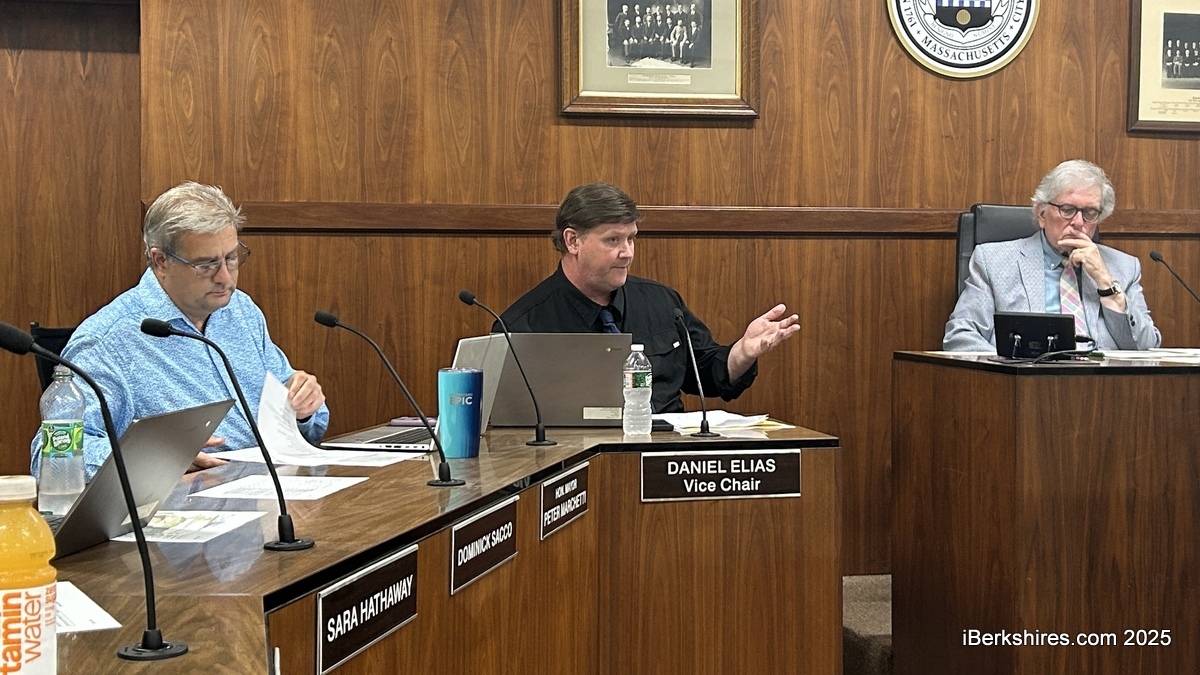
Vice Chair Daniel Elias explained, "This is never popular," but cited pressing issues such as the significant loss in middle school-aged students to districting out and pointed out that a 20-plus person committee came to the same conclusion that this is a necessary move.
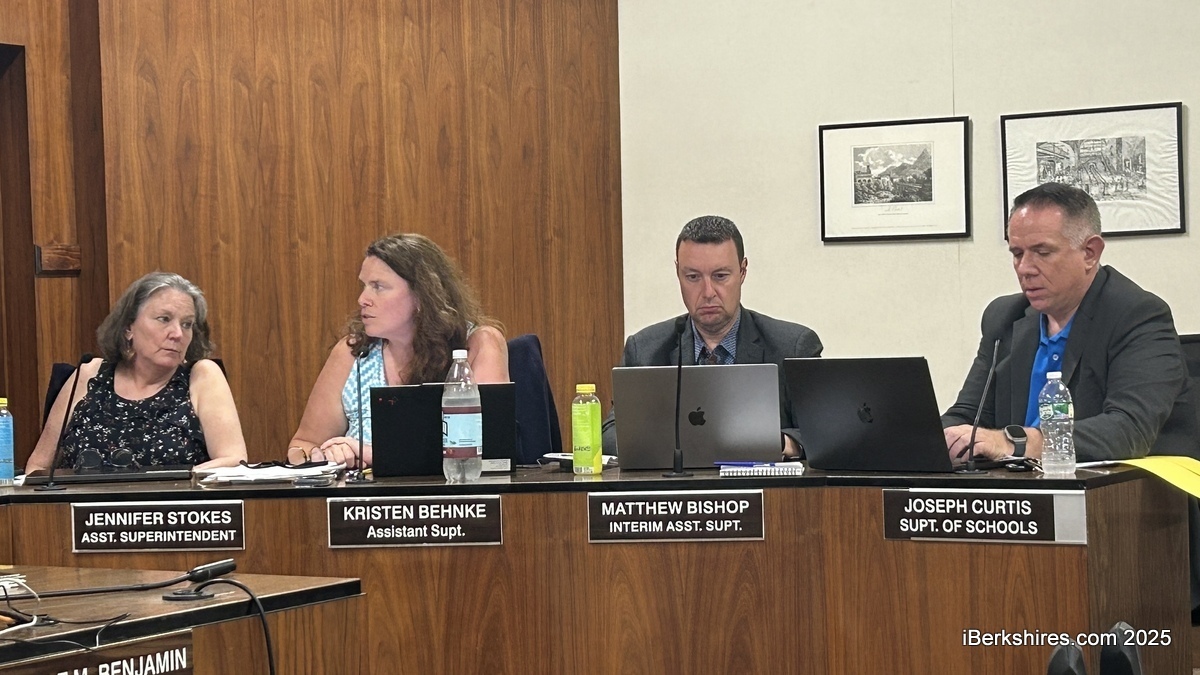
"Redistricting, realignment. It's never popular, and it's seldom ever done because no superintendent will ever take it on because they know the ramifications of that action. This superintendent did," he said about Superintendent Joseph Curtis, who was at his last meeting before stepping down to retire.
"… We must do something. Doing the same isn't really, in my opinion, doing something. We already had a one-year delay. We're going to have an interim superintendent, we will have a vast new school committee, and then we're going to have yet another new superintendent. I'm afraid that this will get lost along the way, and if we don't start now, if we don't have a 'yes' vote tonight, I feel this will die off indefinitely."
School Committee member William Garrity, who graduated from Taconic High School in 2022, highlighted the benefits of grouping similar-aged students. He recalled the significant difference between sixth and eighth grade and the increased student conflicts amongst eighth graders.
"I just think in the end, this is the direction we need to move in, even though it's the hard direction," he said.
"… We need to do what's best for our students, and I think this is what's best for our students."
Chair William Cameron identified the racial, ethnic, and economic class stratification of the district's middle schools as a "major" problem.
"This problem, which I'm sure many of those who spoke against the reorganization committee's recommendations will acknowledge as being a problem, cannot be deplored only in the abstract," he said.
"Action needs to be taken so that all Pittsfield students benefit to the fullest from all the opportunities that our district can offer."
He couldn't justify not moving forward and pledged, "If we run into obstacles, then we'll deal with the obstacles."
While there is positivity around the restructuring, there are also unknowns that drive opposition. The public commenters asked the committee to step on the brakes while the district adjusts to new leadership.
"I do think that you need to slow down with it. I still haven't seen the numbers on the buses for what it's going to cost the city. You need more buses, you need more drivers. What's that cost?" former councilor Karen Kalinowsky asked.
Transportation was also a concern of Mayor Peter Marchetti, who asked if next year's budget ask would include increases for additional buses and drivers.
"We do have additional buses ready that are not utilized, that are used in kind of a spare rotation. We do have additional drivers and monitors in the budget already that we always can't fill, so we wouldn't anticipate that being an option to come forth to the School Committee and ask for, let's say, five additional buses or six additional drivers," Curtis said.
"Because we believe right now, with what we budgeted, we would be making a decision whether it's a two-tier transportation system, so right now, elementary, middle, and high school students are transported together, or would it need a three-tier system? A three-tier system is not desirable."
He reported that the transportation plan for this fall has not been developed, per usual.
"If a parent were to ask me right now, 'What time will my child be picked up on the first day of school?' I could not answer them, and nobody could until roughly around August 20," Curtis explained.
"A new transportation and routing plan is developed and adjusted every year, and that's part of the process. Now, we obviously would not wait. That's why they'd be running sandbox scenarios to see if there's any financial implications."
There was discussion about the amendment to include a checkpoint where action items need to be completed to move forward. Garrity supports a formal check-in at the December meeting, and what ultimately passed was a rewording of Marchetti's motion to delay the project a year if milestones aren't met, which was made by Elias.
"We're either ready to move forward or not, and right now, no one can answer my transportation questions, no one can answer that cost, and there's only one person here that's going to get the 'Mayor, we need to increase the School Department budget by $8 million to solve this problem,' and he'll have the ability to say, 'You're not getting it,' and he can kill the whole restructure all at once," Marchetti said.
"So I don't want to be that person. I want to make sure that we meet the benchmarks. I want to make sure that we're following through on what we're following through on."
Garrity wanted to make sure that the can isn't kicked down the road and thought the automatic extension might be "more trouble than it's worth."
"I feel like, if there's an issue or not, if we're not meeting benchmarks, I think we would all take the responsibility of pushing it off a year," he said. "I don't feel like we need to make it automatic."
Belair has faith in the school official's ability to follow the timeline.
"And if we are not following our timeline, it's not killing it completely. It's giving us one more year," she said.
"If this is so important, and we're hiring an outside consultant, and this is the main task of this outside consultant that we're paying money for, I expect our deadlines to be met, so I don't have a problem with extending it for one full year if we're not doing our job."
Tags: Pittsfield Public Schools, school restructuring,