
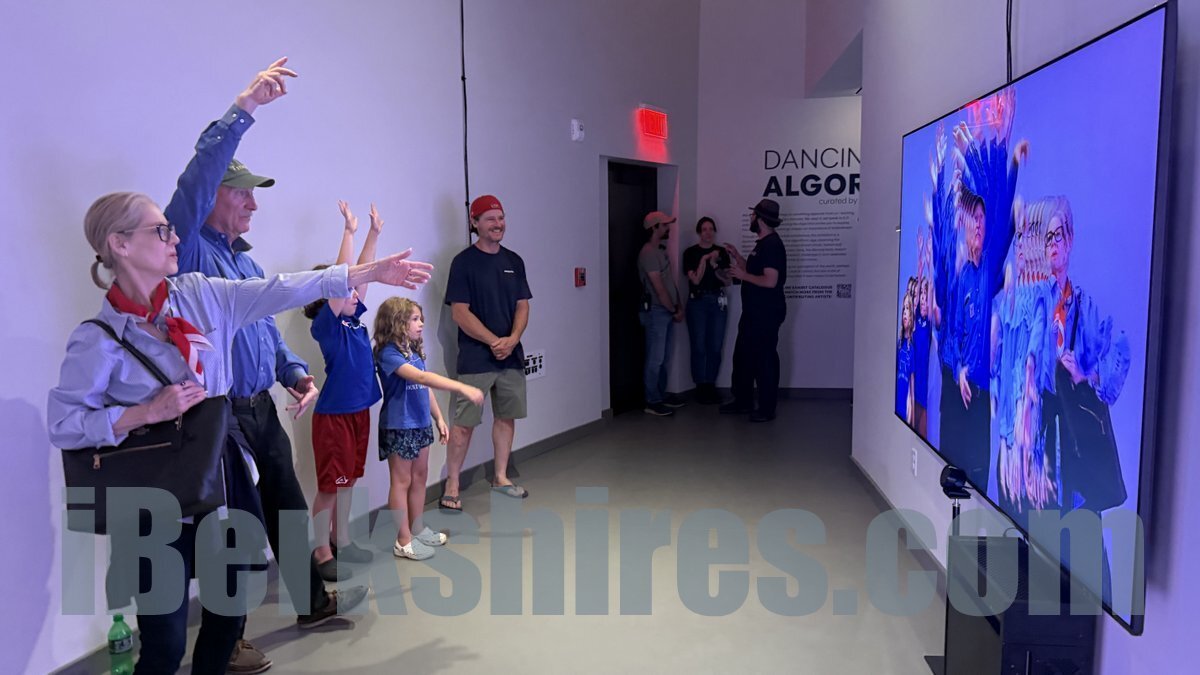
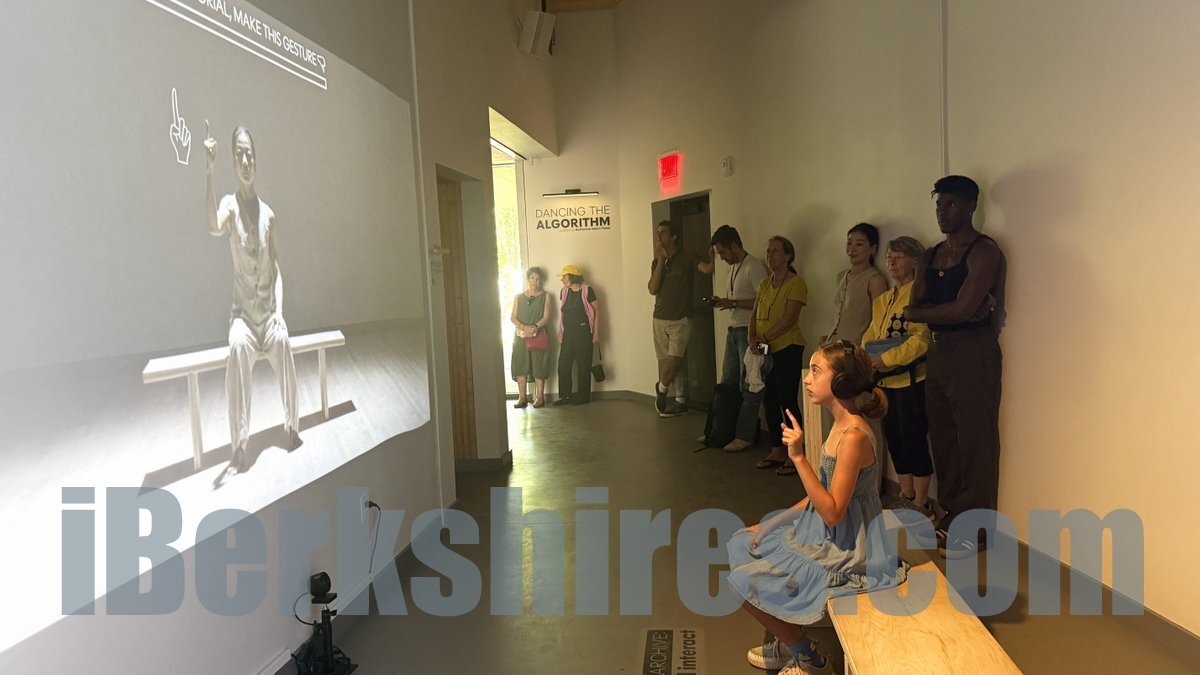
Executive Director Pamela Tatge, left, says Jacob's Pillow is about the 'past, present, and future of dance.' See more photos here.
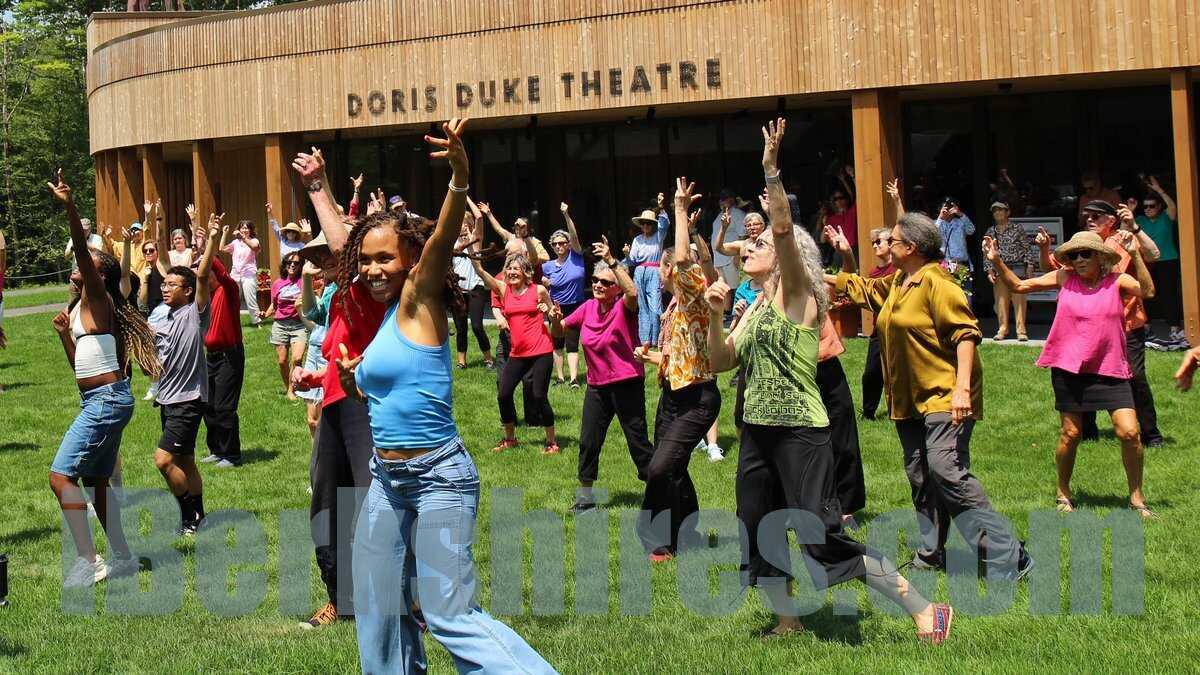
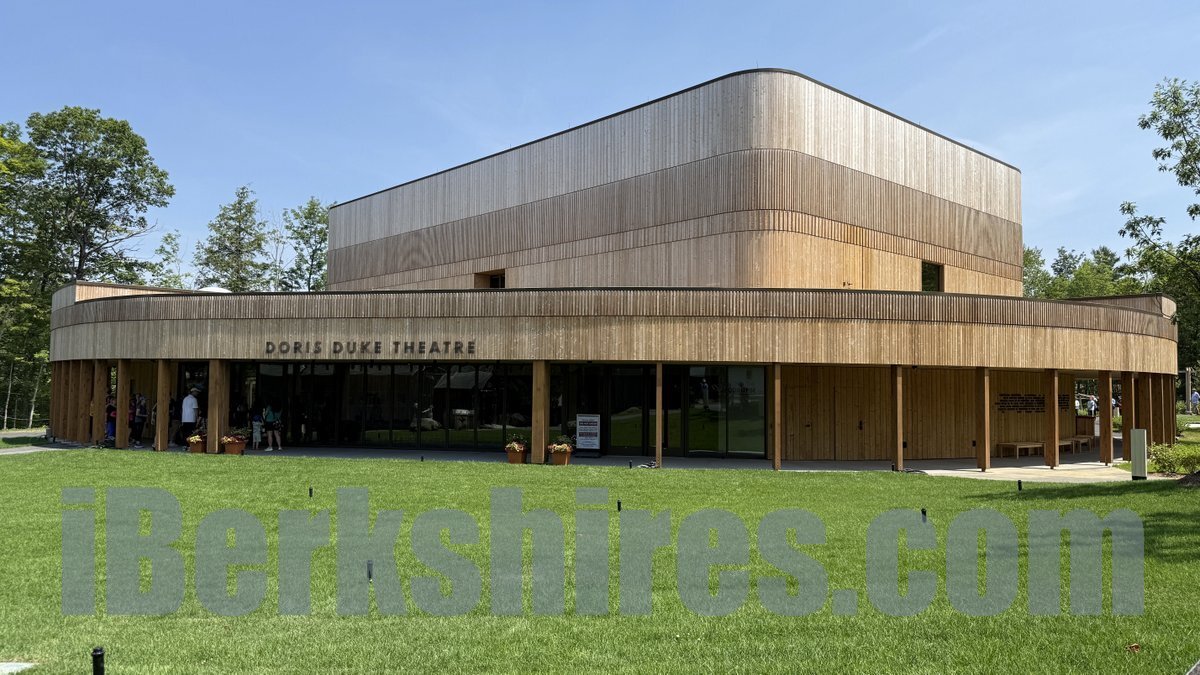
BECKET, Mass. — More than 100 community members of all ages celebrated the opening of Jacob's Pillow's Doris Duke Theatre with a community pop-up dance and open house on Sunday.
The event precedes the theater's ribbon-cutting ceremony, which is scheduled to take place on Wednesday.
The day was filled with smiles, laughter, tears, art unveilings, and, of course, lots of dancing.
Jacob's Pillow Dance Festival at 93 years is the longest-running dance festival in the nation, and the only national historic landmark dedicated to dance, said Pamela Tatge, executive and artistic director.
"There are very few places in our nation that care about, revere, preserve, and celebrate dance like Jacob's Pillow. This theater is all about dance," she said.
"It's dance in the future. It's dance in a way that will not only include artists that have made their artistic homes at Jacob's Pillow, but artists of the future. We are about the past, present, and future of dance at Jacob's Pillow."
Since the 1990s, the dance venue has had three stages: the Ted Shawn Theatre, the first theater built for dance in America; the outdoor stage, which has the backdrop of the Berkshire Hills; and Doris Duke Theatre.
The Duke Theatre, named for the philanthropist and arts supporter, was the smaller of the two performance venues at the dance festival. The Ted Shawn Theatre, named for the festival's founder, has more than 600 seats.
"Doris Duke Theatre was an intimate space, a flexible space, where artists who experiment, who are emerging, have the opportunity to present their best work," Tatge said.
The theater opened in 1990 and was Jacob's Pillow's first large studio. It was used for developing new work in class, rehearsals, and performances.
That was until 2020, when it burned down in a fire amid the pandemic. Despite that, the dance community banded together, rising above the ashes, and brought the theater back to life.
"The new Doris Duke Theatre will not only have all of the intimacy and warmth and character of the original Duke, supporting emerging artists, artists who want to have a visceral connection to their audience. We will also have as a hallmark of our work, dance that integrates with technology," Tatge said.
"That is work that gives an audience an experience that they wouldn't otherwise have in person, and also contributes to our online presence, bringing dance to audiences around the world."
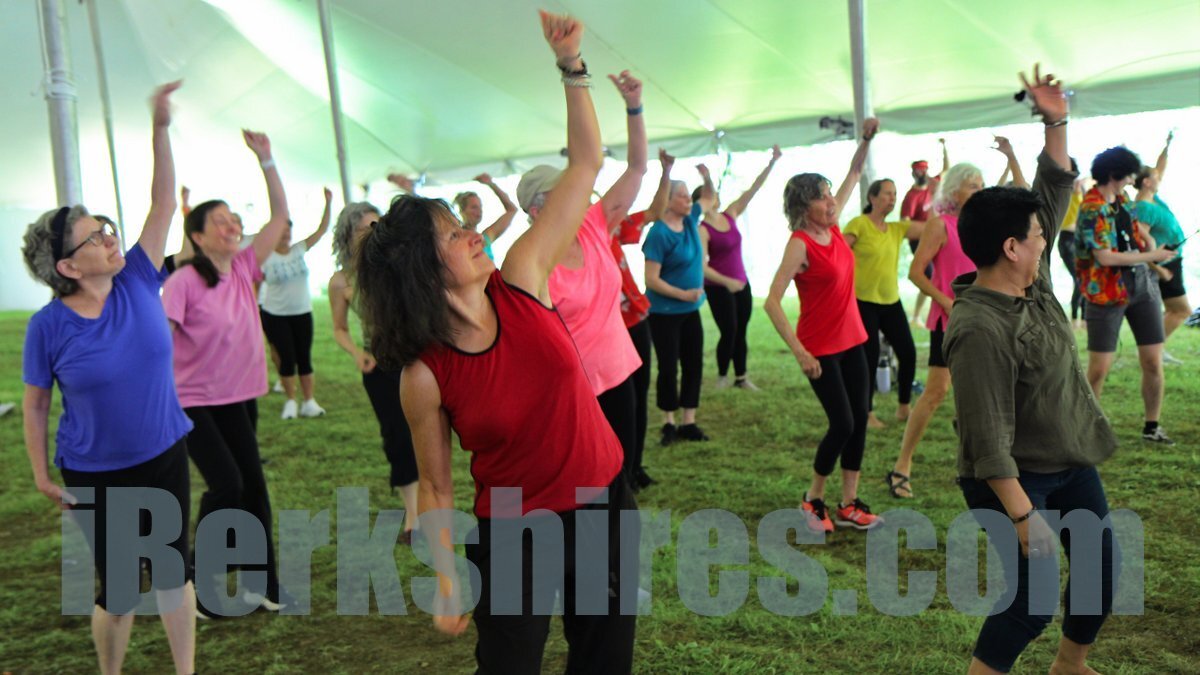
In preparation for the pop-up dance, the Pillow sent a request out for volunteers who had learned a dance commissioned for the event by Broadway and five-time Tony-nominated choreographer Camille A. Brown.
"What dance does is it builds community. When we move together, we experience the kind of feeling that we wish we had all the time in our world," Tatge said.
Following tours of the new space, the volunteers rehearsed with Camille A. Brown dancers Brianna Dawkins and Eboni Edwards.
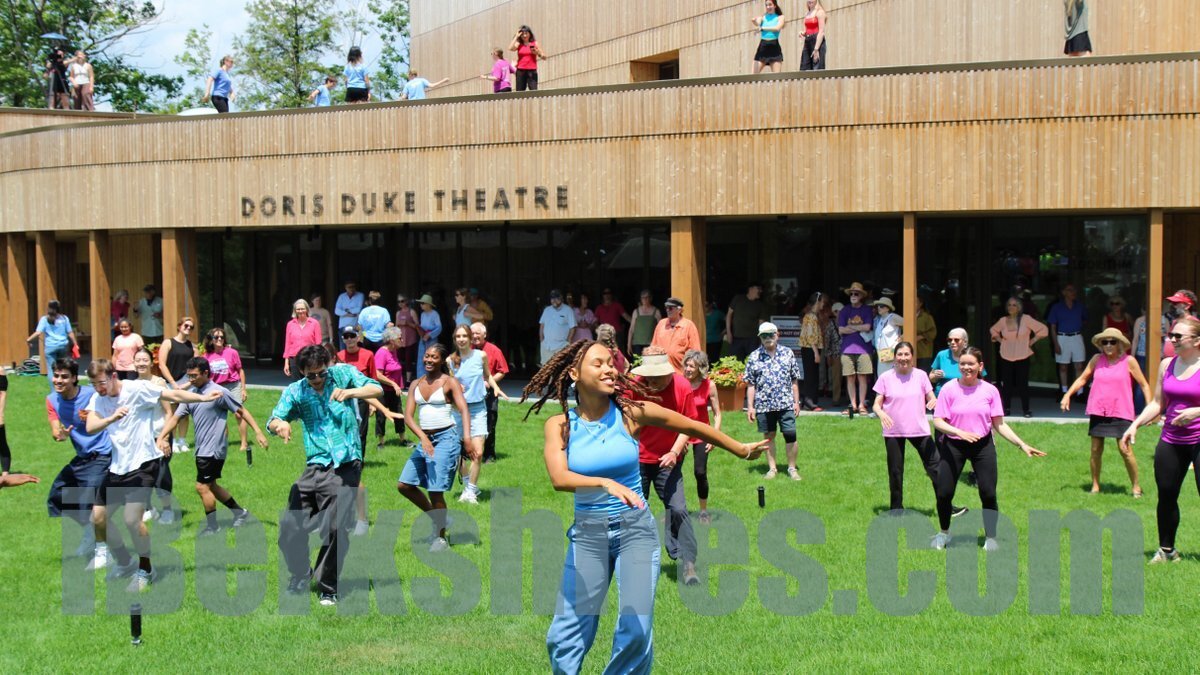
Following lunch, the fun and joyful dance was performed in front of the new theater, on its roof, and on the veranda.
"The idea being let's birth this building together and put our good energy and all of the future that awaits us," Tatge said.
If you would like to contribute information on this article, contact us at info@iberkshires.com.
Your Comments
iBerkshires.com welcomes critical, respectful dialogue. Name-calling, personal attacks, libel, slander or foul language is not allowed. All comments are reviewed before posting and will be deleted or edited as necessary.
No Comments
First Eagle Mill Units in Lee to Open in Springtime
By Brittany PolitoiBerkshires Staff
Eagle Mills developer Jeffrey Cohen updates the Lee Chamber of Commerce as the project's phases, and the amount of heavy lifting to get it to this point.
LEE, Mass. — More than 50 affordable units are expected to come online at the Eagle Mill this spring.
This is the first of several planned development phases at the former paper mill that dates back to the early 1800s, totaling more than 200 units. The Lee Chamber of Commerce hosted an information session on the project during its Business Breakfast last Wednesday.
"We are here because we have a really big project that's happened for a very long time here in Lee, that, for myself, has provided a real sense of hope, and has has really defined this community as one of the few in the Berkshires that's really looking forward, as opposed to just being sort of stuck in the past," Chamber member Erik Williams said.
The estimated $60 million development broke ground in 2021 after nearly a decade of planning and permitting. Hundreds of workers once filed into the 8-acre complex, producing up to 165 tons of paper a week. The last mill on the property closed in 2008.
Hearthway is accepting applications for 56 affordable apartments called "The Lofts at Eagle Mill" with expected occupancy in May. The housing nonprofit was also approved for 45 additional units of new construction on the site.
Jeffrey Cohen of Eagle Mill Redevelopment LLC said the project dates back to 2012, when a purchase contract was signed for the West Center Street property. The developers didn't have to close on the property until renovation plans were approved in 2017, and the mill was sold for $700,000.
It seemed like a great deal for the structure and eight acres on the Housatonic River, Cohen explained, but he wasn't aware of the complex pre-development costs, state, and local approvals it would entail. Seven individually owned homes adjacent to the property were also acquired and demolished for parking and site access.
"If I knew today what I knew then, I'm not sure we'd be sitting here," he said, joining the breakfast remotely over Zoom.
Cohen praised the town's government, explaining that the redesigns and critiques "Could not have been done in a friendlier way, in a more helpful way," and the two Massachusetts governors serving during the project's tenure. The Eagle Mill redevelopment is supported by state and federal grants, as well as low-income housing tax credits.
This is the first of several planned development phases at the former paper mill that dates back to the early 1800s, totaling more than 200 units. click for more
Representatives from those towns were presented with plaques and proclamations, and shared stories of their communities' participation in both the Knox Trail and the Revolution. click for more