Clark Art Lecture on Reading Coastlines
Print Story | Email Story
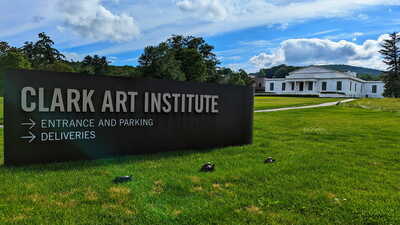
WILLIAMSTOWN, Mass. — On Tuesday, Nov. 18 at 5:30 pm, the Clark Art Institute's Research and Academic Program hosts a talk by Leslie Geddes (Tulane University / Clark Fellow) that examines how early modern cartographers taught others to see coastlines and read their contours in maps. 
 
The talk takes place in the Manton Research Center auditorium.
 
This talk makes Italian hydrography distinct by focusing on how early modern printed atlases shed light on the vast conceptual gulf between articulating known terrain versus cartographic imaginings of remote seas. More than collections of maps, atlases such as Robert Dudley's Arcano del Mare (“The Secrets of the Sea”) (Florence, 1646–47) incorporate volvelles and other paper instruments built into the book for the reader's experimentation and delectation. As manipulable objects, atlases served as a training ground for readers to learn principles of navigation and to read maps effectively. Atlases set the parameters for apprehending cartographic knowledge. The implications are nothing short of the limits of firsthand knowledge of the aquatic environment and its cartographic representation.
 
Leslie Geddes is the Jessie J. Poesch Assistant Professor of Art History at Tulane University. She is the author of "Watermarks: Leonardo da Vinci and the Mastery of Nature" (Princeton University Press, 2020). Her research focuses on how early modern artists studied and depicted the natural landscape. At the Clark, she will work on her second book, which examines how printed maritime atlases confronted the struggle to represent the ineffable. 
 
Free. Accessible seats available; for information, call 413 458 0524. A 5 pm reception in the Manton Research Center reading room precedes the event.

Tags: Clark Art,   

If you would like to contribute information on this article, contact us at info@iberkshires.com.

Williamstown Planners Finalizing Draft of New Subdivision Bylaw

By Stephen DravisiBerkshires Staff
WILLIAMSTOWN, Mass. — The Planning Board last week gave its final direction to the consultants hired to help the panel rewrite the town's subdivision control bylaw.
 
The town's contract with Northampton's Dodson and Flinker Landscape Architecture and Planning, which is funded by a state grant, expires on June 30, and the consultant is set to deliver a draft document in early July.
 
Last Tuesday, the board reviewed the latest progress from the consultant and considered some of the points discussed at its final, lengthy, video conference with Dodson and Flinker and its team on May 26.
 
Ultimately, plans to take the final draft and make any last decisions before presenting it to the town for a public hearing and adoption by the Planning Board later this year. Its goal has been to make the subdivision bylaw easier to navigate and more contemporary in order to encourage economic development.
 
At Tuesday's regular monthly meeting, Planning Board Chair Kenneth Kuttner told his colleagues he felt a lot of the issues were resolved at the May 26 session, including the development of a regulatory regime that ties infrastructure requirements to the size of a proposed development.
 
He also said he thought Dodson and Flinker's proposed language properly distinguishes between proposed developments in the town's core and those proposed in its rural residential districts.
 
"The thing they suggested, which I thought was interesting, was the 'payment in lieu of' for things like sidewalks in the rural area," Kuttner said in a meeting telecast on the town's community access television station, WilliNet. "So we could keep the sidewalk in the subdivision areas but require in the rural areas, payment in lieu of, which, as he said, would put the urban and rural development on an equal footing in terms of development cost.
 
View Full Story

More Williamstown Stories