Planning Board Continues Berkshire Concrete Hearing
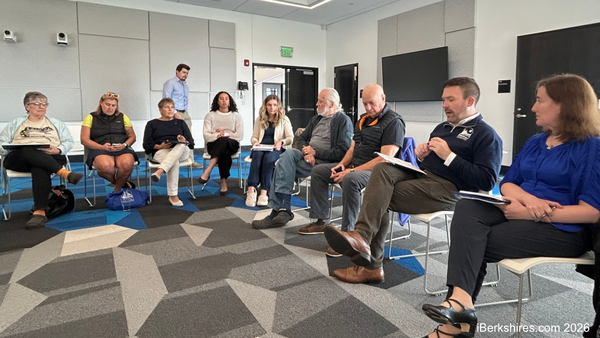
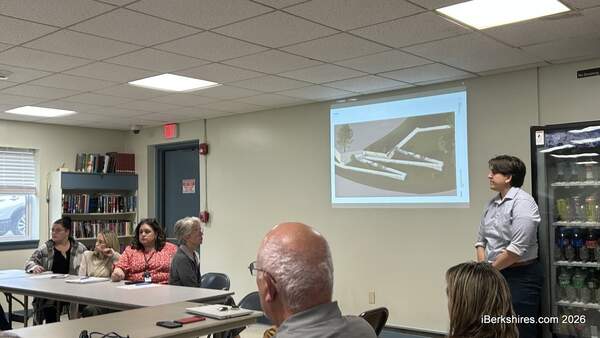
DALTON, Mass. — The Planning Board again voted to continue the public hearing for Berkshire Concrete's excavation permit despite opposition from neighbors.
The hearing was continued to Jan. 21 with the stipulation that Berkshire Concrete, a subsidiary of Petricca Industries, have all its documents submitted to the town 10 business days prior to the next meeting.
"We have two roads to take — one helps keep us with the ability to put more useful and adamant conditions on the permit, and the other one gives us a year and eight months to figure out what we would like to add to the information," Planning Board Vice Chair Robert Collins said.
Following the board's last request in November for more updated, accurate, and clear plans, Berkshire Concrete requested a continuance of the public hearing to allow them time to gather that information.
"In response to questions and comments from the Planning Board [at the November meeting Berkshire Concrete] has engaged Foresite Land Services to provide, among other items, an updated plan of land. In addition, my office has begun preparing information that is responsive to questions and comments presented [during the November meeting," Berkshire Concrete's attorney, Dennis Egan Jr. of Cohen Kinne Valicenti & Cook LLP, wrote to the board.
"Based on the lead time required by Foresite to prepare the updated plan of land approximately six weeks) [Berkshire Concrete] will not be prepared to present the requested information to the Planning Board at its hearing scheduled for Wednesday, December 17, 2025."
Berkshire Concrete applied for a special permit to renew its current permit and continue excavation on the unauthorized dig site on parcel 105-16, which was partially mitigated, and continue the work up toward Renee Drive, on parcels 101-25 and 105-12.
It was explained to attendees that based on the current state law denying the continuance would allow Berkshire Concrete to maintain its operations under the existing permit until 2027. This permit does not include the contentious 105-16 parcel.
By approving the continuation, the board has the opportunity to impose additional or revised conditions on the operation, planners said.
Several residents requested that the permit be denied, saying Berkshire Concrete had repeatedly failed to submit all required application materials, which they believe should have been done from the beginning.
"I would say ultimately, tonight, you deny the permit, you control the narrative they really want to excavate, they really do on 105-16 and go around the lake to the north," Clean Air Coalition member David Pugh said.
"For all the negative issues we've raised, they need to get their act together. They really need to put forth some work and submit a proper application to the town."
During the November meeting, Planning Board members expressed confusion around Berkshire Concrete's plans because of inconsistencies in the documentation and its vagueness.
They also reviewed the recommendations made by the town's consultant Berkshire Environmental Consultants, which determined the dust mitigation plan as insufficient.
Attendees also emphasized what they have said at several meetings — that the dust is a nuisance, and believed to be, by residents, an environmental concern and health risk.
"Planning board members have a chance to make history. History here! In a perfect world, you wouldn't be faced with this issue of sand pollution," resident Ronald Griffin said.
"It would be heroic if this board stood up to Berkshire Concrete and said, ‘No more. We care more about our town residents and their health — that's our priority.'"
Residents also claimed that Berkshire Concrete has not been neighborly, like they claim to strive for. Rather, residents said they have continuously "disrespected" the town and the time invested by various boards, citing the lack of complete remediation of the unauthorized digsite.
Several community members attended multiple meetings in an effort to find a resolution and as a result, the Zoning Board of Appeals determined that Berkshire Concrete is in violation of town bylaws. The board ordered Berkshire Concrete to fully remediate the site. Berkshire Concrete has appealed this determination.
There will be a Zoning Board of Appeals meeting on Jan. 6 to determine if Berkshire Concrete needs to reclaim the rest of parcel 105-16.
Tags: berkshire concrete, dust, debris, excavation, Planning Board, special permit,