Anthony Birthplace's Executive Director Leaving
ADAMS, Mass. — The leadership at the Susan B. Anthony Birthplace Museum is changing with the departure of Executive Director James Capuzzi.
Capuzzi, hired in fall 2023, will be leaving at the end of the year to pursue a new opportunity closer to family in New Orleans. Museum officials say he leaves behind an impressive record of stability and growth.
"We are deeply grateful for James' dedicated leadership over the past two years, said Carol Crossed, museum founder and president of the board of directors. "During this time the museum has experienced tremendous growth in community engagement, grant funding, and educational programming."
According to Capuzzi, the decision to leave was not an easy one.
"It is hard to leave a role and a community that has been so welcoming to me and my family," he said. "I am proud of our impact locally and regionally and know that the museum board will continue its commitments to Adams and Berkshire County."
Thanks to Capuzzi's leadership and vision and through support from the Massachusetts Cultural Council and the Berkshire Taconic Community Foundation, museum's educational programs will reach more students.
"With these educational grants, we will be able to reach five schools and over 300 students in 2026," said Muriel Dyas, a longtime museum volunteer, historical re-enactor, and now a board member. "The Berkshire Taconic Community Foundation has been an invaluable partner, providing funding for educational outreach programs like 'Your Neighbor, Susan B. Anthony,' resources for institutional strategic planning, and support for our special exhibits."
The museum board credits Capuzzi with solid planning and direction, demonstrated by the exhibits and programs he has developed. The museum is preparing to launch on May 22, 2026, a special exhibit, "The Rejected Stone: Justice & the American Founding," a collaborative effort with the Adams Historical Society that will explore Anthony's connection to Adams and the abolitionist themes of Moncure Daniel Conway, an American abolitionist minister, radical writer, and a prominent figure in the antebellum South. The exhibit is funded through a grant from William J. & Margery S. Barrett Fund for Adams, Cheshire & Savoy.
"With reliable funding sources developed by James, the museum can look towards planning events months and even years into the future," Crossed said. "His outreach is nearly unparalleled in the Berkshires."
Capuzzi has also overseen growth in the museum's internship program. Two Harvard College student interns will work at the museum this January, and a University of Massachusets at Amherst student will work in the spring.
"I am most proud of the impact our internship program has on students locally and nationally. Our student interns are exposed to all aspects of museum operations and perspectives and leave with a better understanding of their own skillset and interest areas," Capuzzi said.
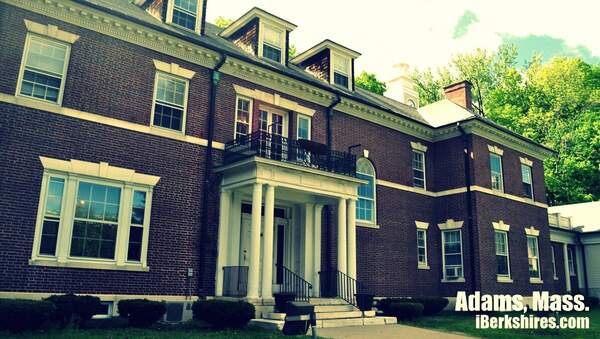
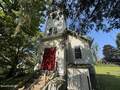
He was hired after a three-year search for an executive director for the small birthplace museum, which opened in 2009. The house, built a couple years before Anthony was born in 1820, had been a private home for many years. It was restored to reflect how it would have looked when the town's most famous daughter lived there as a child.
In New Orleans, near where his wife's family resides, Capuzzi will become donor engagement manager for Catholic Charities. The Birthplace Museum board of directors will look to fill his position in the coming months. A job posting will be available on its website, www.susanbanthonybirthplace.com, and on local and regional job boards in the coming weeks.
Tags: executive director, museum, Susan B. Anthony,