Lanesborough Farm Appealing Short-Term Rental Prohibition
LANESBOROUGH, Mass. — Are short-term rentals permitted in Lanesborough?
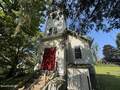
That question has sparked debate following a cease-and-desist sent to Second Drop Farm, the new keepers of the historic Bradley Farm, for using its farmhouse as on Airbnb.
The farm's owners have appealed to the Zoning Board of Appeals, which is holding a public hearing at 6 p.m. on Wednesday at Town Hall.
The Airbnb is an important part of the farm's services, especially in the winter season, because it helps keep the farm sustainable, said Samantha Phillips, one of the farm's owners.
"We're not growing anything other than raising chickens for eggs in the winter. It's a vital part of our income to have the Airbnbs here on the farm," she said.
Prior to opening the short-term rental, Phillips said they complied with several safety regulations by having the fire inspector visit the property and installing a "state-of-the-art fire/security system."
They also made sure their operation was listed on the state website for short-term rentals to ensure it is properly taxed.
At the June 2024 town meeting, voters approved new taxes and fees on short-term rentals, which are stays of less than 30 days. These include:
- A local excise tax of up to 6 percent on total rent for each stay at bed and breakfasts, hotel lodging houses, short-term rentals, or motels
- A 3 percent impact fee on "professionally managed" short-term rentals
- A 3 percent impact fee on short-term rentals in two- or three-family dwellings
"That's like, the huge issue right now is that, how can a town take money for a business that they're stating is not allowed," Phillips questioned.
Discussions surrounding short-term rentals were held during public meetings leading up to the annual town meeting, including the Select Board and Public Safety Building Committee.
In August 2023, the existence of Airbnbs was acknowledged during a discussion on signage for the town's public beach, restricting it to residents only.
The topic was discussed during several Public Safety Building Committee meetings in 2023, with the hope that funds collected from the tax, paid by the travelers, to cover municipal capital projects, such as the proposed police facility.
Although the need for regulations was mentioned during some meetings, none were promulgated, and voters were presented with options for taxing short-term rentals but not for regulating them.
According to the Building Commissioner Brian Duval, third-party booking operations such as Airbnb and Vrbo are becoming popular these days, with many towns in similar situations.
"There are some cities and towns that have adopted bylaw language to address this use, but many have not. The Town of Lanesborough's Planning Board will be actively working on crafting language to add this use to its bylaws," he said.
"The proposed by-law amendment will have to be approved at a town meeting, then reviewed and approved by the [Attorney General's] office before it will become effective.
"Once this is in place, there are state Building Code requirements that must be met as well as maintaining a valid Certificate of Inspection involving annual inspections to be made by the Health, Fire, and Building departments."
In addition to taxing short-term rentals, the town's bylaws do regulations surrounding parking requirements.
"There's so many mixed messages that are being sent, [it] looks to me like we are allowing it, just by the fact of it's in the zoning bylaws as such. If it was absolutely not being allowed, then I wouldn't expect that we would go to the trouble of defining it, talking about how many parking places and collecting community impact fees and taxes," Barbara Davis Hassan, local Realtor, said during the Select Board meeting on Monday.
"I would think it would almost make sense in the interim, I mean, they're going to do their ZBA hearing, and that's all fair and good, because the process allows it, but it would almost seem like it would make more sense for the building inspector to put on hold any further cease-and-desist notices until such time as the Planning Board and the building inspector get together.
"I would think the building inspector should go to the Planning Board meeting as a guest so that he could know that this is what we're doing in order to answer the questions about whether these are allowed or not."
This is not the first time Second Drop Farm has been flagged by the building inspector since opening in 2022, leading the owners to believe they are being targeted.
Phillips demonstrated how last year the building inspector informed them that they needed to hire an architect to operate its farm store or the coffee shop because it wasn't zoned for such usage. However, the farm's previous owners used the space to sell baked goods and had a farm store.
"At the time, we were just trying not to ruffle anyone's feathers. So we hired an architect, and it was a lot of money," she said.
"We even hired professional contractors who came in and said, 'No, you guys don't need special permits. You don't need anything but if this is what the town is going to require you guys to do to open, then you just need to do it.'"
Tags: ZBA, short-term rentals,