PORTSMOUTH, NH. — FedPoint, a federal benefits administrator and marketplace operator, announced the window to apply for its annual nursing scholarships is now open.
The company will award four $5,000 scholarships, with recipients to be announced in May during National Nurses Week, which occurs from May 6-12.
"Nurses serve as a critical foundation of the healthcare system," said FedPoint CEO Kevin Hill. "Our scholarship program is designed to attract and develop the next generation of nursing talent and reinforce our communities' ability to meet future care demands."
Eligible applicants for the merit-based scholarships include graduating high school seniors, adult learners, and individuals pursuing a career change. Candidates must be U.S. citizens residing in New Hampshire, Maine or Massachusetts who are entering their first year of an accredited nursing program in the fall of 2026. More details about the scholarship, eligibility requirements, decision criteria and important dates are available at fedpointusa.com/scholarships.
As a benefits administrator for the Federal Long Term Care Insurance Program (FLTCIP), FedPoint employs several dozen nurses who provide care coordination and planning services to thousands of claimants and their families. The company introduced the FedPoint Nursing Scholarship in 2023 to promote nursing as a highly rewarding career and help bolster the future nursing workforce in northern New England and beyond.
The deadline to apply for the 2026 FedPoint Nursing Scholarship is Friday, March 20, 2026. The scholarship review panel will include members of FedPoint's own care coordination team, as well as nurses from the Cornerstone Visiting Nurse Association.
If you would like to contribute information on this article, contact us at info@iberkshires.com.
Your Comments
iBerkshires.com welcomes critical, respectful dialogue. Name-calling, personal attacks, libel, slander or foul language is not allowed. All comments are reviewed before posting and will be deleted or edited as necessary.
No Comments
State Officials Issue Annual Reminder on Open Burning Season
STOW—Massachusetts' fire and environmental leaders are reminding residents to use caution, care, and common sense if they plan to burn certain agricultural waste during open burning season, which runs from Jan.15 to May 1.
State Fire Marshal Jon M. Davine, Commissioner Bonnie Heiple of the Massachusetts Department of Environmental Protection (MassDEP), and Chief Fire Warden David Celino of the Department of Conservation and Recreation (DCR) said restrictions on open burning are imposed at the state and local levels.
"Open burning season applies only to specific types of fuel and is always limited based on the daily fire hazard, environmental concerns, and location," said State Fire Marshal Davine. "Even where burning is authorized, you must have a permit from your local fire department and you must be able to extinguish the fire on a moment's notice. Please make safety your priority when burning."
"Improper open burning creates safety risks and can harm air quality," said MassDEP Commissioner Bonnie Heiple. "Only burning approved natural materials — like driftwood and prunings — and burning on ‘good air days,' when pollution levels are low and air circulates well, ensures these fires can be managed safely."
"Massachusetts residents have seen just how quickly outdoor fires can grow out of control," said DCR Chief Fire Warden Celino. "We encourage everyone to exercise caution - don't risk a fire that puts you, your home, or your community at risk. Burn only approved materials, always get a permit from your local fire department, and ensure that any fire is extinguished properly and completely."
These restrictions are authorized by 310 CMR 7.07, which sets baseline requirements based on air quality and allows for "no burn" days; MGL chapter 48, section 13, which prohibits any open air fire unless a permit is issued; and the Massachusetts Comprehensive Fire Safety Code, which gives local fire chiefs the authority to impose additional limits.
Open burning is prohibited year-round in the cities and towns of Arlington, Belmont, Boston, Brookline, Cambridge, Chelsea, Chicopee, Everett, Fall River, Holyoke, Lawrence, Lowell, Malden, Medford, New Bedford, Newton, Somerville, Springfield, Waltham, Watertown, West Springfield, and Worcester.
In the remaining communities, open burning season runs from Jan.15 through May 1 with the following limitations. Local fire departments may deny a permit or set additional limitations if circumstances make open burning hazardous.
Only certain agricultural waste may be burned. This includes brush, cane, driftwood, residential forestry debris, fruit tree and bush prunings, raspberry stalks, infected bee hives, trees and brush from agricultural land clearing, and fungus-infected elm wood if no other acceptable means of disposal is available. It is unlawful to burn leaves, grass, hay, stumps, tires, household trash, construction materials, demolition debris, or brush, trees, cane, or driftwood from commercial or industrial land clearing.
Open burning may only be conducted:
With a permit issued in advance by the local fire department;
Between 10:00 am and 4:00 pm;
At least 75 feet from all dwellings and without causing a nuisance;
As close as possible to the source of material being burned; and
When it will not cause or contribute to a condition of air pollution.
Persons who burn unlawfully or allow a fire to grow out of control could be held liable for firefighting costs or face fines or even jail time.
Open Burning Safety
An adult should tend to the fire at all times and keep tools to extinguish it close by.
Burn small amounts at a time.
Never use gasoline, kerosene, or other accelerants to start the fire.
Don't wait for the fire department to tell you that it has become unsafe to burn: put the fire out if winds pick up or the weather changes. Most fires get out of control during sudden wind changes.
If the fire gets out of control, call the local fire department right away.
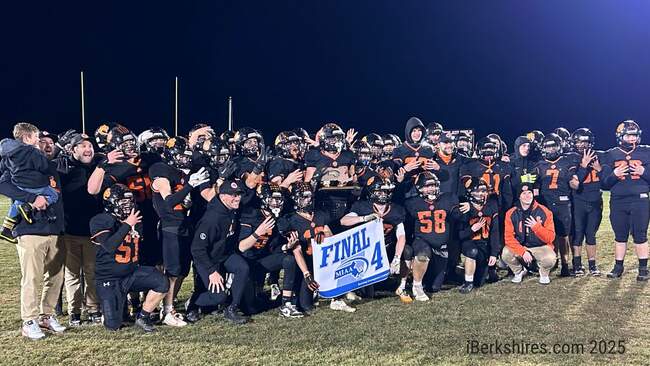
The Wildcats marched 84 yards in a drive that consumed 11 minutes, 17 seconds of the third quarter for a critical touchdown in a 48-36 win over Boston’s Cathedral High in the quarter-finals of the Division 8 Tournament. click for more
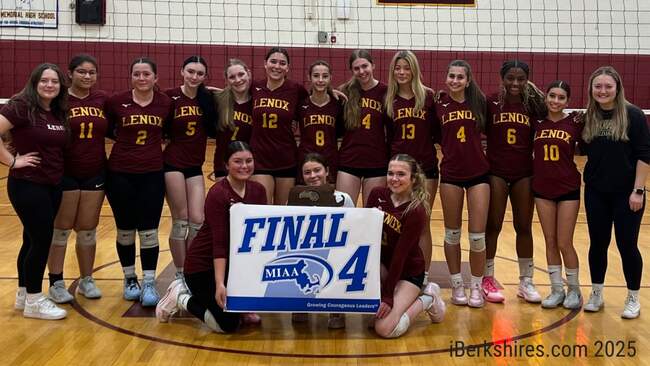
Evelyn Julieano and Leanne Maschino each put down seven kills, and the Lenox volleyball team came out strong in advancing past Whitinsville Christian in three sets in the Division 5 State Tournament quarter-finals on Friday.
click for more
Kofi Roberts and Everett Bayliss remained tied for the team lead with 14 goals apiece, and Lucas Burrow notched his second goal as Mount Greylock (11-6-1) won for the fourth time in five games and earned its third shutout victory in the Western Mass tournament. click for more
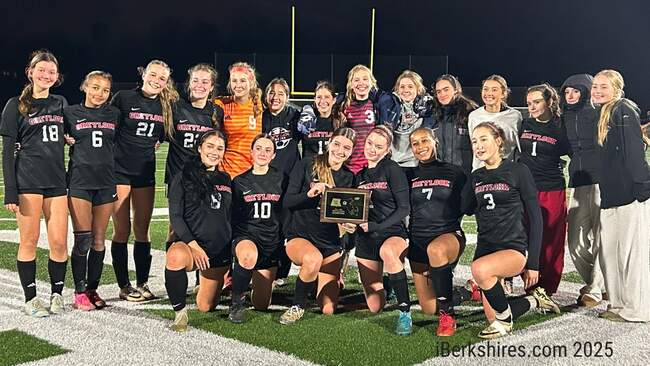
GG Nicastro scored in the 37th minute to break a 1-1 tie, and the Mount Greylock girls soccer team Wednesday went on to a 2-1 win over Monson in the Western Massachusetts Class C Championship Game at Berkshire Community College.
click for more
Primary setter Grace Julieano had 22 assists – 10 of them to her sister Evelyn and eight to Sara Isby in Saturday's three-set win over Mount Greylock. click for more
The License Commission will be informing local establishments of a new law allows restaurants serving beer and wine to change their license to all-alcoholic. click for more