

Part II: Matching Vocational Programs to Workforce Needs
Deep Dive is a monthly series that takes an in-depth look at economics, business, art, recreation, and education in the Berkshires. John Townes gets into the details on topics and issues of interest to the community. Have a subject you think should be explored? Contact us at info@iberkshires.com.
Our first topic is vocational education in the Berkshires. Read Part I here.
In Massachusetts, Career Technical Education Chapter 74 programs are based on a framework of employment preparation.
In addition to the core academic curricula required of all high school graduates, Chapter 74 programs include specific skills and career training in a variety of industries and specific jobs, ranging from agriculture to manufacturing to computer graphics to health care, among others.
The guidelines for Chapter 74 programs include immersive learning time, co-operative education in partnership with local employers, and opportunities to earn high-value industry credentials, such as professional certifications and adjacent qualifications.
The individual programs are also tailored to the specific needs of their industries. Advisory boards comprised of educators and industry representatives are incorporated into programs on the state and local levels.
The basic framework for Chapter 74 programs is structured as "strands" that include Safety and Health, Technical Training, Embedded Academics, Employability and Career Readiness, Management and Entrepreneurship, and Technology.
In addition to academic and occupational classes, students also receive other preparation, including coursework in computer technology. The career strand includes activities such as resume preparation and job-interview skills. Students learn how to manage their money in personal finance education. During their senior year, students are exposed to basics of business management.
Students alternate between core academic classes and CTE activities within their career field on a weekly basis.
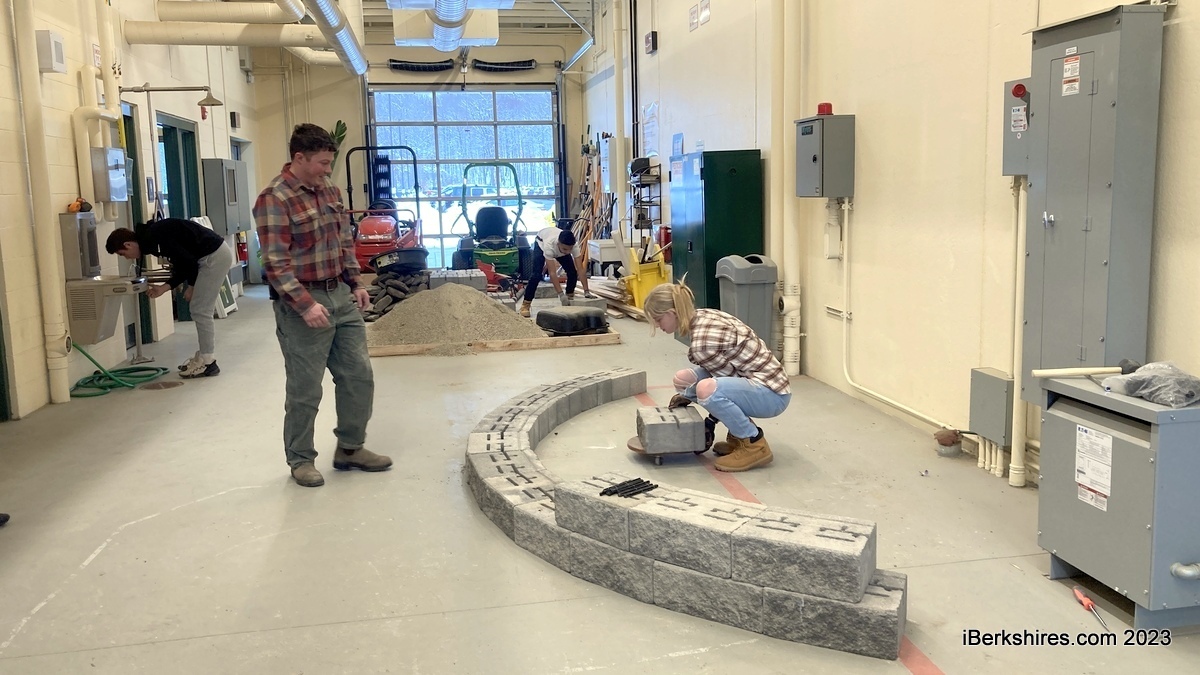
The professional instruction takes place in facilities on campus and/or work experience in positions at employers within their field through cooperative partnerships.
Students are eligible for co-op work in their junior and senior years. Those who aren't placed in jobs through that continue to receive training on campus.
The options for direct job experience depends on the availability of positions at employers, explained Thomas Tinney, cooperative education placement coordinator at McCann Technical School in North Adams. Currently, of 126 seniors in CTE at McCann, 54 are working in co-op positions.
"I maintain relationships with employers," he said. "When they have an available opening for a specific position they contact me. Then we match and place a student in that."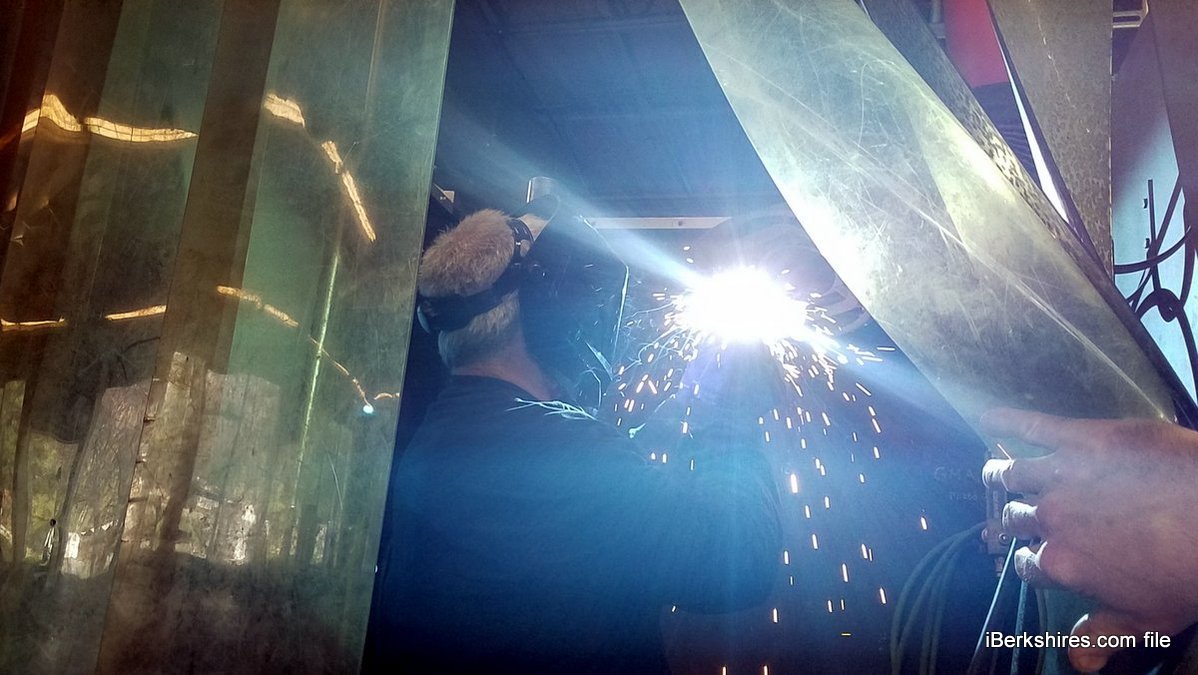
Massachusetts recognizes more than 40 Chapter 74 CTE programs of study oriented to specific career training. Individual programs are categorized under the umbrellas of 11 broad career clusters.
For example, programs offered under the Agriculture and Natural Resources cluster include Veterinary Science, Agricultural Mechanics, Animal Science, Environmental Science and Technology, and Horticulture. The Arts and Communication Services includes Graphic Design and Visual Communications, and Multimedia and Broadcast Production.
Other clusters can include:
- Business and Consumer Services: Cosmetology, Business Technology and Marketing.
- Construction: Carpentry, Electricity and Facilities Management, among others.
- Health Care: Dental Assisting, Health Assisting, and Medical Assisting.
- Hospitality and Tourism: Culinary Arts and Hospitality Management.
- Manufacturing, Engineering and Technology: Advanced Manufacturing, Metal Fabrication and Joining Technologies, Biotechnology, Drafting, Electronics Engineering Technology, Engineering Technology, Robotics and Automation Engineering Technology, Telecommunications and Fiber Optics.
- Transportation: Automotive Collision, Automotive Technology, Diesel Technology, and Marine Service Technology.
Individual schools and districts determine what is most needed within their region to determine what to apply to the state for approval and funding. At McCann, programs include Advanced Manufacturing Technology, Automotive,
Business Technology, Carpentry, Computer Assisted Design (CAD), Culinary Arts, Electricity, HVAC/R, Information Technology, Metal Fabrication.
It also offers postsecondary programs for those who have already graduated, which include Cosmetology, Dental Assisting, Medical Assisting, and Practical Nursing.
CTE programs at Taconic High in Pittsfield include Advanced Manufacturing, Auto Collision Repair and Refinishing, Automotive Technology, Business and Entrepreneurship, Carpentry, Cosmetology, Culinary Arts, Early Education and Care, Electricity, Environmental Science, Health Technology, Horticulture, Information Technology and Cybersecurity, Metal
Fabrication and Joining Technologies and Multimedia Production and Broadcasting.
Schools and CTE programs have advisory boards comprised of educators, members of industry and other stakeholders.
Marcie Simonds, supervisor of career technical training at Taconic, said schools work with regional industry representatives, economic-development organizations, and others to keep track of regional employment needs and changes that occur over time.
"We look to various partners and resources to determine factors like which industries have critical shortages of qualified workers," she said.
For example, manufacturing technicians design and create precision parts and tools that are essential to an enormous number of industries ranging from aeronautics, plastics, shipbuilding, and engineering, among others.
These parts and tools are manufactured through the use of lathes, milling machines, grinders, and robots, all of which are Computer Numerically Controlled (CNC) machines. The advanced manufacturing program provides students the opportunity to learn all the skills demanded of the 21st century manufacturing technician. Students follow a course sequence that starts with the basics of machining and progresses to advanced multi-axis CNC programming, setup and operation, and robotics and automation.
Qualified and skilled technicians are presently in high demand and students completing our program are ready to immediately enter the workforce or continue their education in college.
.jpg)
Simonds said references include the state's MassHire employment program. They also use as a basis for programs the Berkshire Blueprint, a collaborative comprehensive regional analysis and outline of goals and strategies for the region's economy and overall community development and quality of life. CTE is also tied in with larger goals, including strategies to help students determine their educational and career goals. These are also referred to as pathways.
This provides middle school students and families with exposure to differing educational and career options to help them determine choices for their secondary education. CTE programs also includes partnerships and coordination with colleges, such as Berkshire Community College (BCC).
Career Technical Education Linkage at BCC works with local high schools to provide their CTE students with a smooth transition into the higher-ed programs of their choice. The goal is to "link" high school CTE with related programs at BCC.
Students in aligned programs may be able to receive college credit for some of their high school coursework upon entering BCC under the terms of a state or independent articulation agreement.
The popularity of CTE has created a dilemma. At many schools, the number of students applying for CTE programs is far greater than the number of openings.
This has led to controversies over what form schools should take in admissions policies to ensure a manner it is fair and equitable. Traditional admissions have been based on factors such as grades, attendance and interviews. However, opinions differ on this.
Critics claim this discriminates against certain types students, such as those in low-income families. Last year the state Board of Elementary and Secondary Education voted to replace that with a lottery system. However, there were objections to this, and it remains controversial.
Bishop said applications for programs at Taconic have been closely aligned with the number of available openings. He noted in January that the application process for the coming year was still open.
"Fortunately we have not had to make those decisions," he said. "Right now, the jury is still out. If we receive more applications than openings we'll have to go to a lottery."
McCann accepted 126 freshmen in the class of 2029 and was able to place 88 percent in their first program choice, which was credited to the addition of the HVAC program.
Tags: deep dive, vocational program,