Allegrone Company Restores Base of Statue of Liberty
PITTSFIELD, Mass. — Allegrone Companies has ensured that the foundation around one of the nation's most significant monuments to freedom lasts for ages.
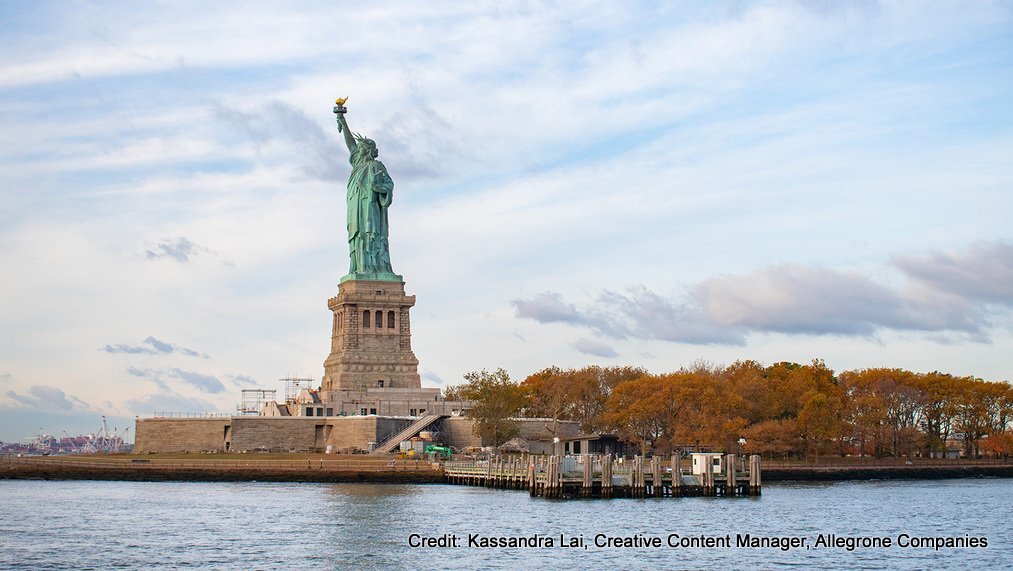
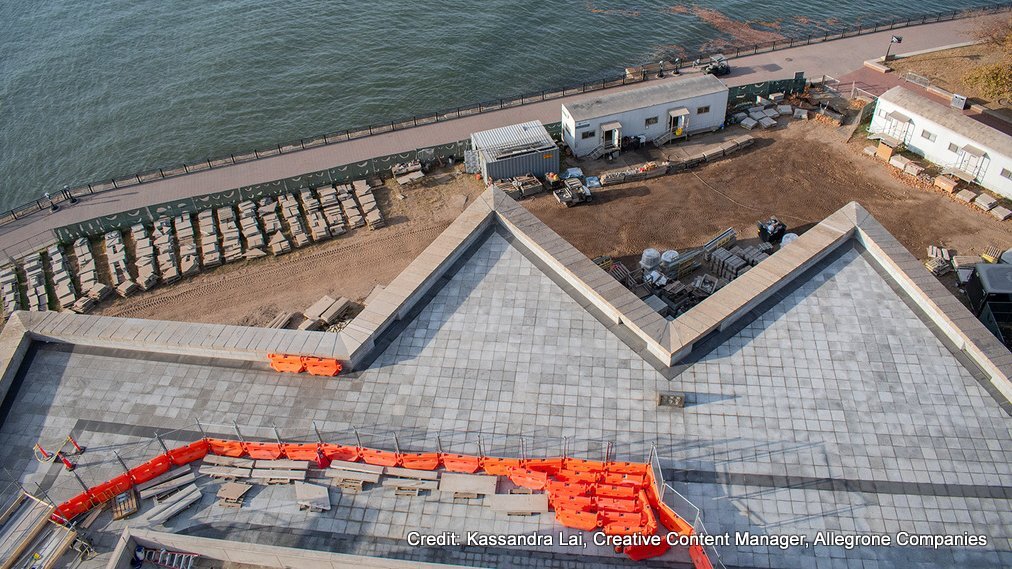
The nearly $30 million project restored the masonry stone walls and the terreplein deck of Fort Wood — 11-pointed star-shaped fort that forms the pedestal base of the Statue of Liberty.
Michael Mucci, director of masonry at Allegrone Companies, said the construction company has been working with the National Park Service for years.
"We have been working on National Park Service jobs, NPS projects, for about 10 years now, and we've been doing restoration work throughout New England," he said. "And when this opportunity came out as a restoration of the Fort Wood, the base of the Statue of Liberty, we decided to go and bid the project."
Allegrone is probably best-known in the Berkshires for its new construction and redevelopment of historic structures in the region, such as the Onota Building and the new Bousquet lodge in Pittsfield, and Jacob's Pillow's Doris Duke Theatre. But it's also been involved with the restoration of the 54th Regiment Memorial in Boston and the Yin Yu Tang house at the Peabody Essex Museum.
Ii won the bids on both phases of the Fort wood restoration project, at about $10 million for Phase 1, and then another $20 million for Phase 2. The project was funded under 2020's Great American Outdoors Act, a $1.9 billion, five-year legacy fund to address maintenance backlogs at federal parks and public lands.
Allegrone began the project in its centennial year, and completed it this past fall. The Fort Wood project included repairs to the terreplein, an elevated decking behind parapets once used for cannons that was filled in to create pedestrian plaza last renovated in the 1980s.
The team rehabilitated 35,000 vertical square feet of the granite masonry, which involved repair, cleaning, and replacement of the protective caps, or coping stones, as well as masonry work on the delicate schist stone. They worked on 500 capstones to make sure the fort's durability lasts for ages.
"Our family has always taken pride in carrying forward a long tradition of historic restoration, so taking on everything from the walls to the terreplein deck felt like a natural reflection of who we are," Louis J. Allegrone, president of Allegrone Companies, said on the company's website. "We're proud to have preserved an icon that's welcomed generations looking for hope and freedom."
Mucci said it's an incredible position for them to be able to work with a national monument.
"It's kind of the iconic nature of working at the Statue of Liberty, everyone's familiar with it, to be able to work on something that's so recognizable throughout the world," he said. "Really neat opportunity for us to work on something like that."
Mucci said one of the most challenging and interesting aspects was working on an island. It was challenging to figure out how to transport materials to and from Liberty Island in New York Harbor.
"As far as, big challenges and unique parts of the project, it truly is on an island. And how do you run any type of construction project on an island has been bit of a learning curve, but it's something that we took the challenge on and we figured out how to do it," he said. "And it's been quite the process getting all of our men, all of our equipment, all of our materials, to and from an island every day."
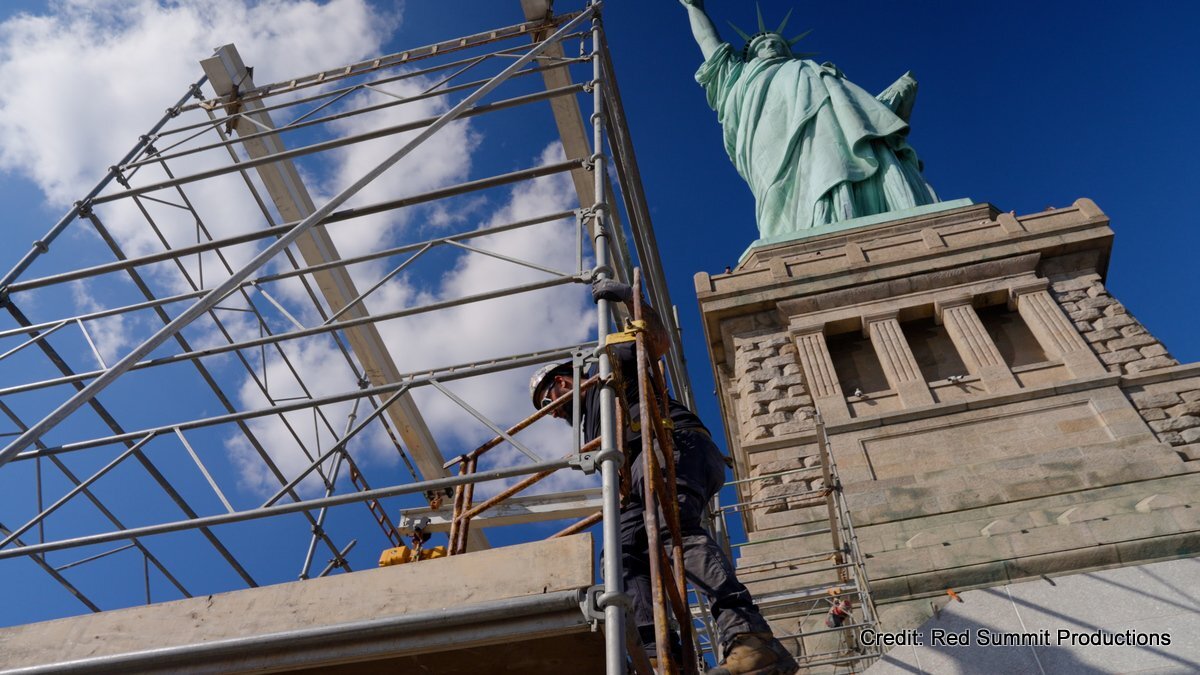
The team worked with a custom designed scaffolding and a ramp system to help transport using two different types of barges.
"They had what they call the spud barge, which could actually pull up to the land and allow equipment to drive right off onto the beach and come on to the island, or when we had much larger deliveries, we work with a barge that would get towed out to the site and kind of set up on a dock for a day," Mucci said. "And was another way to kind of move a lot of materials from a barge to a dock with a crane. So it's a lot of coordination every time you wanted to do something like that."
The crew was made up of longtime employees who lived in Albany, N.Y.
"We still ran the job from the Berkshires as our headquarters. We do have a good Albany base of guys they're both project managers and masons that have worked with us for more than five to 10 years, and we've put up housing for a lot of those guys to move down and be closer to the project site, where they would go spend Monday through Friday, work on the site, and then come back to their homes on the weekend," he said.
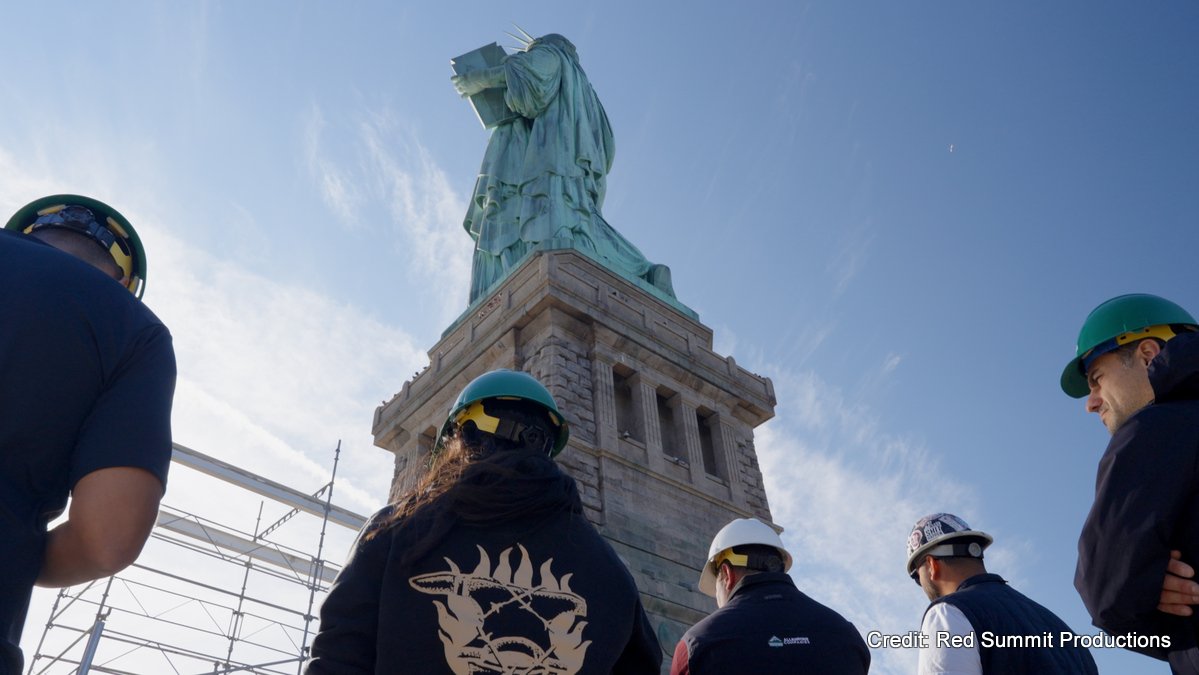 The crew rehabilitated 50,000 horizontal square feet of the hardscape surfaces and two masonry stairwells that led to the basement. Allegrone also repaired the concrete decks, added a new waterproofing system, and made snowmelt infrastructure walkways. They also installed new granite pavers that they furnished.
Mucci said the team is always looking for new projects to help restore and rehabilitate.
"We had just wrapped up a large project in Boston. We were working at what's called the Dorchester Heights monument. And that had us doing both monument and park restoration," he said. "So we're in both New York City and Boston, and we've really been able to have a large geographical area where we're able to do these types of restoration projects.
"And the challenge is finding the next big adventure to continue doing this type of work on."
Tags: construction, historic preservation, historic structure, national monument,