

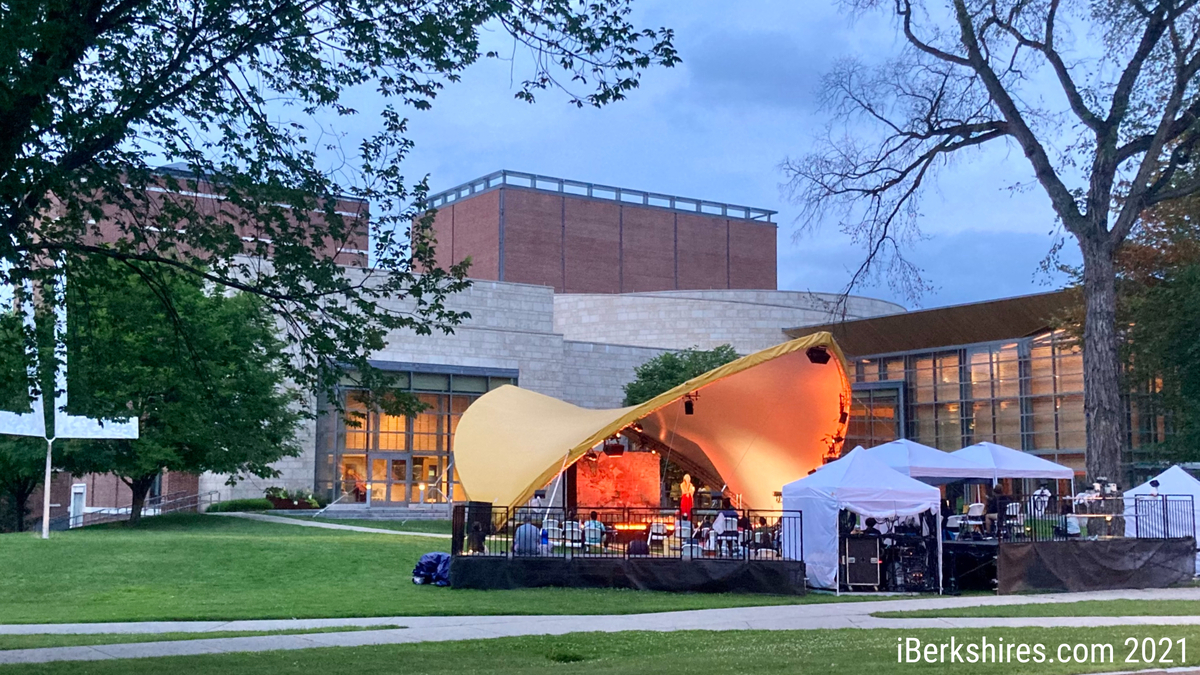
Creative Pause: Venerable WTF Taking Time to Innovate, Strategize
The pace and pressures of change have intensified in all sectors of society. The creative economy is no exception.
Non-profit arts organizations have always had to adapt to changing times. Some of these issues are common and perennial, including the need to raise funds, attract audiences, and remain relevant and sustainable.
In addition, while the COVID-19 pandemic was several years ago, it has taken time
to recover from the universal shutdowns of 2020 and their aftermath.
These issues were highlighted in the Berkshires recently with the announcement that two prominent cultural institutions in Northern Berkshire County — the Williams Theatre Festival and the FreshGrass music festival at Massachusetts Museum of Contemporary Art were cancelling their 2026 summer seasons.
Both organizations, which are separate, will use the time to regroup, with plans to return in 2027.
While the announcements raised concerns about the impacts on the cultural tourism economy this summer, the overall slate of cultural attractions and activities in the Berkshires appear to be on track. The cultural sector is not monolithic, and other individual organizations are either proceeding as normal or expanding their offerings.
The season cancellation at WTF was because of a combination of factors, said Raphael Picciarelli, WTF's managing director for strategy and transformation. He shares administrative oversight responsibilities with Kit Ingui, managing director of operations and advancement.
He described the suspension of this season as a period of preparation for the future, including strategic planning and developing artistic concepts and new revenue-generating structures.
"Some people have misinterpreted what we're doing as making basic changes and pulling back from live theater and our presence here," he said. "However we're doubling down as a live performance center, and the season here will always be our flagship. This is not a case of 'either/or' but 'yes/and.' From the beginning, the core of WTF has been about creative people coming together as a community and nurturing and presenting new work. That will continue to be our primary mission."
He acknowledged that recent years have been difficult for WTF because of internal issues as well as larger changes in the cultural landscape.
"Several years ago, we changed to an all-paid staff, and we had to develop a new business and organizational model, to handle that added expense," he said. "At the same time we also had to contend with the impacts of COVID."
The iconic Williamstown Theatre Festival was founded in 1954, as an independent summer theater company based on the campus of Williams College. It was guided for more than 30 years by Nikos Psacharopoulos, a professor at Yale Drama School. Following his death in 1989, it was overseen by a succession of artistic directors and managers and its board.

Over the years, WTF gained a national reputation presenting a mix of works by prominent playwrights and new works by emerging talent. It also provided experience for interns and theater professionals and attracted many well-known actors to Williamstown, some of whom became regulars. It also was an originator of works that went on to New York and other venues. Among other recognition it won a Tony Award for Best Regional Theatre in 2002.
It also developed a strong relationship with Williamstown. It stimulated the economy and community life during the summers when Williams College was on vacation.
However, in recent years, WTF faced several serious challenges. In addition to the pandemic, it also had to contend with an internal crisis in 2021, when current and past staff and interns publicly criticized unsafe working conditions and exploitation of interns at WTF. This led to an internal investigation and a reorganization and temporary scaling back of productions for several seasons.
In 2025, WRF launched a new prototype format of a shorter more concentrated season of productions and activities in a span of three weeks, similar to other festivals. It is also envisioned as becoming a biennial festival.
"We're taking what we've learned from last season and developing ways to grow and expand on it," said Picciarelli. "That requires a lot of planning and work, and we're using this break as a runway for that."
In addition, he continued, like other long-established legacy organizations, WTF has had to update to keep up with the times.
"WTF has been successful for many decades," he said. "But it was founded 72 years ago, and the world has changed since then. We're trying to maintain the core of what it has always been, but in terms of the realities of 2026. And looking ahead, the world will be very different in five years and we have to be in a position to adapt to that as well."
This includes practical solutions to maintain its financial health. Last year, it made more than $1 million in ticket sales — on an $8 million budget.
"The attendance and audience response last year was encouraging," Picciarelli said. "However, costs outpace revenue. Non-profits like us can't survive on ticket sales alone so we also rely on grants and philanthropic support. That has become increasingly challenging. Funding is more uncertain in the current political and economic climate.
"Also, there are so many other needs in society these days, and that makes fundraising
for the arts more competitive. So we have to find additional sources of revenue."
The festival is exploring additional income sources such as presenting additional programming in New York City and other locations. Other possibilities include creating a for-profit arm. Officials are also exploring creative partnerships and presentations in other sections of Berkshire County, and incorporating new media and other resources.
"We're looking at how to utilize new technology to expand our reach while also promoting the festival," said Picciarelli.
He added that while streaming and other media have become increasingly prevalent, WTF is committed to live performances at its core.

"I believe the experience of people coming together is more important than ever," he said. "Theater has an important civic role, You can't replace the value of being with other people. In my opinion, one reason for the divisions we're seeing today is because we've been losing the arts as a source of shared purpose. It's extremely helpful when theater brings people together and helps to explore common purpose and values. "
Picciarelli believes new media and other forms of creative expression can augment and enhance the live experience. He cited Disney as an example of building on original stories with other work that expands on characters and worlds.
"For example a play that has 10 characters can be expanded and made more meaningful by preceding the live production with a series of podcast plays that introduce the characters individually and tell the stories of their lives before the events of the live play," he said.
Another goal is to maintain the creative communities and collaborations that WTF
has always fostered.
While financial sustainability is a priority, he said, the underlying purpose is supporting its creative role.
"A legacy institution can't just dig in and continue to do things in the same ways forever," he said. "But we're focusing everything we're doing on maintaining that legacy and role into the future. It's not about growth for its own sake. It's about leveraging resources to support storytelling and the creative collaborations that have been at the heart of the festival."
(The next installment will look at Barrington Stage Company, which is taking a different path than WTF this year. Read Part One on the tourism and economic factors.)
Tags: deep dive, fine & performing arts, WTF,