Adams Jordan Street Parking Fix Causes Neighborhood Tension
ADAMS, Mass. — The years-old culvert collapse on Jordan Street that has displaced residential parking in the winter is creating tension amongst neighbors.
While most residents on the narrow, one-way street have access to private parking, a select few were left with no legal options during the winter months.
So, in December, the Selectmen approved allowing permitted on-street parking for those affected by applying for a parking permit.
The permit allows overnight parking from the North Side of Jordan Street, opposite 17 to 31 Jordan St., where the culvert impacted private parking.
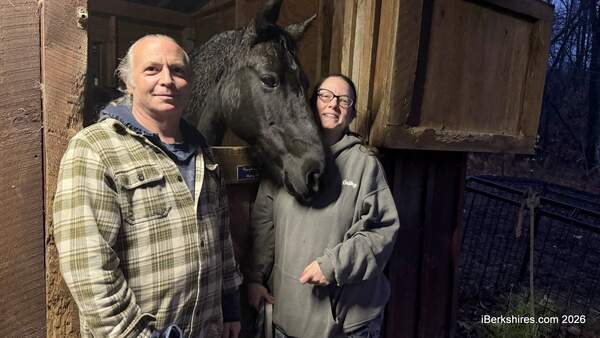
Owner of the duplex located at 16 Jordan St., Christopher Martindill, attended the board meeting to request a permit for his tenants because of an ongoing dispute with a neighbor in the multi-family home at 17-31 Jordan St.
Martindill explained that for the last decade his tenants have parked on the street in front of the duplex without issue, until the parking fix.
"You were kind of collateral damage here because we made a decision to section of Jordan street parking … and it's part of your house, is where we ended up putting the residents of the impacted individuals from 17 to 31 Jordan St.," Chair John Duval said.
It was explained that overnight parking is restricted townwide during the winter.
Martindill said he works diligently to maintain parking spaces outside his apartments. He clears snow not only in front of his own duplex but also from adjacent areas, including in front of 18 Jordan, to create space for multiple cars.
Since he clears these spots, disputes sometimes arise among neighbors over who has the right to park there, Martindill said.
Additionally, he clears part of the yard to ensure all his tenants can park off-street during the winter parking ban, since the duplex has only one driveway.
If the town does permit parking only in front of Martindill's duplex, his tenants do not qualify because they are not one of the residents impacted by the culvert.
"I don't care that [the neighbors are] in front of my house, per se, because obviously I don't own the street… I was just trying to get two parking passes [for my tenants] so they can park comfortably without worrying about getting a ticket," he said.
Martindill said shifting the parking fix closer to Mill Street may help because no one parks in front of the four houses past his house in that direction, even in the summertime.
The board said it could extend the permitted parking area for the entire Jordan Street. However interim Police Chief Timothy Sorrell cautioned against that as it would make it harder for the Highway Department when plowing.
Having a fixed area for permitted parking ensures that the plows only have to avoid that section, he said.
The board did not reach a resolution during the meeting. Instead, members approved a recommendation to install permit parking-only signs in locations to be determined at Sorrell's discretion.
Sorrell said he will collaborate with Martindill to find a solution to the situation and will present it to the board before the signs are placed.
When the winter season ends, and there is no longer an overnight parking ban this will no longer be as much of an issue, Sorrell said.
The only way this will get rectified is by fixing the culvert which the town has been working towards the last five years, Selectman Joseph Nowak said.
The $3.9 million Jordan Street culvert project appears to still be in limbo with the Federal Emergency Management Agency.
The culvert carries Miller Brook into Tophet Brook behind 17 Jordan. The new culvert is designed to be 2 feet wider and a foot deeper, and will be moved away from problem areas, including the parking lot it currently runs underneath.
The town first heard about the failing culvert by its public works staff but when the town hired a preliminary engineer to do an assessment, it was discovered the project was going to be very complex and expensive.
The town reached out to the state Emergency Management Agency, MEMA, to see if they could provide some assistance and was directed to FEMA's Hazard Mitigation Grant Program and was approved by both FEMA and MEMA to begin engineering in 2021.
Adams was awarded $1.7 million of the then $2.2 million in two obligations, with the town picking up $572,000.
It was said in September that the town has asked for a budget amendment after the construction costs swelled from the original $2.2 million.
The Community Development Director Donna Cesan previously noted that MEMA will not enter into a formal agreement until funding is fully secured.
Nowak said the town received an extension, however, he was at a meeting where he found out the federal funding isn't going to come.
"The money from the feds aren't coming. Matter of fact, everything that we send now that normally goes to Boston for FEMA is going directly to Washington, D.C., because they want to micromanage everything. We're a Democratic state, and unfortunately, we're getting the short end of the stick," he said.
The board will be given an update on the culvert situation in the spring.
Tags: culvert, parking,