MassWildLife: Watch for amphibians on the road
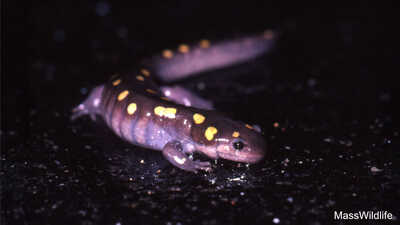 |
For many Massachusetts residents, spring rain is a reminder of the changing seasons. For smaller Massachusetts natives, like amphibians, spring rains signal it's time to emerge from winter retreats and migrate to breeding sites or disperse to new areas. Unfortunately, many of those animals will face the daunting task of having to cross roads to reach their destinations. Spotted salamanders, wood frogs, blue-spotted salamanders, Jefferson salamanders, American toads, spring peepers, four-toed salamanders, northern leopard frogs, and eastern red-backed salamanders are frequently encountered on roads during early spring rains. With little to no snow cover and the ground thawed in many areas, we expect migrations in milder, lower-elevation parts of Massachusetts to commence with the next warm, rainy night.
These animals can be difficult to see, as they are generally small-bodied and move under the cover of dark. This spring, please be mindful of our amphibians and our natural heritage.
How you can help:
- Please drive cautiously and carefully.
- Whenever possible, please consider not driving on rainy nights when air temperatures are 40°F or higher to protect amphibians who are on the move.
- Travel on larger highways rather than small, wooded roads if possible. Plan routes that minimize the number of wetlands or vernal pools passed.
- If observing amphibian migrations, consider arriving at your destination prior to sunset, and then conduct your monitoring on foot.
- If assisting amphibians across roadways or handling them for other reasons, be sure your hands are free of lotions, bug repellent, or other chemicals.
- If you encounter any of our state-listed rare amphibian species (eastern spadefoot, blue-spotted salamander, Jefferson salamander, and marbled salamander), please take a clear photograph of the animal, carefully record the location, and submit an observation report to MassWildlife's Natural Heritage and Endangered Species Program.
- Go the extra mile to help preserve amphibian habitat by certifying vernal pools on your property. The data you collect is used to help MassWildlife and local conservation organizations better understand habitat resources for our native amphibians.
Tags: MassWildlife,