Hoosac Valley Seeks to Prevent 'Volatile' Assessments
ADAMS, Mass.— The "volatile" shifts in Hoosac Valley Regional School District's town assessments year to year is hard for smaller towns to absorb; however, a proposed change to the regional agreement would fix that.
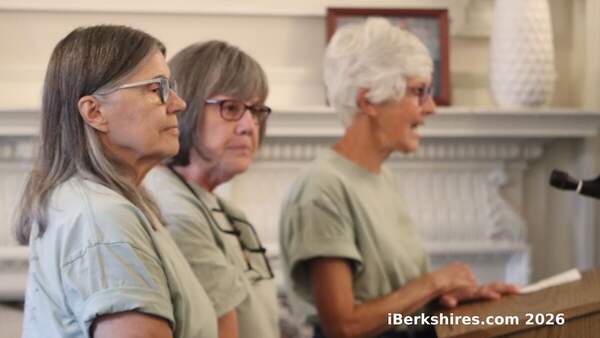
During the Select Board meeting last week, Superintendent Aaron Dean presented the proposed change to the regional agreement that would set assessments based on a five-year rolling average rather than the annual student enrollment.
"The long-term goal is to make the assessment process a little bit more viable for people from year-to-year," he said.
An ad hoc committee was convened to review the district's agreement, during which concerns arose about the rapid fluctuations in assessments.
"I think you have to look short term, and you have to look long term. The goal is to kind of level it off and make planning easier and flatten that curve in terms of how it's going to impact both communities," Dean said.
Every year, it is a little more difficult for one community because they are feeling disproportionately impacted compared to the other, he said.
"The transient nature of this population right now is like nothing I've ever seen," Dean said.
The district had hoped to move this forward last spring, but it was delayed for about six months because of ongoing correspondence with the state regarding the proposed language change.
"The pros for doing something like this for our budgeting sake is being able to predict a little bit better as to what the numbers are going to be … it makes it so that we're not as much of a sticker shock when we get the budget," one ad hoc committee member said.
Hoosac Valley uses the enrollment figure submitted to the state Department of Elementary and Secondary Education to calculate its assessments.
In fiscal 2026, for example, some $15,719 would have shifted to the Adams side using a five-year average; although in prior years, Cheshire would have paid more because averaging would have raised its percentage. This is based on calculations provided to the board.
For FY2027, Adams' average percentage would be 76.11 compared to 74.6 for enrollment, and Cheshire's average would be 23.89 percent, compared to 25.4.
Other communities use the rolling average method; Hoosac Valley Regional School District is an outlier, the member said.
Getting this approved would be a tough sell for Adams because if approved, that town's assessment would be more than it would under the current system.
The first year was expected to be a big jump and then it will level it out.
"It doesn't seem like much, but it really drives the percentage points you have those jumps, that jump back and forth, which kind of brought us to that discussion of it's probably time to do the five-year average," Dean said. "So the communities have a little better idea of what's coming their way."
Tags: assessment, HVRSD_budget,