Williamstown Government Presents Communication Plan
WILLIAMSTOWN, Mass. — Williamstown is working to improve communications with residents.
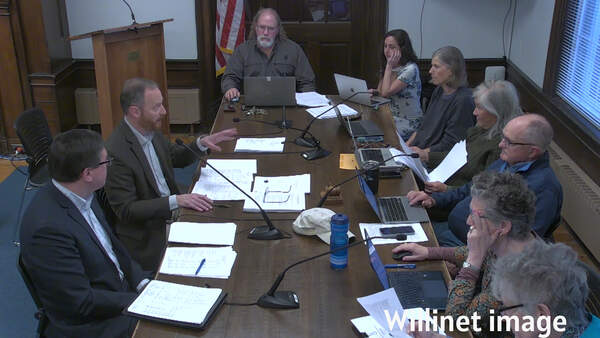
The town manager told the Select Board last week that the town obtained a Community Compact Best Practices grant from the state's Division of Local Services to fund a consultant from the University of Massachusetts at Boston's Collins Center for Public Management to develop a communications strategy.
Improved communications is a growing concern for small towns like Williamstown, Town Manager Robert Menicocci told the board.
"The world has changed with social media," Menicocci said. "The expectations of what a community communicates to its citizens — the game has been upped.
"I think this was a new area for government and many communities are looking at a need to staff up to address communications, where, in the past, maybe a big city would have a communications director. Now that has trickled down to almost all small communities."
To that end, the town has completely revamped its website and hired its first communications director — both steps that were included in the November 2025 Collins Center report, "Roadmap for Inclusive and Accessible Municipal Communications in Williamstown, Mass."
Brianna Sunryd, a public services manager at the Collins Center, presented her group's findings to the Select Board.
"We really drew a lot of the language around inclusivity and well-being and belonging from the work of the CARES report," Sunryd said, referencing a multi-year project that yielded a 2023 Community Assessment Research report.
"Because it was important to your leadership team, we tried to tailor some questions about inclusivity and that feeling of belonging within the community and what would increase that for participants."
A cornerstone of the new communication strategy is the revamped town website, which addresses Americans with Disabilities Act compliance issues and makes a more user-friendly portal to town government.
"[The prior iteration of the website] was organized internally," Communications Director Laura Christensen said. "It made sense to staff. But it didn't take into account the perspective of the resident and how they might understand things or even find things.
"Now it's much improved. There's way more content on the site. It's organized in a way that's hopefully, more friendly to residents."
The Collins Center work included focus groups with Williamstown residents about what sort of communications they wanted to see from town government.
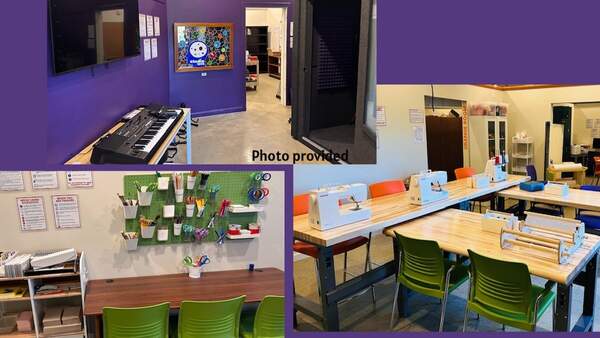
"The main things that emerged surrounded town meeting, the need for two-way communication instead of just putting information out there, the sense of wanting to have a seat at the table and how that looks for different people and physical gathering spaces came up quite a bit even though that's not, necessarily, the focus of our project," Sunryd said. "It was clear that it was important for the participants in the focus groups the need for a physical gathering space."
While many of the recommendations in the report — like devoting a town hall position to communications — have been implemented, "the journey continues," Christensen said. She told the Select Board that among her next steps are developing a weekly town hall newspaper that she plans to start issuing this spring and developing policies for information that goes out through the town website and social media.
That website could play an even more important role in town communications if town meeting approves one of the two articles the Select Board plans to send to the May 19 meeting.
Although the board Monday chose not to be the sponsor of an article proposing a bylaw to ban the use of biosolids as fertilizer in town, it did move ahead on articles on digital posting of legal notices and increasing the maximum income and asset levels for recipients of a 41C senior exemption on property taxes.
The digital posting article is a home-rule petition that, if passed by residents at town meeting, would ask the Legislature to give Williamstown relief from a state law that requires certain legal notices to be printed in a local newspaper.
"What we've found of late, as newspapers have struggled with their circulation and money concerns, the price for the ads has gone up dramatically," Menicocci said on Monday. "So, for us, in a given year, we need to post a handful of notices, but that's getting to cost us in the ballpark of $5,000 to $10,000 per year."
He said other municipalities in the commonwealth have asked Beacon Hill to give them an exemption that would allow notification on a town website, statewide website or a website, "reporting local news and opinion."
The four members currently serving on the Select Board agreed to put the warrant article Menicocci drafted on the warrant the board plans to finalize on April 13.
That warrant also likely will include a proposal to change the eligibility rules for the senior property tax exemption allowed in town under Massachusetts General Law, Chapter 59, Section 5, Clause 41C.
Currently, an exemption of $1,000 per year of property taxes is available to residents 65 and older who meet the following income and asset limits: $21,846 in income for a single person ($32,769 for a couple) and $43,692 in assets for an individual ($60,076 a couple). The asset limit is for assets not including the value of one's home.
As with most property tax relief measures, the individual household's exemptions ($20,000 if 20 households are eligible, for example) are spread across the rest of the tax base.
Select Board Chair Stephanie Boyd presented her colleagues with a proposal to raise those limits across the board: $33,587 for an individual income, $44,510 for a married couple's income, $55,987 for a single person's assets and $68,477 for a married couple's assets.
"The thing we don't know is how many people might apply," Boyd said. "Some of the thinking [in her proposed numbers] is: Let's step into this slowly, see how many people apply and we can go back next year and change it if necessary."
Former Select Board member Andrew Hogeland, who initiated some of the board's past work on targeted property tax relief programs, suggested that the board might want to propose town meeting adopt even higher income and asset thresholds.
"I'm inclined to agree we should step into it slowly and carefully, because we don't want to know what the result will be," Hogeland said. "But I think the numbers in the 41C proposal that Stephanie presented are lower than I would have anticipated. I think to make this meaningful to enough people in town, it would be helpful to have income and asset levels not a lot above that but a little bit.
"In this town, if you have an income of $44,000 and you own a house, that's not much. That may be a very small universe of people to begin with. And the goal is to help seniors who are low income and low assets get a little something off their tax bills so it's easier to live and easier to live here."
Hogeland suggested the town might want to peg its income maximum to 60 percent of the area median income ($50,220 for a single person or $57,360 for a married couple). He even mentioned that rather than setting a specific dollar amount, town meeting could simply enact legislation that ties the local exemption to a percentage of the area median income as determined by the federal government.
The board members generally agreed that setting a specific number that could be reviewed every year or two is a better approach, but they could not agree on specific numbers on Monday evening.
Peter Beck agreed to come back to the board's March 23 meeting with revised numbers for the group to consider sending to the annual town meeting.
Tags: communications, town meeting 2026,