Williamstown Town Meeting Facing Bylaw to Ban Agricultural Biosolids
WILLIAMSTOWN, Mass. — Town meeting may be asked to outlaw the application of fertilizer derived from human waste.
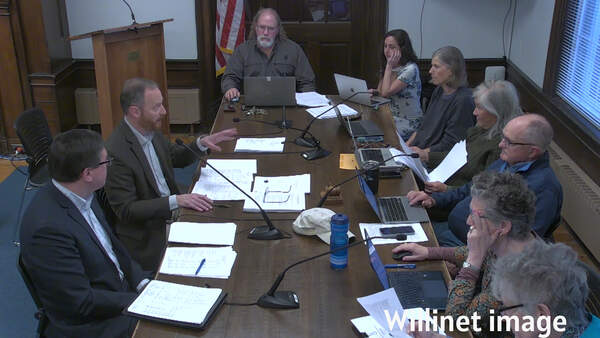
On Monday, Select Board Chair Stephanie Boyd asked the body to sponsor an article that would prohibit, "land application of sewage sludge, biosolids, or sewage sludge-derived materials," on all land in the town due to the presence of per- and polyfluoroalkyl substances, or PFAS.
Last year, concern over PFAS, which has been linked to cancer in humans, drove a large public outcry over a Hoosac Water Quality District's plan to increase its composting operation by taking in biosolids, or sludge, from other wastewater treatment plants and create a new revenue stream for the local facility.
Eventually, the HWQD abandoned its efforts to pursue such an arrangement. Today, the district still runs its composting operation — for locally produced sludge only — and needs to pay to have it hauled off site for non-agricultural uses.
On Monday, Boyd presented a draft warrant article put together by a group of residents in consultation with the Berkshire Environmental Action Team and Just Zero, a national anti-PFAS advocacy group based in Sturbridge.
"What this warrant article would do is not allow anybody who owns or manages land in Williamstown to use sludge or compost [derived from biosolids] as a fertilizer or soil amendment on that property," Boyd said.
Her colleagues raised concerns about the potential for uneven enforcement of the proposed bylaw and suggested it might be unfair to penalize residents who purchase a small bag of compost that contains biosolids at their local hardware store and unwittingly use it in a backyard garden.
"I am worried about setting up a trap where you've made something illegal that people don't know is illegal," Peter Beck said. "They go to the hardware store and buy a product, put it on the their land, and now they're on the hook for these [fines].
"In an ideal world, you can't buy that at the hardware store. Given that you can — not just across town lines, but we're not making it illegal to sell [in Williamstown]. It could be right here. It could be in our hardware stores in town. Obviously, it would be strange for them to carry it, but it's not illegal for them to sell it."
Boyd told the board several times that the intent of the bylaw is to prevent the large-scale, commercial use of soil amendments derived from biosolids. But she agreed that the proposal also would apply to small-scale, backyard applications.
Shana Dixon asked how the town would enforce such a prohibition. Boyd replied that someone at town hall, likely the health inspector, would receive complaints from other residents who observe the use of the banned fertilizers.
"It's pretty obvious when someone is spreading this on their property," Boyd said.
"Is it though?" Dixon replied. "Because no one is in their backyard watching them."
Boyd answered by reiterating that the bylaw is really intended to stop commercial applications.
"You want to go for the big people only, but what about the people who are actually doing it and causing similar harm?" Dixon asked.
Proponents of the bylaw note that PFAS contamination can leach across property lines, contaminating ground water and surface water far beyond the point of application.
Boyd said that even if the town does not stop every resident "causing similar harm," the bylaw would raise awareness of the issue.
"I think a lot of times when we have regulations like this, one of the biggest benefits is the communication and the awareness for people," Boyd said. "There are people speeding on the roads every day. We don't stop every single one, but they shouldn't be doing it."
Beck suggested that if the bylaw's intent is to go after the large-scale application of biosolids, the fee structure in the draft may need to be addressed.
"If a homeowner buys a $10 bag of compost and applies it, let's say that's a violation," Beck said, referring to the draft on the table. "The first violation is a warning, second violation is $100, third violation is $300. As I'm reading it now, if a landscaping company or a farmer applies truckloads across 10 acres, that's also a violation. First violation a warning, second violation $100, third violation $300.
"So, again, it seems like, if that's the thing we want to prevent, and we should prevent it, this isn't it yet. … This doesn't deal with the large-scale one, because as long as you can incorporate $300 per [application] into the cost of doing business, you could keep doing it. A violation is a day's worth of application."
At a couple of points during Monday's debate, it was mentioned that it is difficult for a small town like Williamstown to enact a regulation like the one proposed and that it would be better to wait until efforts are successful on Beacon Hill to ban application of sludge or compost from biosolids.
The executive director of the Berkshire Environmental Action Team addressed the meeting via video conference to say waiting is not a viable option.
"About questions regarding turning off the tap on the federal level or the state level or, better yet, let's just stop putting PFAS in products and having industrial waste streams that incorporate them, while that's great, after the Biden administration introduced a draft risk assessment, this [Trump] administration has repealed all efforts to make progress toward regulation of PFAS on the federal level, which is why you'll see in states, red and blue across the country, municipalities taking the lead on this issue," Brittany Ebeling told the board.
Passing local legislation would send, "a message to our regulators, to our legislators, to other agricultural communities that will be the most impacted by this historic practice," Ebeling continued.
The local agriculture appears to be supportive of the proposed bylaw. Boyd said that according to research by the team developing the proposal, it has been "a couple of years" since a farm in town has used biosolids-based soil amendments, according to state records. On Monday, the chair of the town's Agricultural Commission noted that the commissioners, last year, opposed the expansion of the Hoosac Water Quality District's composting operation.
Another member of that commission, which is scheduled to take up the proposed bylaw at its April 1 meeting, submitted a written comment that was read into the record by Boyd.
"'As a farmer who is committed to protecting the long-term viability of agricultural land in Williamstown and the general health of residents, I support the proposed warrant article,' " Boyd read from a note from Brian Cole.
The Select Board decided that while its members might ultimately support a bylaw proposal that comes to town meeting, the board does not have time to fully digest the draft and make amendments before its next meeting on March 23, when the warrant for the meeting will be closed.
Boyd indicated that the working group that developed the draft seen on Monday will make some changes and is happy to put the bylaw on the warrant for the May meeting by means of citizens' petition.
In other business on Monday, the Select Board:
• Looked at two other warrant articles that town meeting will see at the May 19 annual town meeting. One would raise the maximum income and asset limits for eligibility for a 41C property tax break. Another would ask the legislature to allow Williamstown to stop posting legal notices in a local newspaper, a move that would save the town between $5,000 and $10,000 per year, according to Town Manager Robert Menicocci.
• Heard that a group of volunteers is planning to expand the town's Independence Day festivities to include a day of events in South Williamstown on July 3, a Friday and federal holiday, in recognition of the 250th anniversary of the Declaration of Independence.
• Got an update on the town's communications plan from Brianna Sunryd of the Collins Center at UMass-Boston and Laura Christensen, the recently installed town communications director.
• Approved a request from National Grid to place a pole and wires to serve a new residence on Henderson Road.
• And learned from Menicocci that the town has issued a request for proposals to develop the town-owned former town garage site at 59 Water St. The proposals are due Wednesday, April 15.
Tags: PFOA / PFAS, town meeting 2026,