Greylock School Project Moves Into Construction; Geothermal System Approved
NORTH ADAMS, Mass. — The $65 million Greylock School Project has moved into construction phase, where it will stay for the next 18 months or so.
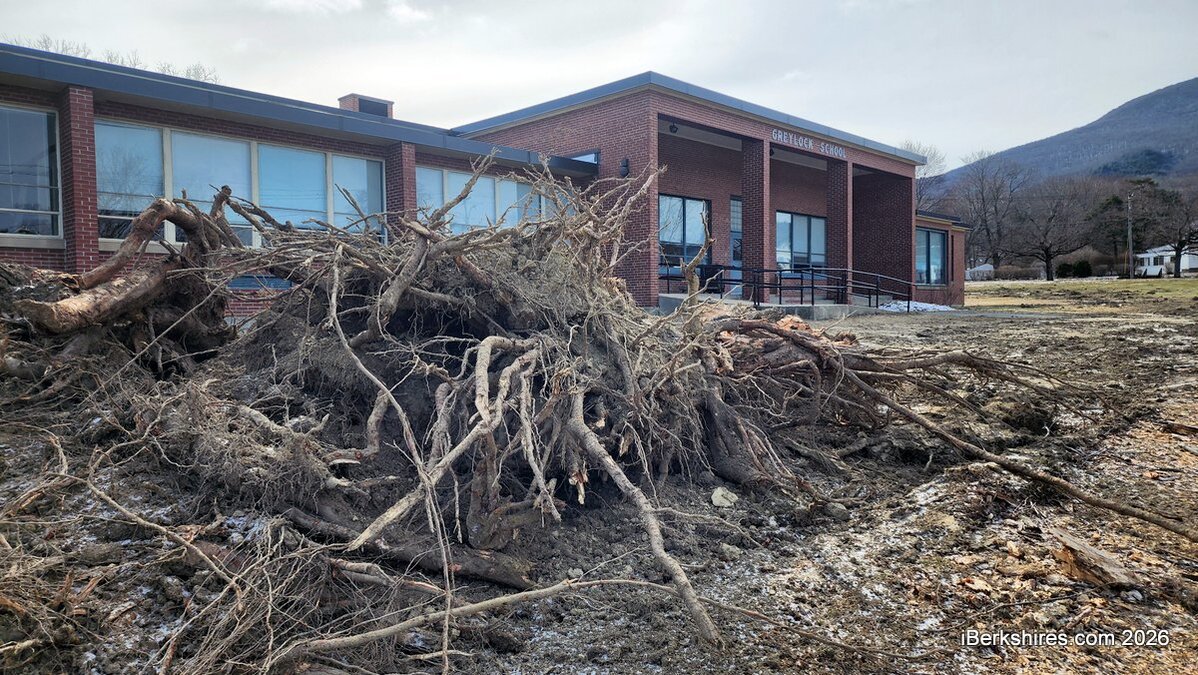
Work has already started, as abatement of asbestos and lead paint at the old school are underway and trees and playground equipment removed for site preparation by general contractor Fontaine Bros.
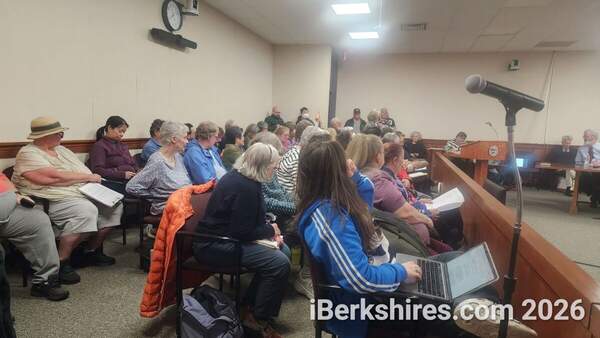
"They hit the ground running," Jesse Saylor of TSKP Studio told the School Building Committee on Tuesday. "Fontaine's doing a nice job looking ahead and forecasting and ... we expect to get their schedule upcoming, as well as their breakdown of schedule of values, which is important because the [Massachusetts School Building Authority] reimburses the city based on that."
Timothy Alix of Collier's International, the owner's project manager, said the school construction will come in about $51 million and change.
"Our total budget is $65.3 million. We've processed invoices for roughly $4.4 million of that, we believe that roughly $4.2 [million] would be eligible for reimbursement, and then, based on the city's reimbursement rate, we expect a reimbursement of $3.4 [million]," Alix said. "It's right where we expected. Again, the biggest number here will be this construction line item, and we'll start seeing some invoices coming in as Fontaine builds out their schedule of values."
Saylor offered a presentation on the differences between vertical and horizontal geothermal systems, with the committee finally committing to horizontal. The savings are estimated at about $225,000; the project is expected to receive about $2.4 million in federal funds toward the alternative energy option.
Committee members had been wary of the use of geothermal, which is being pushed by the state, but felt better after Tuesday's overview and voted unanimously to go with a horizontal system under the parking lot.
"I guess I can say that it all makes sense, understanding what you're dealing with there, for the soils and stuff," said David Moresi, the committee's contractor representative. "In all these meetings, we're just presented with stuff. But now we've had a very thorough presentation on something that I particularly had questions on, and perhaps some other committee members. I appreciate all that. I appreciate taking the time to reach out to Williams College."
Williams has been using vertical geothermal but was unable to do at the art museum site because of a layer of fractured bedrock, similar to the Greylock site, Saylor said. The North Adams, however, has the ability to go horizontal, which Williams can't because there is not enough space.
The company that provided the presentation materials is a horizontal driller that has done work in the area and for larger projects, such as JFK Airport in New York.
The removal of mature trees last week along Phelps Avenue and in the buffer zone behind residential homes had caused some consternation in the neighborhood.
Committee member Lisa Blackmer said she'd had some complaints about the "extensive" removal and the size of the trees and asked about landscaping.
"You can't plant 100-year-old trees, but to plant something that would have hopefully be large enough and grow fast enough to fill in that," she asked, adding that trees had been taken down in her neighborhood, creating wind tunnels and loss of habitat.
Mayor Jennifer Macksey, chair of the committee, said it had always been part of the plan to remove the trees.
"The trees that we took down, we found most of them were going to come down anyways," she said. "It was surprising to see these beautiful, huge, wide trees, and when we cut them down, they were hollow in the middle, so Mother Nature was going to take them down if we didn't soon."
She said cutting them down was a more proactive approach and that they will be replaced, though obviously not as large. Saylor said trees will be replanted along the north side of the building, behind the homes on Barbour Street.
"I think that's probably where the complaints were coming from, sort of the north edge of the property, where the tree buffer does get pretty thin, particularly to the first house on Phelps Ave to the north of the school property," he said. "We were judicious as much as we could be to pull the project away from that tree buffer, and most of the buffer remains, but we had to thin it in some places."
Most the plantings will be going there and on the north side of the Greylock Community Club to create a visual screen between the club and the school, Saylor said.
"It may be possible to adjust the location of some of the trees that we have in the contract to address some of these complaints. I've actually not heard any specific complaints yet, so I will be interested to hear those and understand more specifically where people feel there's an exposure due to the tree removals," he said. "It may be something we can adapt the scope and the drawings to address, or we may have to look at adding some planting."
He said the demolition permit for the old school is in hand and the building permit has been submitted. The project has been approved by the Planning Board, Conservation Commission and Historical Commission. The old school will be replaced with a new parking lot and fields; the new school will be constructed where the current parking lot is.
That will require the removal of some 2,000 cubic yards of unsuitable soil that doesn't have the structural capacity to support the new building.
"That's going to be starting the early part of next month," Saylor said. "So that'll be a major milestone where instead of them just working inside the existing building, there'll be activity outside or a lot more activity outside to to be going on, so exciting, too."
There were questions about how neighbors were being informed about work on the site. The mayor said 20 or 30 letters were sent to abutters informing them of the construction, based on the radius used by the Planning Board and Conservation Commission. These residents were asked if they wanted to be updated regularly on the project but she believed only a handful had responded as of last week.
She noted that regular updates will be posted on the Greylock page on the public schools' website and on social media. Once fencing is installed, it will be harder for residents to see what is happening on the site.
Tags: Greylock School Project,