From Survival to Speaking Out: Holocaust Survivor Inspires New Generation
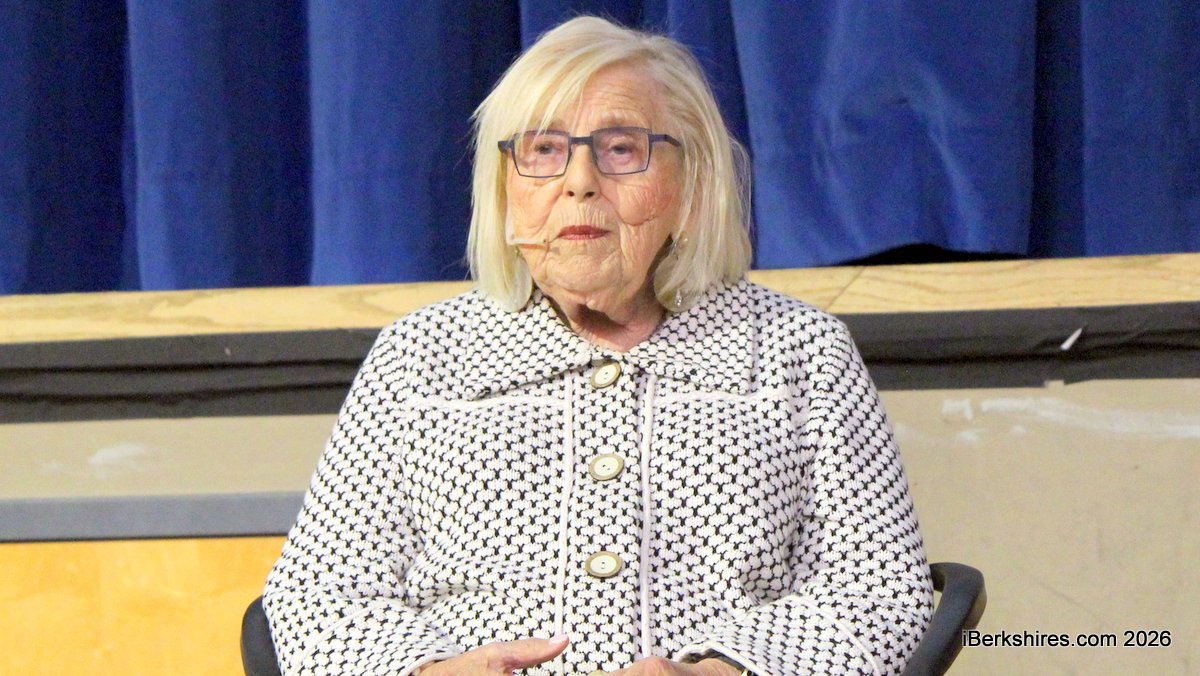
Janet Singer Applefield survived the Holocaust by having her identity disguised during World War II. The Boston University graduate has been telling her story of loss and survival for 40 years to ensure the Holocaust is remembered.
Applefield is a child survivor of genocide, eluding the Germans in Poland during World War II. After liberation, she reunited with her weakened father, emigrated to the United States, and has since dedicated her life to teaching about the dangers of hatred and inspiring students to bear witness.
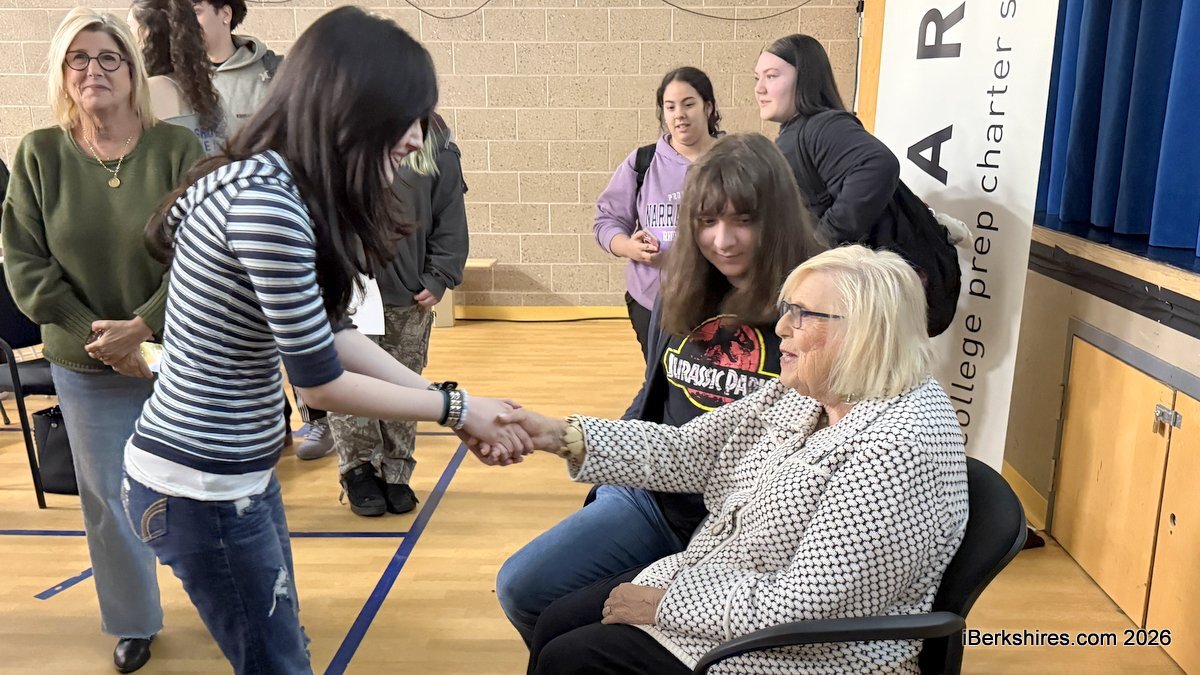
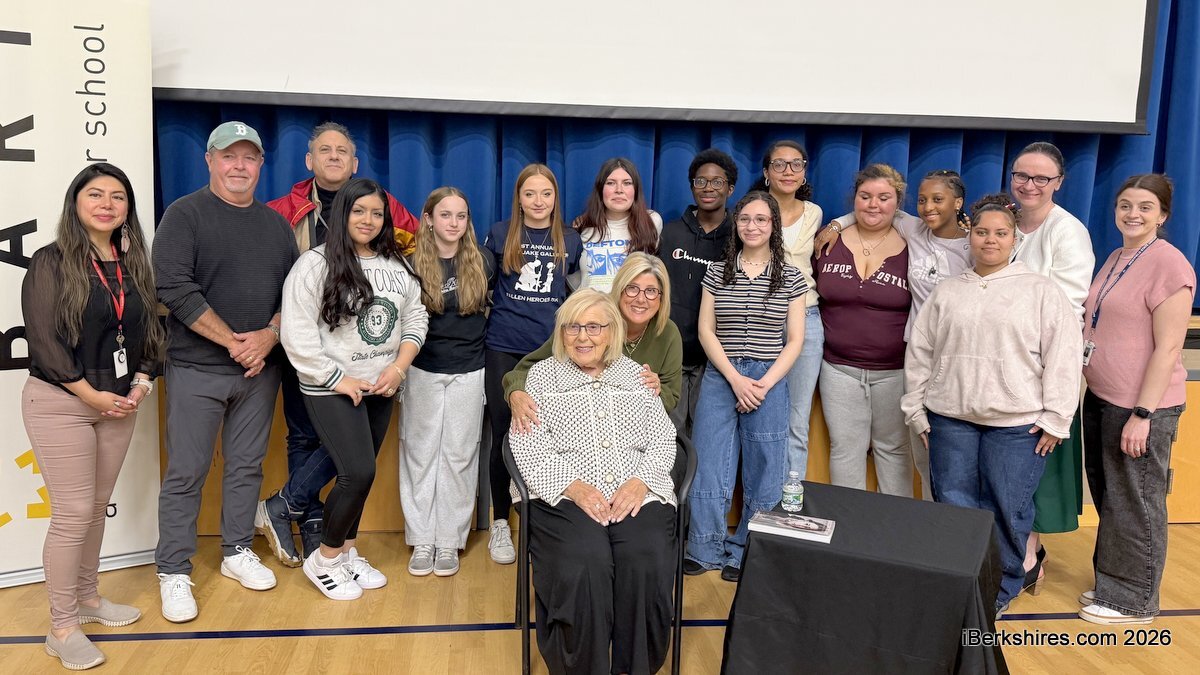
A social worker, she's spoken to thousands of students over the years, and on Wednesday was at Berkshire Arts & Technology Charter Public School to recount her experiences as a child Holocaust survivor from Krakow.
More than a hundred students in Grades 8 through 12 filled the gym and even more watched from their classrooms as she told of her experiences being separated from her family, living under false identities, and enduring profound loss — witnessing loved ones and neighbors being abused, starved, murdered, or sent to concentration camps.
An estimated 6 million Jews were murdered in the Holocaust and another 5 million people for their politics, religion, sexual orientation and resistance, and as prisoners of war.
Amid the hatred, there were also seeds of kindness, showing how even the smallest acts can create a lasting ripple effect, she said.
Those that risked their lives to help the persecuted during the Holocaust didn't just save those individuals, but also the lives of future generations, Applefield said.
"So, I urge you to be mindful of those choices that you make and don't be silent. Because we all have power. We all have voices. Silence doesn't help anyone. In fact, it helps the perpetrator," she said.
Although being generations apart, Applefield and these high schoolers share something in common — witnesses of a turbulent history.
While she survived the experiences told in history books, future pages are still being written as students watch patterns from the past re-emerge in today's society, she said.
"We live in a very difficult and divided country, and I feel that the students, hopefully, are inspired to speak out against any injustice that they may see," Applefield told iBerkshires.
"We see tremendous amounts of hatred and discrimination against every different kind of group, and what the students can do is to not be silent, to speak out, and to try to make some changes."
Applefield's appearance was underwritten by a Genocide Education grant from the state Department of Elementary and Secondary Education. It included the purchase 225 copies of Appleton's book "Becoming Janet," her story of survival and becoming American.
Leaders of the school's Black, Indigenous, and People of Color Union helped organize the event, emphasizing the importance of staying connected to history to help ensure it is not repeated.
"Bringing in a Holocaust survivor is really important for the school, especially in a time like this, where everything is so polarized and a lot of hate and prejudice is rampaging our society right now, and it's important to hear different stories and grow from lived experiences," said junior Aiko Hosmer.
Hosmer emphasized the importance of staying informed and understanding history to help address mass atrocities occurring around the globe, particularly in light of ongoing events and "misinformation" being shared in the media involving the United States and the Middle East.
"I think that for people that have experienced things like Janet has, it's probably scary to see what's going on in America right now, seeing a pattern of previous leaders having this type of totalitarian mentality towards their own country is probably scary," said Ginerys Vazquez Melendez, a senior.
"But I think the biggest way to fight it is by speaking about it and desensitizing it and letting people know that you can stand up and you can fight for what you think is right, because your voice does matter, and especially in a time where your voice is being blocked off, you need to speak up."
Despite being 91 years old, Applefield is very active in sharing her story. Last week alone, she spoke to 6,000 students, her daughter Deborah Applefield Milley said.
In 2025, she spoke 80 times and she is on target for doing about the same this year, she said.
"I know my mother and I are very triggered by what's happening in our country today, and in many ways, it's somewhat reminiscent of pre-World War Two. So it's very important that my mother's story gets to be heard by as many young people as possible, so they know the dangers that happen when hate is perpetrated," Milley said.
"I have so much admiration for her. It's her doing, she will not slow down. She feels compelled to reach as many people as she possibly can and I think it's a beautiful treasure."
The event also kicks off Jewish American Heritage Month in May and allows the school to highlight and celebrate the Jewish community, students said.
"As a senior, I hope this event leaves like a mark and opens a way for us to do other events like this and expand on it so that in the future, so other generations can see the importance of what we're doing and join BIPOC," said Dareen Hage, another BIPOC member.
This event brings to life the experiences that they read in history books or memoirs, such as the "Diary of Anne Frank," or hear from loved ones and demonstrates the effect of genocide, hate and prejudice, Melendez said.
"I think having an event like this, students can really understand the severity of what hate does to a society and how it cripples a society from within. And yeah, I think this event is really important for addressing that type of hate and prejudice," Hosmer said
As many students are preparing to graduate, junior Mickeayla Rosa Pietri, a BIPOC member, said she hopes her classmates leave the lecture recognizing the importance of talking about these historical events. When there are no more survivors, those who listened to the stories carry it on, she said.
The lecture gave students a powerful, life-changing, firsthand perspective on history that goes beyond textbooks, Principal Joe Huston said.
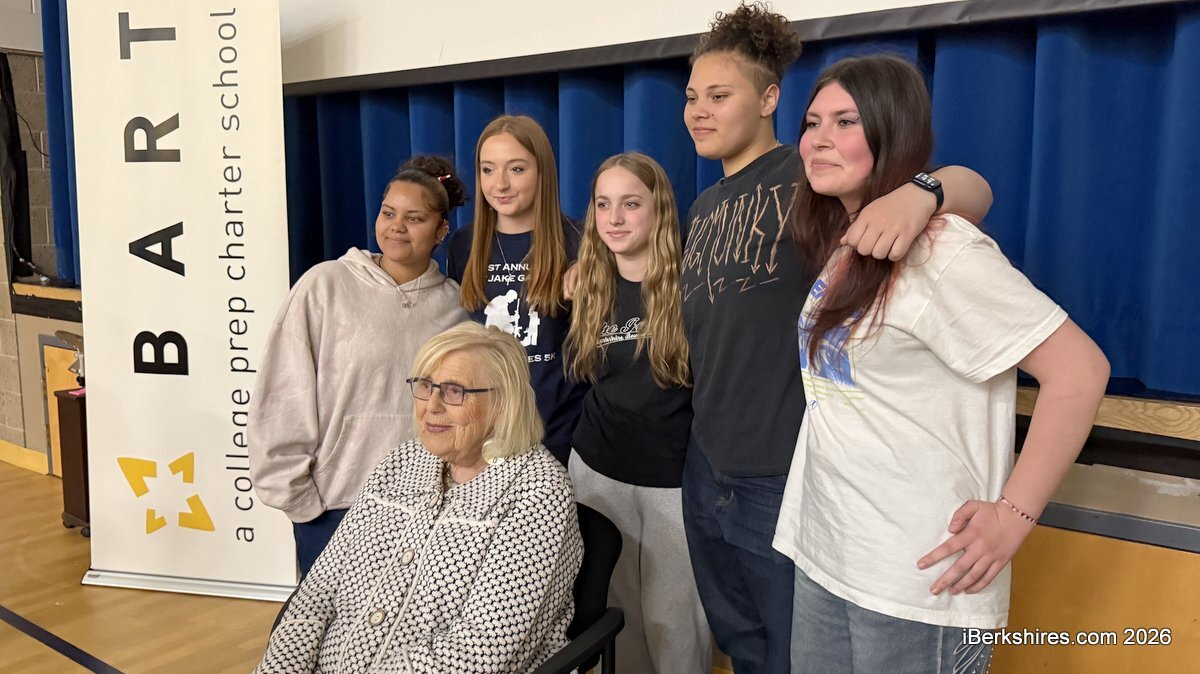
"I was impressed with how attentive the students were. They were really engaged with it, seeing how they stayed to interact with Mrs. Applefield afterwards, hugging her, asking her questions. Clearly, they were impacted and touched in significant ways. And I think that's it's awesome to be able to deliver that kind of experiential learning to our students," he said.
Sometimes it is challenging for people to understand others' experiences and perspectives. Hearing from Applefield can help students reflect on their actions, think more thoughtfully about how they treat others, and learn from history in order to build a better, more compassionate society, he said.
"One of the powerful things that Mrs. Applefield said was, that the atrocities of the Holocaust didn't start with gas chambers. They started with words," Huston said
"And I thought that was a powerful moment for our students to be able to reflect and understand the impact that words can have, even on a small level. That would be a really valuable lesson for them to take away."
Tags: BArT, Holocaust,