New BRPC Executive Director Shares Vision and Reflects on Role
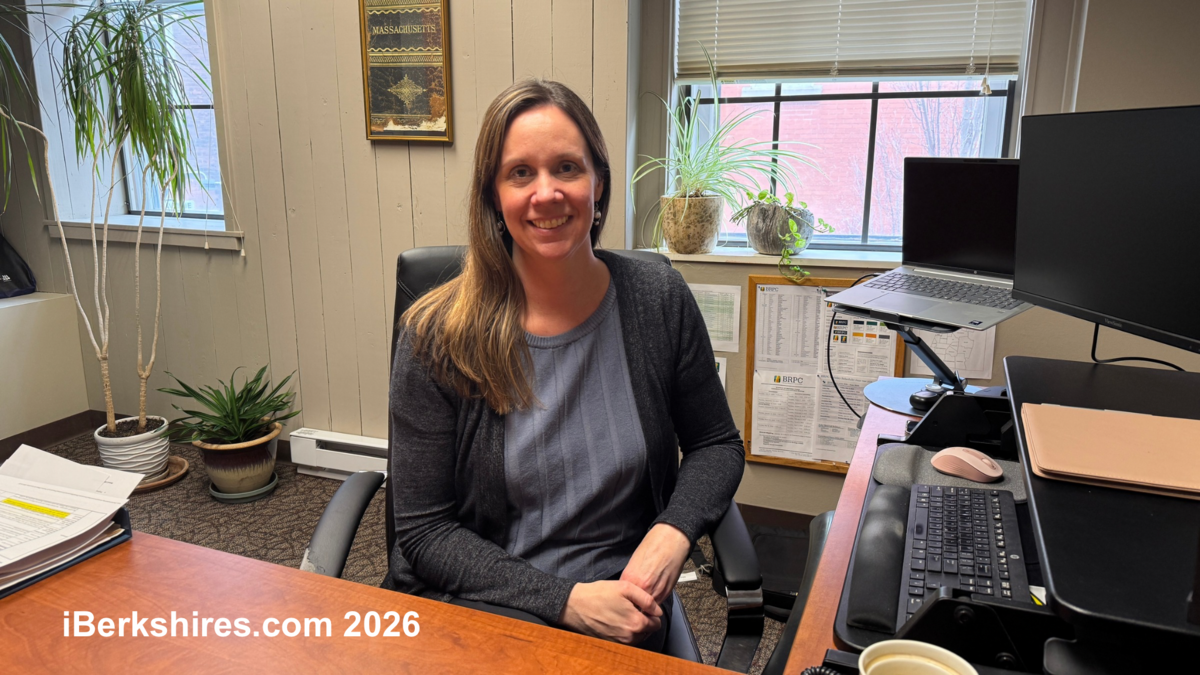
PITTSFIELD, Mass. — The new chief of the Berkshire Regional Planning Commission is excited for her new role.
Laura Brennan was voted as the executive director after an extensive and lengthy interview process earlier this year to replace retiring Thomas Matuszko.
Brennan was the economic development program manager for three years and senior planner for six. Prior to that she was the marketing and operations director at Hancock Shaker Village and director of member and client services for the Berkshire Visitors Bureau and 1Berkshires.
She earned her bachelor's degree from Franklin & Marshall College in Pennsylvania and a graduate-level certificate in local government leadership and management from Suffolk University.
"I came over to BRPC from 1Berkshire to do economic development planning, and it was a pretty smooth transition, because I did understand quite a lot about economic development in the region and I was able to jump right in to some of the early projects that I was asked to do, including supporting both Lenox and Great Barrington in establishing cultural districts," she said.
"That was part of my early work here, and that was a great fit, because I had come from the cultural and museum world and understood the benefits of that kind of place making, and also really knew how to be a community organizer and get all of the stakeholders around the table to tackle something like going after a cultural district designation, which is actually quite an undertaking."
Other projects she worked on included supporting Lanesborough businesses with networking events, assisting Adams with opportunity zone designations, and helping to open Greylock Glen Visitors Center.
Brennan's interest in the executive director position stemmed from her current position as well as from Matuszko. She also credits her enthusiasm for organizational mission-driven work.
"I had been given the opportunity to really be exposed to what it was to be the executive director, as I spent time serving as the assistant director," she said, adding Matuszko had been "great about inviting me into meetings and discussions that have really taught me what it is to involve ourselves at a state level and a regional level outside of Berkshire County, so that I understand sort of where we position ourselves in those conversations. And that has been extremely helpful."
She is also excited to be at the helm of an agency with a mission that aligns with her values.
"I think the best way that anybody can be part of an organization like this is to have an agency mindset that prioritizes, first, our long-term mission, and to take the long view about the impact of our work and our relationships with the clients that we serve," Brennan said. "I say clients really, that's the 32 municipalities of the Berkshires, and I see that in a lot of my colleagues, and I see that as a set of values that is going to really serve us."
Once starting her role May 1, she hoped to utilize BRPC's nonprofit arm, Berkshire Tomorrow Inc.
"It's not super common, but in our case, I think it is a great opportunity to go after funds that we wouldn't be eligible for as a public entity," she said. So if we think about diversifying our revenue to be able to continue to serve the Berkshires, we have to think about non-federal sources, and in some instances, probably non-state sources, because the state is being impacted by cuts and changes at the federal level. So being able to pursue private foundation funds, I think, is a big area of opportunity for us, and so I hope to really leverage that nonprofit entity that is housed underneath BRPC."
She also hopes to immerse staff within other departments and get them out of their "silos." It's important for them to get exposure on other kinds of planning and work on cross-disciplinary on projects, Brennan said, "so that they don't get stuck in a rut."
"Just learn more about our profession and learn more about what planning can do in different ways, whether it be public health impacts or transportation impacts or economic development impacts," she said. "So I'd like to see more sort of cross departmental, interdepartmental project work, which we have, again, we've dabbled in that, and we've had some really good, successful experiences."
Brennan came to the Berkshires around 20 years ago from the Adirondacks and said it instantly felt like home. She said the community is something she is excited to support and collaborate with.
"I love the variety that we have, but I also love the unity that we have as a region that we are the Berkshires and not necessarily, 32 individual municipalities," she said. "And I'm really eager to find ways for us to work together more effectively. Again, I think there's some great examples of towns collaborating on shared services and finding ways to deal with staffing concerns or cost concerns or just efficiencies, and I'd like to see that grow."
Matuszko retired after 30 years, eight of those as executive director. Brennan, only the fourth person to lead the 60-year-old agency, is grateful for his mentorship and how he has handled the agency during his tenure.
"Tom has been such an amazing mentor for me. He has taught me so much of what I understand about this work and about how to interact at all levels of government and to persevere. He's been here for nearly 30 years himself, and has certainly seen a lot of different economies and different political environments and different just versions of our region. And he has been steadfast in again, also serving the Berkshires," she said.
"He has never held back when I have needed better insight into how things got to where they are. He has a lot of institutional memory, but he also has a lot of optimism and willingness to again, take the long view and say that's going to be a hard change to effect, or this is going to be a hard project to work on, but it's worth it, and so I really appreciate that pragmatism."
Outside of BRPC, she and her family enjoy the Berkshires and its variety of opportunities and activities.
"I am a mom and wife, and our family does a lot of outdoor activities together. We are huge hikers. My kids have been all over the Berkshires and a little bit of the Adirondacks on trails, and they love it almost as much as my husband and I, but they've been out there really since the temperature was warm enough to take them out as little babies.
"And that's a big part of why I love the Berkshires, too, is I love the combination of the creative economy and the natural beauty. I think we have an unmatched combination of those two things here."
Tags: BRPC,