Dalton Counter Sues Berkshire Concrete

By Sabrina DammsiBerkshires Staff
Print Story | Email Story
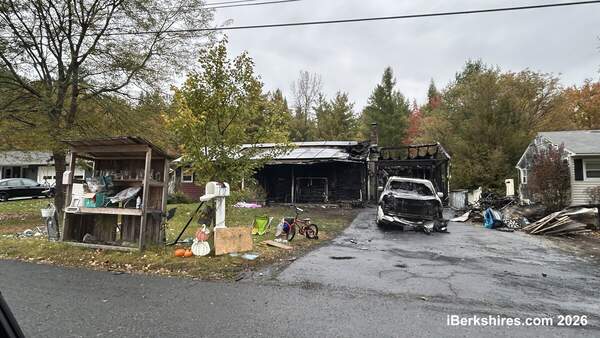
DALTON, Mass. — The dispute between Berkshire Concrete and the town has taken another turn as the town pursues a countersuit against the excavation company.
 
On April 13, Berkshire Concrete Corp., a subsidiary of Petricca Industries, launched legal action against the town, seeking damages, the overturning of the Planning Board's denial of its special permit, and additional proposed orders of a court. 
 
The town has responded with a countersuit of its own, seeking a preliminary injunction requiring Berkshire Concrete to fully restore Lot 105-16 and a permanent injunction mandating an effective dust mitigation plan. 
 
The suit also requests that Berkshire Concrete pay all fines assessed against them, along with the town’s legal costs and attorney's fees, and other relief deemed by the court. 
 
The claim explains the timeline of events dating back to 2024 when Berkshire Concrete started mining without town approval on parcel 105-16, clearing trees and vegetation that abuttors claimed acted as a natural barrier. 
 
The removal of this vegetation resulted in the creation of a corridor for wind to carry dust from the lot and onto residential properties in the abutting neighborhood, the suit claims. 
 
Almost a year ago, both the Select Board and Planning Board expressed that they wanted parcel No. 105-16 fully mitigated to abide by the town's bylaws.
 
This vote was supported by the Zoning Board of Appeals, which ruled that Berkshire Concrete had violated zoning bylaw 350-61 Section E. Restoration. 
 
Petricca Industries appealed this decision, however, ZBA upheld its initial vote and ordered the company to fully remediate or cover the dig site to abide by town bylaws.
 
View all previous stories iBerkshires has written about the situation here
 
The town claims that Berkshire Concrete violated the town’s zoning laws by not remediating the entire parcel, adversely impacting the public health, comfort, and convenience of the abutting neighborhood. 
 
The suit outlined the number of efforts the town underwent to compel Berkshire Concrete to comply with the town's bylaws including numerous meetings, numerous letters, fines, and obtaining consulting services from Berkshire Environmental Consultants, Inc.. 
 
Berkshire Concrete was issued a $50 fine on April 25; a subsequent $100 on April 26, and $300 daily fines continuing thereafter until a detailed restoration plan is received. The town continues to issue daily fines, which Berkshire Concrete still has not paid. 
 
On March 2, the Board of Health issued a $5,000 fine to Berkshire Concrete for creating a public nuisance by allowing sand and dust to leave the property and for failing to submit an adequate dust mitigation plan despite numerous orders.
 
This fine went unpaid and was not appealed. However, Berkshire Concrete did appeal the subsequent fine of $10,000.
 
During its meeting in April, the Board of Health voted to uphold the fines. These fines have also gone unpaid.

Tags: dust, debris,   lawsuit,   
If you would like to contribute information on this article, contact us at info@iberkshires.com.

Lanesborough Select Board Tables JMJ Negotiations

By Breanna SteeleiBerkshires Staff

LANESBOROUGH, Mass. — Tensions swirled at Monday's Select Board meeting in light of conversations to dissolve the Baker Hill Road District.

The meeting started with public comment, including from Tim Grogan, development consultant for JMJ RE Holdings, who emphasized that without a dissolution of the road district, the potential sale and redevelopment with the mall would fall through. 

He said the town expects about $760,000 in fiscal 2027 from the road district plus normal taxation. With redevelopment and no district, total income is projected to be around $1.1 million by 2029, he said, implying about a $300,000 annual surplus versus the status quo. He said he provided those calculations to the board.

Keeping the road district alive is not a compromise, Grogan said, referring to a proposal floated by the board last week to facilitate the mall's sale and work with the road district to reduce its tax assessment.

"This mentality by previous select boards and the Baker Hill Road District is what led the property to its current condition," he said. "Further, the Baker Hill Road District has every motive to make this compromise work, as their alternative is dissolution and non-existence. This practice is inherently in bad shape, and JMJ will not entertain any circumstance where the Baker Hill Road District continues to exist. 

"JMJ is inclined and trying to be treated like any other business in the town, and taxes such just like every other major shopping center in the state, keeping the Baker Hill Road District in place will continue to discourage redevelopment, and in this moment will break the delicate balance that has been negotiated between JMJ, Lanesborough, and [buyer Cypress Equities] to the point where the project is no longer feasible, and the only choice is litigation." 

Lyndon Moors, chair of the Finance Committee and recent appointee to the district's Prudential Committee, spoke personally in favor of keeping the district. He said it currently provides more than $500,000 per year to the town, which helps fund two police officers, fire and police vehicles, and over $100,000 per year for the Department of Public Works. He said losing that revenue could significantly impact town services and future budgets, especially as free cash may be lower going into FY28. 

He suggests downsizing the district's budget to reduce the tax burden on the mall and Target, which owns its building separately, while still maintaining revenue for the town. The board should let the litigation play out and not be too hasty in making decisions, he said.

"I think it is unlikely that we will see $1.1 million from the mall property without Baker Hill Road District in FY29. That's what I just heard. We are in FY27 right now. I think that's very unlikely two fiscal years from now, that we are enjoying the tax benefits to the tune of $1.1 million. So I would encourage the Select Board to put on the brakes a little bit, continue to be thoughtful, responsive, deliberative, and let's continue to do what's best for the town," Moors said.

Moors mentioned a Facebook post posted by Blake Mensing, one of the owners of JMJ, on the town group with documents that could be relevant to the meeting, saying it looked as though he was trying to negotiate in public. Mensing said it was an exercise of his First Amendment rights and an attempt to provide transparency to residents, especially since JMJ's opportunity to speak is limited to public comment.

Vice Chair Julie Baker suggested the compromise, said she and board member Michael Murphy have had "very robust and constructive discussions with the district."

"The purpose of it was to see if we could work with them to lessen the special tax burden that the district imposes on the owners, all owners of the mall properties, and while keeping the special tax district in place to preserve the police, fire, police car, and road maintenance services that we received from that special taxation," she said. 

Baker said the district is also interested in giving the road to the state, if the state allows. They also reviewed the district's $800,000 budget and discussed reductions but have not made concrete decisions.

"We find a great deal of interest in helping cut the budget there so that it would reduce the tax burden as well," she said. "So we're not ready with specific numbers yet on that, but there's certainly the willingness to make some major cuts into that budget."

Chair Deborah Maynard said she wants to dissolve the BHRD and that she would not want them to go ahead with the discussions.

View Full Story

More Pittsfield Stories