Why Berkshire Community College Is Essential to Our Community
 |
Berkshire Community College is central to the life of Berkshire County, and nothing demonstrates BCC's contribution to the community more than its ability to provide a trained, ready workforce. BCC is deeply connected to the needs of our Berkshire County employers, tailoring its academic programs to specifically meet their needs. The nursing program, for example, trains professionals in many nursing fields that keep up with an ever-growing demand. Meanwhile, BCC's workforce training certificates
cover high-demand employment areas, including social services, hospitality, manufacturing, engineering, education, computers and IT, business, Commercial Driver's License (CDL) holders and more.
With free community college in Massachusetts, BCC attracts students from diverse backgrounds who are either entering the workforce for the first time, or who seek to gain or improve their skills and expand their careers. Free tuition supports students to succeed across the Commonwealth, and BCC is no exception. This past year, enrollment was up 13 percent. The number of students pursuing a certificate or degrees is up a stunning 73 percent over fall 2022.
Access and support
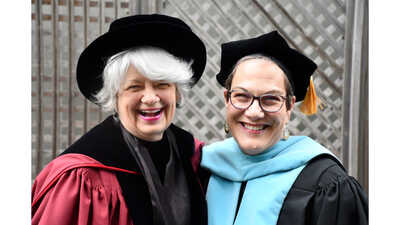
BCC's mission begins with access. Its welcoming environment draws students from across the Berkshires, the Commonwealth and beyond. That diversity is what makes the College special. Perhaps no one understands this better than outgoing BCC President Ellen Kennedy, who is retiring after 14 years of service to the College.
"Everything we do — every program we offer, every strategic plan we create, every building improvement we make — means nothing without access," Kennedy said. "The real meaning of community college is exactly what its name implies: a place for the community that welcomes everyone, regardless of where they are starting from, and gives them the tools to succeed."
Such supports are critical for student success, and it is an area in which BCC "truly shines," Kennedy said. From tutoring and mentorship to ensuring students have access to food and transportation, BCC makes it possible for students to complete degrees or certificates on their own timeline, including many who never thought it possible.
"We have students who haven't stepped foot in a classroom for decades, who never thought they would be going back to school, and who might be incredibly nervous at the prospect," she said. "Sometimes, those students might be working multiple jobs to make ends meet. They might struggle putting food on the table or finding care for their children or their parents or grandparents. Once we understand what a student needs, we act."
Meeting the everyday needs of students
In the last academic year, more than 200 students met with a coordinator for urgent non-academic needs — food, housing and childcare. BCC's Campus Cupboard food pantry has welcomed more than 350 students through its doors, nearly 900 times. Many depend on it not just to feed themselves, but everyone in their household. None of this would be possible, Kennedy notes, without the support of generous donors and community partners.
"Supporting academic achievement is equally vital," she said. One of BCC's most effective tools is SUCCESS (Supporting Urgent Community College Equity through Student Support), a program supported by the Massachusetts Legislature–funded program designed to do exactly that. SUCCESS is open to all students, with particular focus on those facing financial barriers, first-generation college students, students with disabilities and LGBTQIA+ students. Services range from academic advising and skills
workshops to transfer support and visits to four-year colleges. The impact is clear: Students who engage with a SUCCESS team member at least three times in a semester remain enrolled at a rate of 75 percent.
Continuing the legacy
When incoming BCC President Hara Charlier learned about programs like these, she knew she'd found the right place. Having served for 10 years as president of Central Lakes College in rural Minnesota, she understands the meaning of access and inclusion.
"I believe deeply that a robust and inclusive culture creates a strong college," said Charlier, who created a program called "Culture of Caring" at Central Lakes. "We wanted a culture that felt like family, a place where we could change students' lives together, and where everyone has a voice in the college's future."
Charlier's additional passion is student success, especially as it pertains to what happens to students after they leave the college. During her tenure, the college refocused the mission to "build futures," defined by post-completion outcomes. "When we propel upward social and economic mobility, we transform lives," she said.
Kennedy and Charlier agree that a deeply rooted connection with the community is essential. Meeting specific workforce needs has always been a priority for Kennedy, and Charlier is eager to take on that responsibility.
"Community colleges are the engine that provides a talented and educated workforce. This is particularly important in rural communities, where populations are smaller and jobs may be harder to fill," Charlier said. "Everything we do must align with the needs of Berkshire County."
The heart of the community
That relationship goes beyond employment, however. Last summer, BCC held a Community Fest celebration, a full day of activities with more than 2,000 people in attendance.
"BCC is the community's living room," Kennedy said. "Our recent celebration not only drew faculty, staff, students and alumni, but also local families with children who simply came out on a beautiful day to be together. That is exactly what a community college should be."
Kennedy notes that BCC welcomes the community all year. Gym membership at Paterson Field House, plays, musical performances and art exhibitions are open to the public. The BCC chapter of the Osher
Lifelong Learning Institute (OLLI), designed for people over 50 years old, offers lectures, courses, outdoor activities, author talks, trips and special tours of Berkshire cultural attractions — and many are free, with no membership required.
When Berkshire Community College was established in 1960 as Massachusetts' the first community college, its goal was simple: provide access to higher education for all. Today, that goal is stronger than ever.
"We could not be more energized by the commitment of our students, the dedication of our faculty and staff, and the ever-growing relationship with the Berkshires we are so honored to serve," Kennedy said. Charlier couldn't agree more, adding, "Students with a bright future help to create communities with a bright future. No one is in a better position than BCC to create that future, and I'm excited to be a part of it."

Tags: BCC,