Nature Conservancy Opens Dedicated Trail in Mount Plantain Preserve
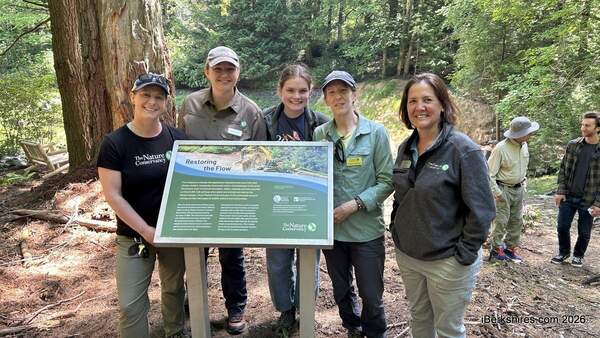
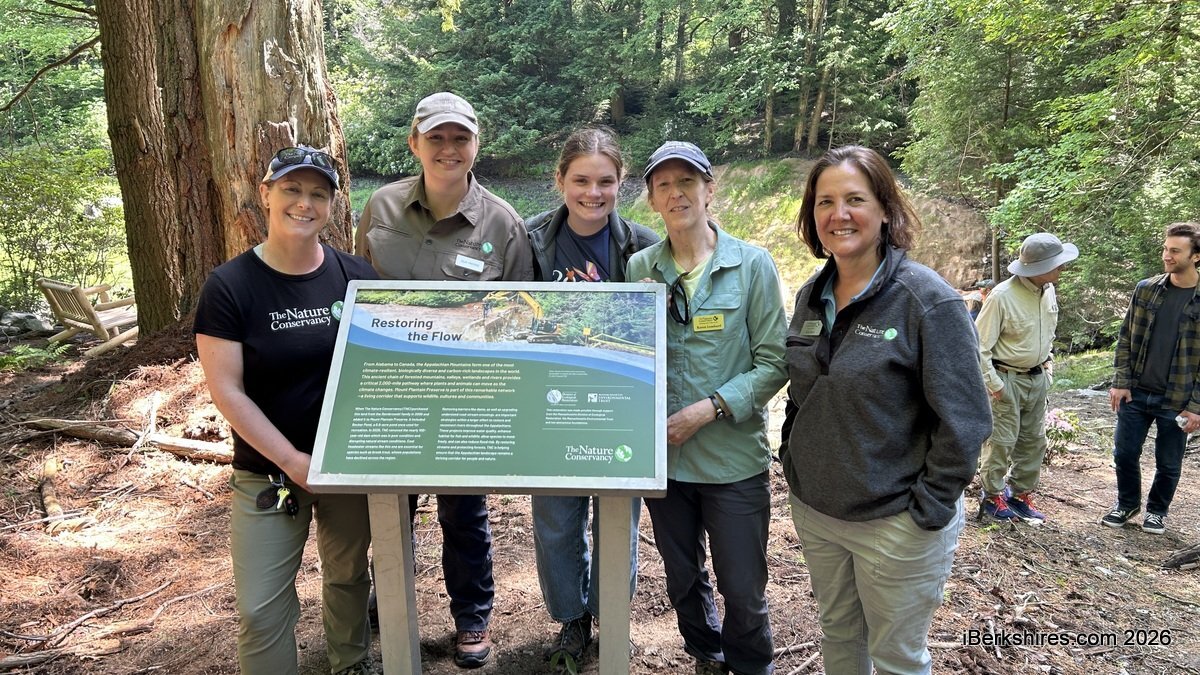
MOUNT WASHINGTON, Mass. — The Nature Conservancy has celebrated the opening of a new nature trail and the removal of the Becker Pond Dam.
The Hallig Trail, a 2.25-mile hike through the 1,600-acre Mount Plantain Preserve, is named after generous conservancy donor Bobbie Hallig. Hallig, who has ties to the area dating back more than 60 years, explained the trail is gorgeous, not difficult, and there is even a spot where a bear has severely clawed a tree.
"There are many interesting things about this walk, and people should come and take a hike," she said before the first official traverse on June 24.
"Mount Washington is a unique habitat. It's one of the treasures of New England. It is the second-largest preserved area by The Nature Conservancy, and it's hugely important for the globe to have places like this that are wild."
Kris Sarri, state director for conservancy, said the preserve is a cornerstone of its work in the Berkshires and is also a part of something much larger: a more than 100,000-acre region spanning Massachusetts, Connecticut, and New York, defined by mountain peaks and rare wetlands.
"In the early 2000s, TNC scientists actually identified this range as one of the last great places," Sarri said.
"It's a globally significant landscape worth protecting at a large scale."
When the conservancy purchased this land from the Dombrowski Family in 2000, it was added to the Mount Plantain Preserve and included Becker Pond, a half-acre pond once used for recreation. Today, through work with many partners, that effort has secured more than 20,000 acres of connected protected land.
"Large-scale land conservation would not take place without the vision and dedication of people like Bobbie, whose steadfast support has been deeply impactful here and many other places," Sarri said.
TNC land steward Rene Wendell reported that it takes a long time to do something like this. He described the new trail as a nice, gentle loop, which the Greenagers helped define, that takes you back to the old road that used to be the main road for Mount Washington.
"It would have happened sooner had Becker Pond Dam cooperated, but it didn't, and a giant retaining wall buckled," Wendell said.
The group then walked through the preserve to the spot of the old dam.
TNC partnered with the state's Division of Ecological Restoration to remove the nearly 100-year-old Becker Pond Dam last year and restore the stream's natural flow.
The organization has known the dam needed to be removed since the turn of the millennium. When talk about the new trail arose, they didn't want people to encounter the collapsing structure, and TNC in 2018 applied to become a priority project with the DER.
DER Director Beth Lambert, standing at the site of the old infrastructure, said there is really nothing more exciting than what happens when a dam is removed and a river comes back to life.
"What you see now is not what you'll see in three months, or six months, or a year, or 10 years," she said.
"This will continue to evolve over time as Mother Nature gains a foothold, where before there was the artificial impoundment."
She emphasized that the state is in the middle of a dam removal movement. Last year, Massachusetts removed 15 dams and reached a national record.
DER committed around $785,000 to this project.
By removing the dam, the cool headwater stream provides habitat for brook trout. It is also part of a larger strategy to restore and connect lands and waterways throughout the Appalachians from Alabama to Canada, a 2,000-mile protected corridor that will provide migration space for animals and plants.
"This project is particularly significant because, first of all, it's headwaters. Headwaters are unique ecological habitats. They feed our larger rivers; they provide a home to species that larger rivers don't support, and so projects like this are a high priority for our division," Lambert said.
"And then second, it's part of this larger approach at the Appalachian scale, stretching all the way from Alabama up to Canada to connect rivers and lands, and so for us to have the opportunity to work with The Nature Conservancy on a project of that scale and importance, that's something that's incredibly significant to us."
The group then crossed a bridge over the water that Greenagers built.
The Nature Conservancy is a global conservation organization dedicated to conserving the lands and waters on which all life depends. It is tackling climate change, conserving lands, waters, and oceans at an unprecedented scale, providing food and water sustainably, and helping make cities more resilient.