Pittsfield Honors Disability Pride Month
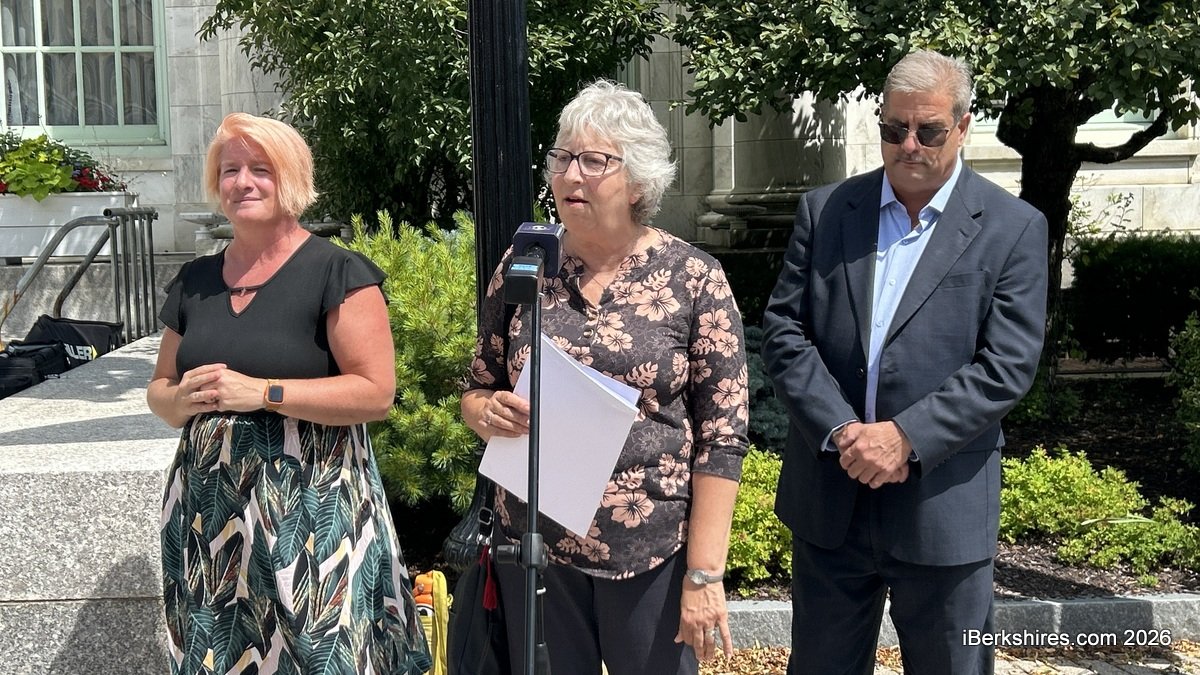
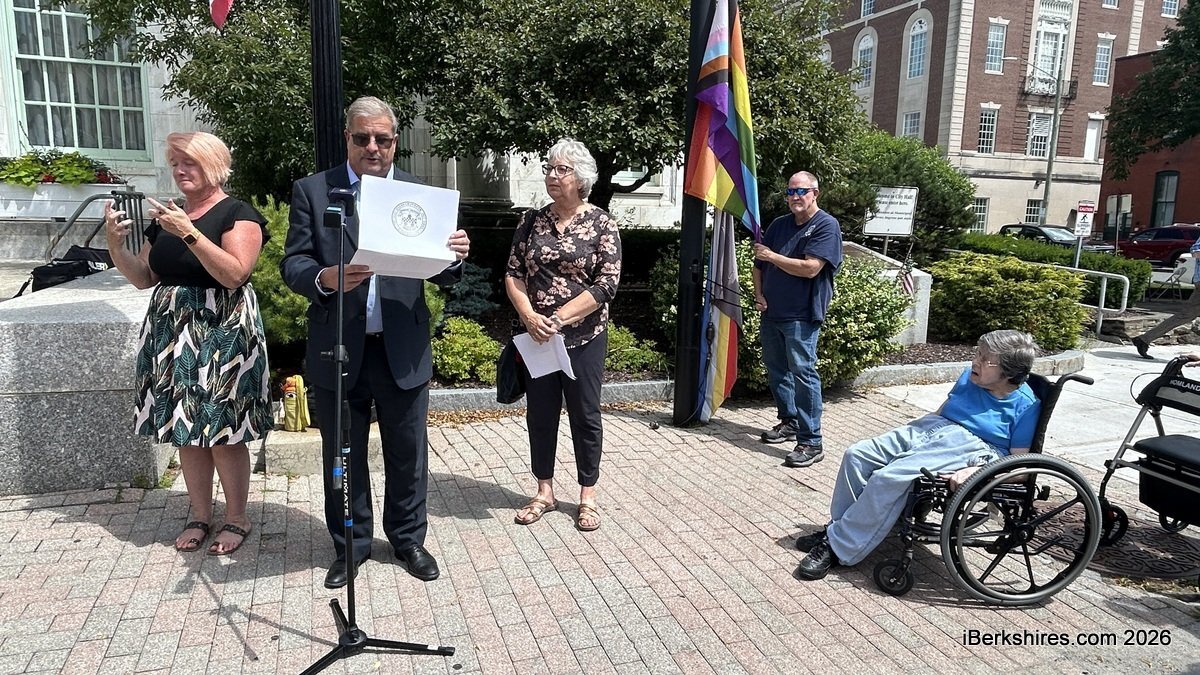
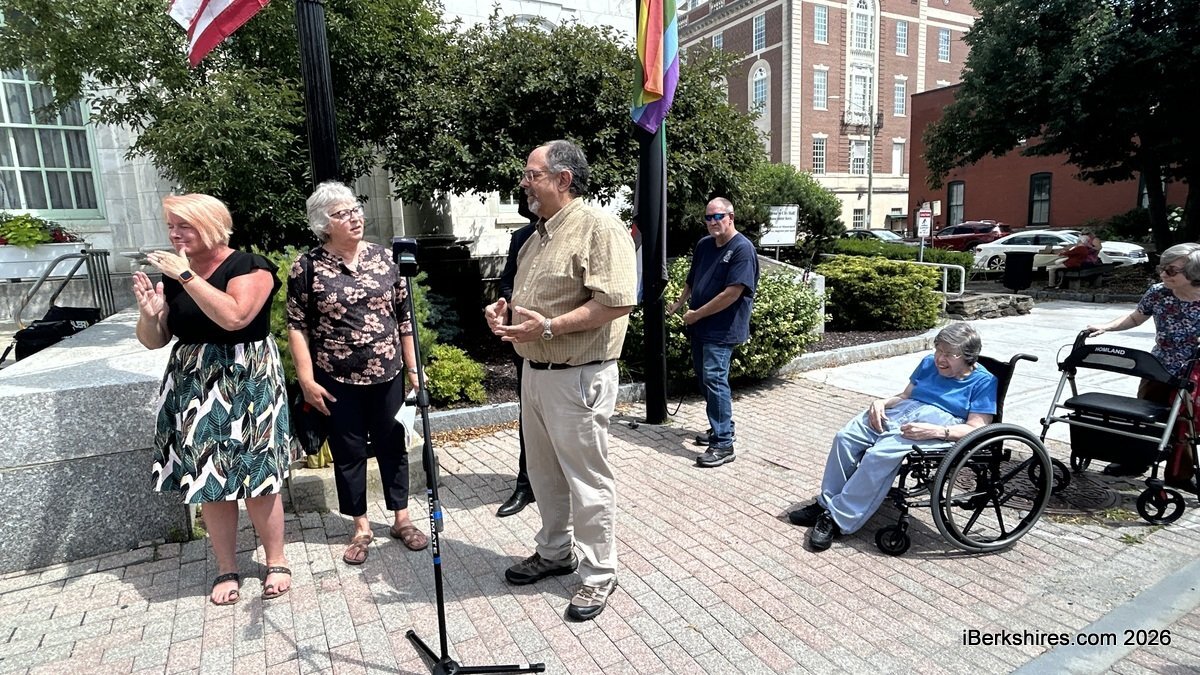
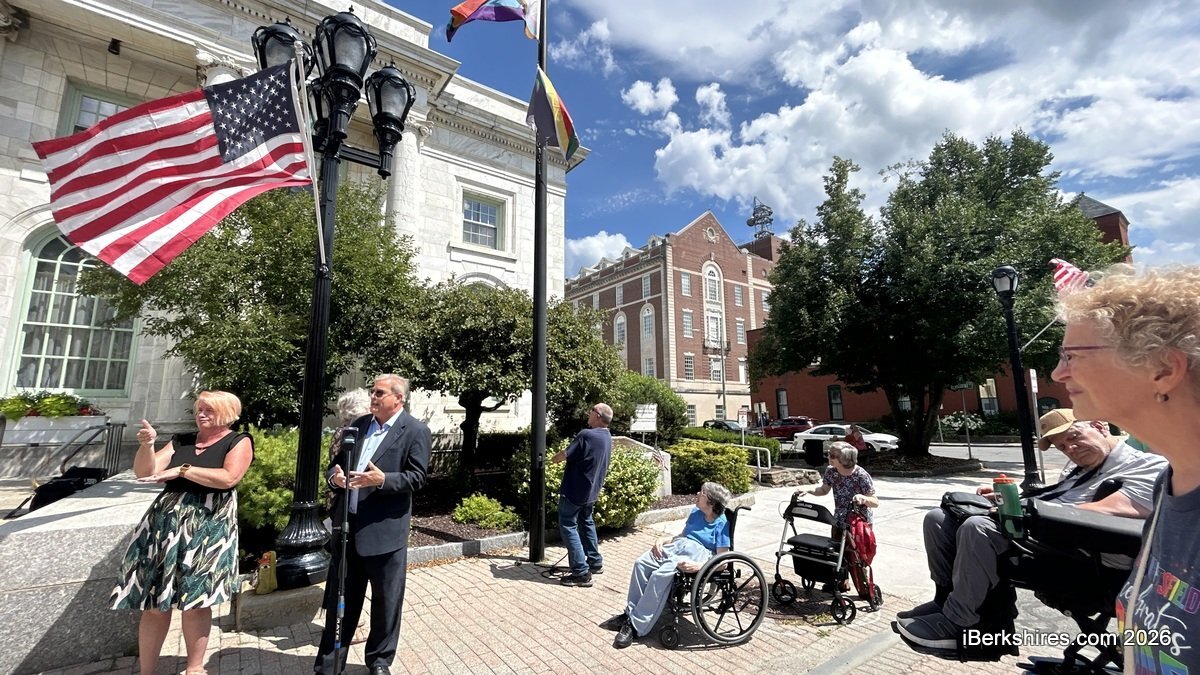
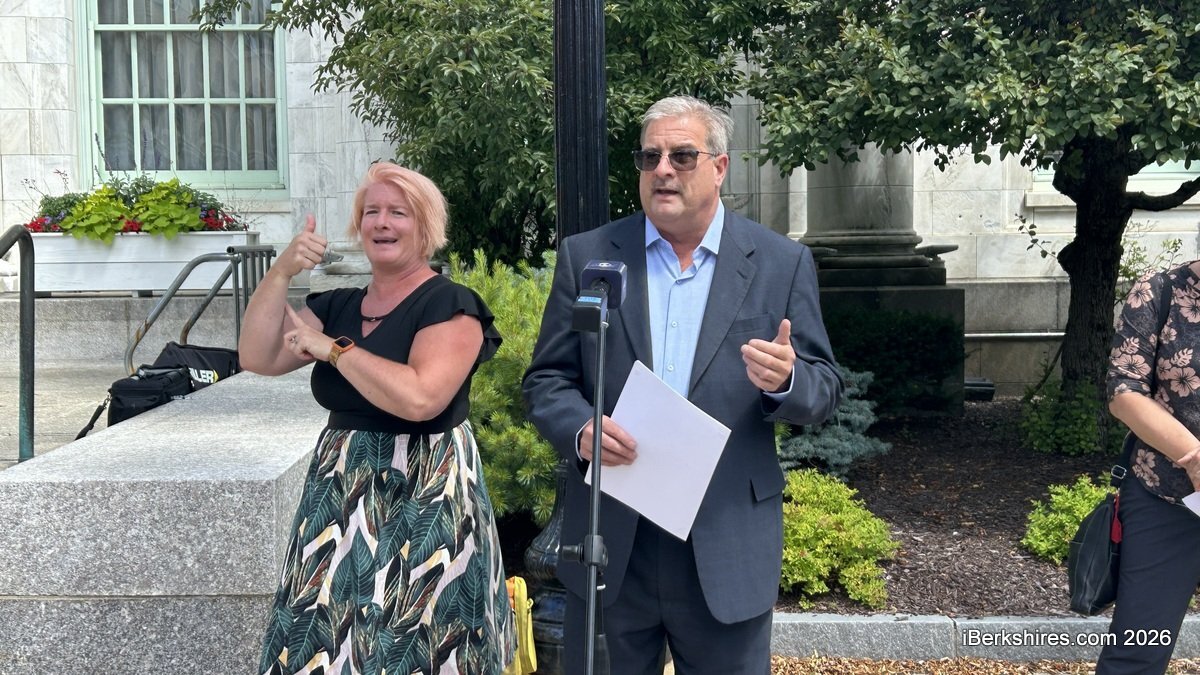
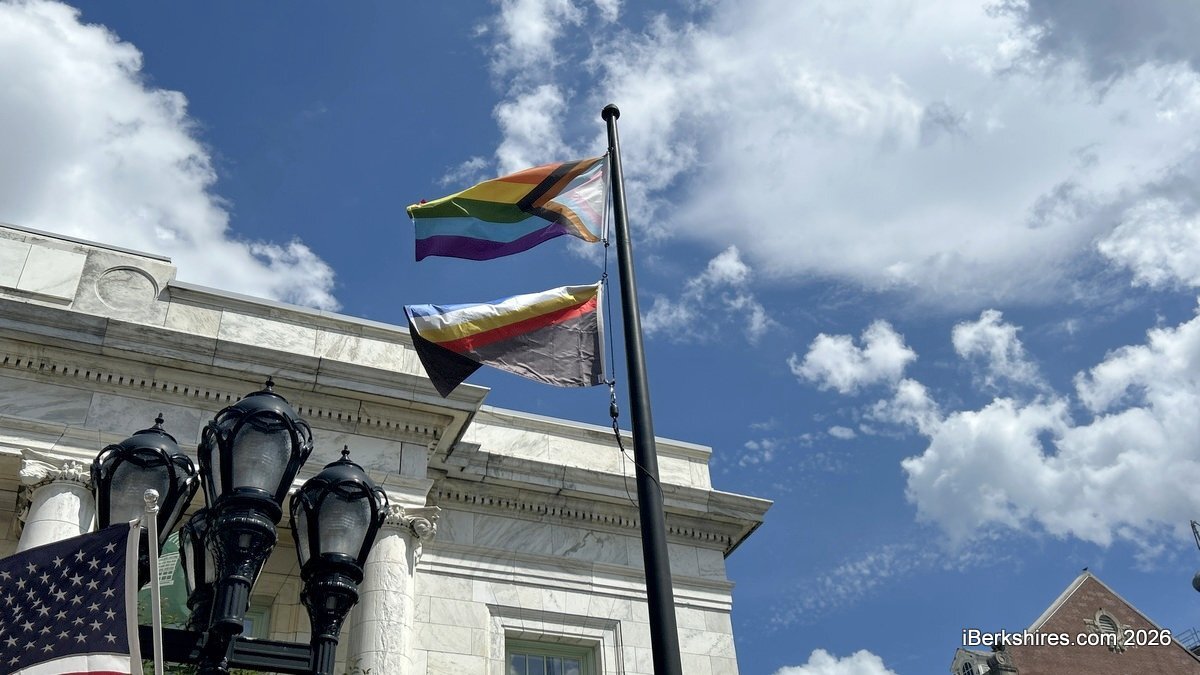
PITTSFIELD, Mass. — The city marked Disability Pride Month with a flag raising on Thursday, recognizing the right of every person to be seen, valued, and included exactly as they are.
Catherine Carchedi, chair of the Commission on Disabilities, pointed out that it has been 36 years since the signing of the Americans with Disabilities Act, and 250 years since the signing of the Declaration of Independence.
"The ADA is really a civil rights movement, and I want to remind people that," she said.
"… It's a civil rights law, and it needs to be protected, especially during these times."
The historic legislation made it illegal to discriminate based on disability in employment, education, transportation, and public spaces. Disability Pride Month was first celebrated in 2015.
Carchedi used the movie theater as an example of how, decades ago, she wouldn't have been able to enjoy a night out with friends who use a wheelchair or require assistive devices.
She said they can now catch a ride to the movies with the Berkshire Regional Transit Authority because all buses now need to be accessible, and find a good place to sit in the theater with seating that meets their needs.
Carchedi's friend with a guide dog can also go to the movies and use a visual descriptive device, and another friend who is hard of hearing can watch the movie with closed captioning or with an assistive listening device.
"Fifty years ago, we couldn't have gone into the movies together and enjoyed an outing, but because of this law, they could," she said. "So it's important that we preserve these rights, not let things slip."
Last year, when honoring Disability Pride Month, officials walked from City Hall, through Dunham Mall, and toward St. Joseph's Church, finding needed accessibility improvements such as a touch-free crossing signal and sidewalk leveling on Dunham Mall.
"Some of the most obvious pieces that we should have all picked up we didn't pick up on, and it was the members of the Disabilities Commission who were highlighting some of the pieces," Mayor Peter Marchetti said.
"What resonated with me was Brian Fitzpatrick saying to me, 'Mayor, what's wrong with the push signal on this light?' And I had to answer, 'I don't know,' because it looked like it was low enough; it looked like it was possible for someone to do. But if you don't have full range of motion of your hands and fingers, then you can't push that button, even if it's right in your sight."
Fitzpatrick has a show on Pittsfield Community Television called "Wheeling the Pathways of Life."
He read a proclamation that affirms disability is a natural and valuable part of human diversity, not a deficit or a condition to be fixed, and states that disability pride breaks down stigma and stereotypes of those with disabilities and serves as a tool to tackle the ableism that persists to this day.
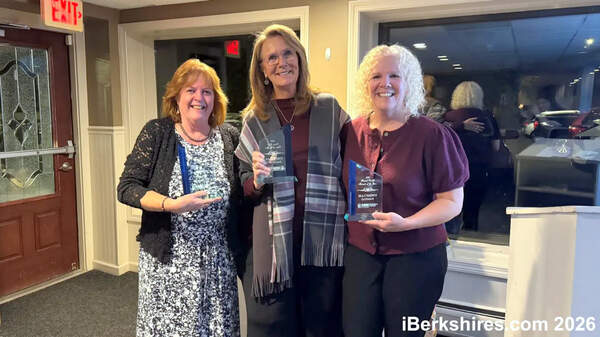
For the first time this year, the commission presented a Disability Inclusive Award. It was given to Shawn Serre, executive director of PCTV.
Carchedi explained that several years ago, she and Serre took up a battle to provide closed captioning on cable.
"The technology was there so that we could provide closed captioning, but there was a mysterious switch somewhere in Spectrum that couldn't be switched, and so Shawn could not show his TV shows with the closed captioning," she said.
"So, with some advocacy, we filed a complaint with the FCC. We finally got that done. So now, anybody can be a part of City Council meetings. They can come in person because City Hall is accessible, or they can watch it on TV, and they can also see it with closed captions. So it's really important that all our citizens are able to participate in the government within Pittsfield."
PCTV implemented closed captioning for certain programs in 2022, but came to a roadblock when the captioning was coming through on streaming but not through cable boxes. It was restored after a complaint reached the hands of the Federal Communications Commission.
"That was a fight that we had to get some extra help with. We did have some help from the FCC. It's illegal to block closed captioning from public access programming. Yes, we found that out, and it took us a while. It took us about two years to finally get that through the system, and they worked it out for us, and we were able to do it," Serre said.
"We also want to say thank you to the Commission on Disabilities and to the Feigenbaum Foundation, who generously help us keep those captions running because they do cost money to create. They're not free, but for many years we weren't able to even put those captions on because only the largest broadcasters could afford to do that."
The community station has been around for almost 40 years now, and Serre said it has always been about inclusion of everybody and enabling a way to ensure people can create media and share it with their neighbors.
Before the flag was raised, Marchetti asked about 30 attendees to keep in mind access elements that he continues to learn about, such as the height of a toilet seat and bed, and the width of a chair.
"These things matter that we all take for granted. But not everybody shares the same ability that we do," he said. "So let's keep all that in mind as we leave here today."
Tags: disabilities, disability commission, flags,