Musician Brings Music of Terezin Concentration Camp to Tanglewood

Mark Ludwig founded the Terezin Music Foundation in 1991. The musician and Holocaust scholar will present at Tanglewood this Saturday.
Ludwig, who at the time was a tenured violist with the Boston Symphony Orchestra, decided to explore the history of music written (and performed) during the Holocaust.
The next time he was in Europe, Ludwig stopped at an archive in Prague, where he was given sheet music written by Terezin inmate Gideon Klein, who had been murdered by the Nazis at 25.
"I opened the score and started playing it in my mind's ear," recalls Ludwig. "And the beauty of it was astounding. It opened up a whole new world to me in terms of music."
The obsession continues. A car accident stopped Ludwig's career with the BSO, so he devoted his time to Terezin, about 30 miles from Prague.
"One door closed, another door opened," said the Boston resident who is founder and executive director of the Terezin Music Foundation.
On July 18, he hosts "I am Alive Because of Music," his fifth presentation at Tanglewood featuring live music from Terezin and World War II. Here, we speak to the Holocaust scholar, who also teaches Jewish Studies at Boston University.
Your work sounds depressing.
I've made more than 100 trips to Terezin, and it never gets easier once you know what transpired there. I've slept in the barracks and I've performed in the crematorium and got overwhelmed emotionally. The experience is so profound it stays with you for the rest of your life.
Did the camp music come out of defiance?
There is no real, quick, easy answer. We must make sure we do not inadvertently romanticize the music or instill our own interpretations. There are pieces that have messaging in them, creating a multi-dimensional statement of defiance that operates on many levels simultaneously. There are also works that were written for fellow prisoners. I think we can safely say that like any composer, the music from Terezin was also for an audience of generations.
Is the music being played depressing?
There's a huge palette, an array of emotions. Some are very dense-like, some are really driving rhythmically, some are like laments. What we will be experiencing at Tanglewood is live performances that transcend nature and are full of hope, and in some sections, defiance.
In the program the act of faith will be explored and how it translates to music. We will be at the intersection of faith. What is the
power of faith in music and of music in faith? My hope for this program is what does the power of music do for performers, composers and the people listening?
Am I right in thinking that any music, especially the music that came out of Terezin, inspired and challenged not only those in the camps but us as well?
Absolutely. You are so right. The music in the program goes beyond the camps, goes outside the barbed wires and walls of Terezin. It traces the journey of being a human being. Some will be familiar, some different, some striking a common denominator. The program brings together music teetered to the Terezin time period. There's Messiaen, Copland, Bernstein. It is music of a time period, the landscape of humanity.
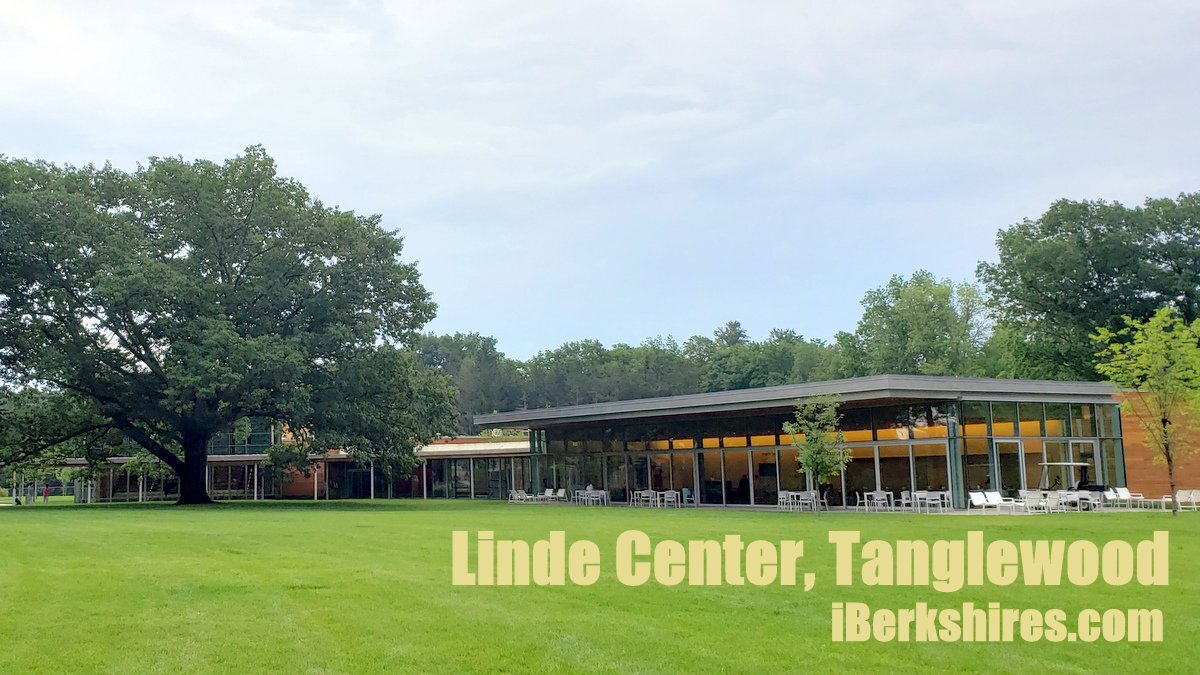
Mark Ludwig presents "I am Alive Because of Music" on Saturday, July 18, at 2 p.m., at Tanglewood's Studio E, Linde Center for Music and Learning. For more information or tickets, call 617-266-1200.
Tags: Holocaust, music, Tanglewood,