Adams Talks STRs: Parking and Business Attraction
ADAMS, Mass. — As Planning Board members continue developing a proposed short-term rental bylaw, one need has consistently emerged: finding a way to regulate them without placing unnecessary restrictions on businesses or property owners.
Planners say the need for community input is essential but comes with substantial challenges.
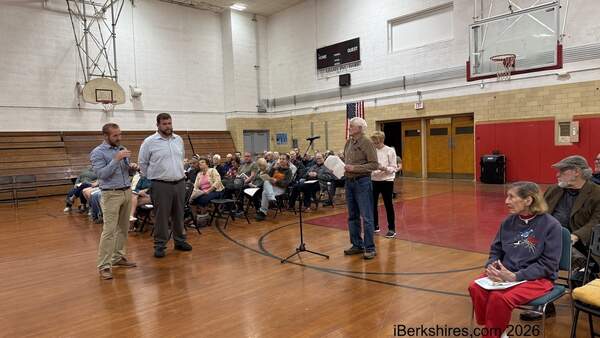
They are proposing to hold public input sessions, with Planner Kathy Foley on Monday recommending they be held at locations other than Town Hall to see if that increases public participation.
Through several meetings, Planner Christian Rowe has consistently emphasized the importance of not overregulating short-term rentals.
He has advocated for a less restrictive approach that relies more on case-by-case review that addresses issues as they arise rather than broad, one-size-fits-all rules.
But Building Inspector Brian Duval said unless the board makes short-term rentals by special permit, no one will be coming before the, as currently the draft bylaw allows them by-right.
In one or two years, the town will start to see issues surrounding short-term rentals and have to address them as they arise based on these complaints, he said.
"Right now we're guessing ourselves out of business," Rowe said at Monday's Planning Board meeting.
Brett Roberts, principal planner with the Berkshire Regional Planning Commission, attended the meeting to present changes made to the draft bylaw based on input from previous meetings and what other towns have considered.
"We've had some good heated discussions today. That's working good for the town," he said.
There has been a lot of effort to increase business in Adams, with the development of Greylock Glen and the work Yina Moore has done to revitalize Adams Theater, which has been the best thing to happen in this town, said Chair Michael Mach.
Rowe also advocated to have more Planning Board meetings about attracting businesses.
The draft bylaw states that owners of short-term rentals must register annually with the town clerk, who will maintain a registry of all approved units.
Additionally, owners need to submit to an annual inspection as outlined in the town's Board of Health rental property regulations.
There was a brief discussion on the definition of "owner" as some short-term rentals are registered under limited liability companies.
It can be difficult for people to navigate the different requirements set by the town, Foley said, and agreed with Rowe's recommendation to have Roberts produce a chart that outlines the steps residents would need to go through to operate short-term rentals.
The new rough draft Roberts presented outlines that the property is required to have one parking space for each sleeping room and that no on-street parking for short-term rentals guests will be allowed to fulfil this requirement.
Several board members agreed that the proposal was too stringent, but acknowledged that some level of regulation is necessary to address concerns raised in certain neighborhoods, including complaints related to parking on Jordan Street.
Duval said the bylaw could include an exemption process for property owners who cannot meet the parking requirement but have a history of operating without parking-related issues.
He emphasized that any exemption criteria should be clearly defined in the bylaw, rather than left to the discretion of the building inspector, to ensure decisions are applied consistently and fairly.
The bylaw also has to align with the state's building code requirements, particularly the sprinkler requirements, which has been a hot topic in communities because of costs and other factors.
Converting a unit into a short-term rental is often a change of occupancy that can trigger the need for a higher-level sprinkler system, 13R or Commercial System, Duval said during a previous meeting.
The state allows one- and two-family homes to have a domestic-line, 13D sprinkler system, which has a lower cost and can be done by a plumber, he said.
The state is actively working to come up with a compliance alternative for the next building code cycle, 11th edition, because it is realizing that it is becoming a problem for everyone but the next cycle will not be complete for a few years, Duval said.
One thing towns are doing, such as Lanesborough, is when they put zoning in place for short-term rentals, they are allowing people to apply for a temporary certificate with a caveat that all other safety regulations are being followed, and give them one year to file for a variance or install the state-required sprinkler system, he said.
The town cannot approve variances for sprinkler requirements because it is a state mandate, Duval emphasized.
Tags: short-term rentals,