Williamstown Board Hears Concerns About 'Hometown Heroes' Banners
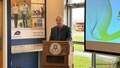
WILLIAMSTOWN, Mass. — Kurt Durocher told the Williamstown Select Board that he had received nothing but positive feedback from the North County communities where he proposed participation in the Hometown Heroes banner program.
Then Williamstown residents started to weigh in.
Durocher was before the board Monday evening to seek its blessing to put banners recognizing living and deceased military veterans on utility poles in Williamstown, an initiative that has been embraced in all but one of the other municipalities in the district where he serves as Veterans' Service Officer.
"The only negative I've had right now, and it's not really negative, [the Town of ] Florida doesn't want banners to go on Route 2, the Mohawk Trail, for safety reasons, understandably," Durocher said. "So we're trying to figure out an alternate way to make that work in Florida."
By and large, though, the reception to the program has been encouraging, Durocher said.
"I'll use Adams as an example," he said. "They've had a program for many, many years, but it's only for [military personnel] killed in action. Now that I've been allowed to take over that program … there's been a huge outpouring of support, because now we get living veterans on the poles as well.
"The only negative I've had is certain people want their banners in certain locations. So what we did in North Adams is we just did a random draw. I can't please everybody. I've got people who want a banner in a certain location, but three other people want that same location.It was a straight random draw for them."
Durocher told the Williamstown board that he wanted to start accepting applications from veterans and their families to have their service recognized in the Village Beautiful now with a goal of getting the banners for all participating towns printed and ready for display by next Memorial Day.
He said his plan is to leave the banners up from Memorial Day to Veterans Day in November to keep them from being damaged by winter weather.
The cost to participate in the program is $125 per family, though he said there will be ways to reduce the cost based on financial need.
"If somebody wants to have a banner to honor their veteran, money's not the reason they can't do it," he said.
Durocher proposed that the Williamstown banners be installed on Main Street (Route 2) between the town line with North Adams to the east and Cole Avenue to the west. Although National Grid, which owns the utility poles, says it does not want such signage affixed to the poles, the utility tacitly allows them, Durocher said.
"Just like the American flags that are currently flying [on Williamstown's Main Street] or the Pride flags we put up in June, it's the same concept," he said. "You're not supposed to, but they're not going to go around and police that. They're not going to take them down. And if they need to get to a pole, they'll reach out, and we'll remove it. It's four bolts, and it comes down."
After the board members asked Durocher some brief, technical questions about the proposal, the body opened the floor to public comment, and three residents took the microphone to express varying degrees of skepticism.
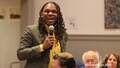
Anna Moriarty Lev told the board she was concerned that the Hometown Heroes program was announced as a seeming fait accompli on the town's social media account without any public input.
"I don't think that they would have just put up Pride flags without the millions of discussions we had to have before we had those, finally," Moriarty Lev said. "I'm a little concerned about that."
Moriarty Lev said that while she supports veterans and is friends with local vets, she does not think that the Hometown Heroes program is the way to support them.
"I'm definitely supportive of actions and programs that directly support living veterans and what they need to survive and thrive," she told the board. "I do not see a way that this program is actually directly benefiting living veterans, such as money going toward programming for health care, mental health care, housing, whatever things our local veterans might need.
"I'd be much more in favor of an action that actually directly, financially supports our local veterans who do need help. And it sounds like I heard that most living vets wouldn't want their picture on a banner. So that also concerns me."
Durocher did, in his presentation, mention that the banners are more commonly placed by families of deceased veterans because living vets are sometimes hesitant to put their name and image on the public displays.
"So I'm concerned about doing something that, if the people were alive, they probably wouldn't want it anyway," Moriarty Lev said.
She also questioned the message promoted by the Hometown Heroes program, which she argued is more about extolling the military, per se, than the veterans depicted.
"A project that highlights people based on one narrow aspect of their experience primarily serves to acknowledge the unifying experience, not the individuals themselves," Moriarty Lev said. "And this Hometown Heroes project is not about these individual veterans so much as it is about the military itself, and it's a way to center positive representation of the military in our community. And I find that to be problematic, especially at the current time that we're living in."
Anton Hasenkampf made a similar point.
"My concern is we have identified one thing a human being can do to be a hero, and that thing is to fight in wars," said Hasenkampf, who told the board that his grandfather flew 52 missions in World War II and his brother is an active duty officer in the National Guard. "And I think, as a town, we have different values than that. I think if we were to have a Williamstown 'Hometown Heroes' program, it would include a lot of other people: teachers, doctors, lots of people do great things.
"And I respect our veterans. I really do appreciate the service they've given to America. I think we should take great care of them. But when I think of countries that have big military parades, I don't think those are places I want to live."
The third resident who addressed the board questioned whether the town should support an initiative to place banners on poles whose owner, National Grid, prohibits such displays.
"One concern I have, among many, is going against what National Grid has explicitly stated for use of their poles," Ben Grimes said. "One question I have along those lines is [Durocher] mentioned that if they need access to the poles, they would contact [Durocher]? So have you been in contact with National Grid and they know you're going to do this even though they said not to do it?"
At that point, Select Board Chair Peter Beck broke in and reminded Grimes that public comments were to go through the board and that the body did not want "cross talk" between participants from the floor of the meeting.
Moriarty Lev, meanwhile, asked the elected officials to consider the potential unintended consequences on some residents who would see the proposed banners displayed around town.
"We're using [veterans'] faces while also promoting this entire organization, which has had such a devastating impact on the world and on many people in our community and their families and their ancestors," she said. "We have to consider the impact of this on them as well -- people who have lost family members in different wars that are being promoted in such a positive way as well as thinking about veterans and their families themselves.
"Not everyone has had a positive impact of the military on their life, and if we're just assuming everyone had a positive impact and would want to have a banner celebrating this part of their life, we're leaving out the varied experiences that people in our community may have had and what effect that might have on them walking around and seeing these."
Durcoher told the Select Board that he was not going to respond to all the points made in the public comment period, but he did want to answer Moriarty Lev's point on tangible support for people who have served in the armed forces.
"For people who are watching and one of your questions: I'm not just some random person who is trying to put up these banners," the veterans agent said. "My job is to provide financial, fuel, clothing, mental health, healthcare, dental -- all of those services. That is my primary job. My secondary process with the banners is what it is. It has nothing to do with my job.
"Just to answer your question: My primary role in this district is to provide food and financial assistance, along with everything else, for the residents of Northern Berkshire.
"That's all I have."
As for Moriarty Lev's point about the town's social media "announcing" its participation in the Hometown Heroes program, Town Manager Robert Menicocci clarified on Tuesday morning.
The post came about from an initial conversation at town hall about the banners a couple of years ago. In consultation with members of the Select Board at the time, Menicocci said the intent was to gauge interest in town for the posting the banners so the board members would have some numbers to consider before approving the proposal.
The social media post was part of the town's outreach to measure that interest, Menicocci said. But, in the interim, a new board had decided on a different approach: consider the proposal at the board level and then go out and solicit applications.
At the end of Monday's discussion, the board members decided they were not ready to make a decision on the proposal, but Menicocci assured them that, like the American flags and [in June] Pride flags on Main Street, it was within the board's purview to give Hometown Heroes the green light.
The members agreed that they needed at least a couple of weeks to solicit feedback from their constituents before taking up the question for a possible decision at the Sept. 28 meeting.
Tags: banners, veterans,