

Local Access Channels Exploring 'New Media' Opportunities, Expanding Options
This is the third on a series on Local Access Cable TV in the new media environment. Find Part 1 here and Part 2 here.
The community-based non-profit organizations that operate local access cable TV channels in the Berkshires have been expanding their roles and strengthening their ties to their communities to adapt to the volatile era of "new media."
The emergence of online streaming has created a decline in their basic source of revenues from traditional cable TV subscriptions. (See articles 1 and 2 for details.) But it has also opened up new opportunities to expand their services, audiences and programming, and to broaden their financial base.
These organizations are known as PEG (public, education and government) media. They were established by members of their communities and operate as independent non-profit organizations. PEG emerged after Federal legislation in 1982 gave municipalities the option to require cable TV companies such as Charter Spectrum to offer designated channels for local programming and provide for their funding when negotiating licensing contracts.
Their original core missions are to provide locally oriented programming on the designated PEG cable channels. They also provide residents, municipal governments, schools and organizations with access to equipment and training to produce programming.
Berkshire County has several PEG organizations that serve different sections of the county. They include Pittsfield Community Television (PCTV) in that city; Willinet in Williamstown; Gateway Collaborative Media (GCM) which serves North Adams, Adams, Cheshire, and Clarksburg; the Dalton Community Cable Association (DCCA); Lanesborough Community Access Television (LCATV), and Community Television for the Southern Berkshires (CTSB) which covers Lee, Lenox, Stockbridge, Great Barrington and Sheffield.
While their cable channels continue to be a primary focus, over the years, they have also been broadening out into other forms of media, to increase their reach, accessibility and services. They have added online Internet streaming and on-demand viewing on their websites and on You Tube channels. They have also developed free downloadable apps to enable viewers to watch programming on smart TVs and on connected devices such as Roku boxes, and on mobile cellphones.
This enables them to be seen and heard by local audiences who are not cable subscribers, as well as distributing the content nationally and globally. It also gives audiences more flexible and convenient ways to watch their content. The organizations have, in various ways, been working to make their communities more aware of the full scope of their services as inclusive multi-platform media hubs.
For example, earlier this year, Northern Berkshire Community Television Corp., which was founded in 1996, officially changed its name to Gateway Collaborative Media (GCM). Its motto is "Local Voices. Limitless Impact." It also unveiled other changes to reinforce its role
"The former name didn't accurately reflect the scope of our services anymore," said Executive Director Matthew Tucker. "We've become a multi-media source of free speech. Our job is to train and enable the community to communicate with itself. The board decided that a new brand name would better convey all that we do as."
As part of this, it has launched a revamped website and updated its online infrastructure for live streaming, on-demand viewing of shows and a searchable archive of past programs.
While not as high profile or comprehensive, other PEG organizations have been undertaking similar initiatives to expand their services and raise their profiles over time. For example, PCTV began streaming in 2015 and launched a major upgrade of its streaming capabilities and an app called Pittsfield Select in 2020.
"The update to Pittsfield Select became urgent with the COVID pandemic so we accelerated its introduction," said Shawn Serre, the executive director of PCTV. "It served important purposes during that time, and we've continued to build on that."
Each PEG organization has individual structures and policies. However they have basic similarities in common. They have small full- or part-time paid staff who provide technical, production and administrative services. They also rely heavily on boards of directors and volunteers from the community.
 Gateway Collaborative, PCTV and Community Television for the Southern Berkshires have all added low-power radio stations to their offerings; WilliNet has been supporting podcasts.
The channels and streams include a variety of programming, such as interviews, discussions, creative expression, and other shows produced by individuals or organizations in the community. They also cover parades, local sports, festivals, performances and other community events. Education channels offers school committee meetings, and programming from schools, teachers and students.
Government channels feature live coverage of meetings of city councils or select boards, and other government bodies as well as shows produced by officials and departments and other service programming.
"Our slogan is 'see it here first,'" said Richard Frederick, executive director of CTSB. "We recognize that many people don't watch us regularly. But they do when they want to see certain local programs — or when something happens that has a direct impact. They'll watch government meetings if a development is planned for next door, or if they are following a local sports team, or want to see a local event."
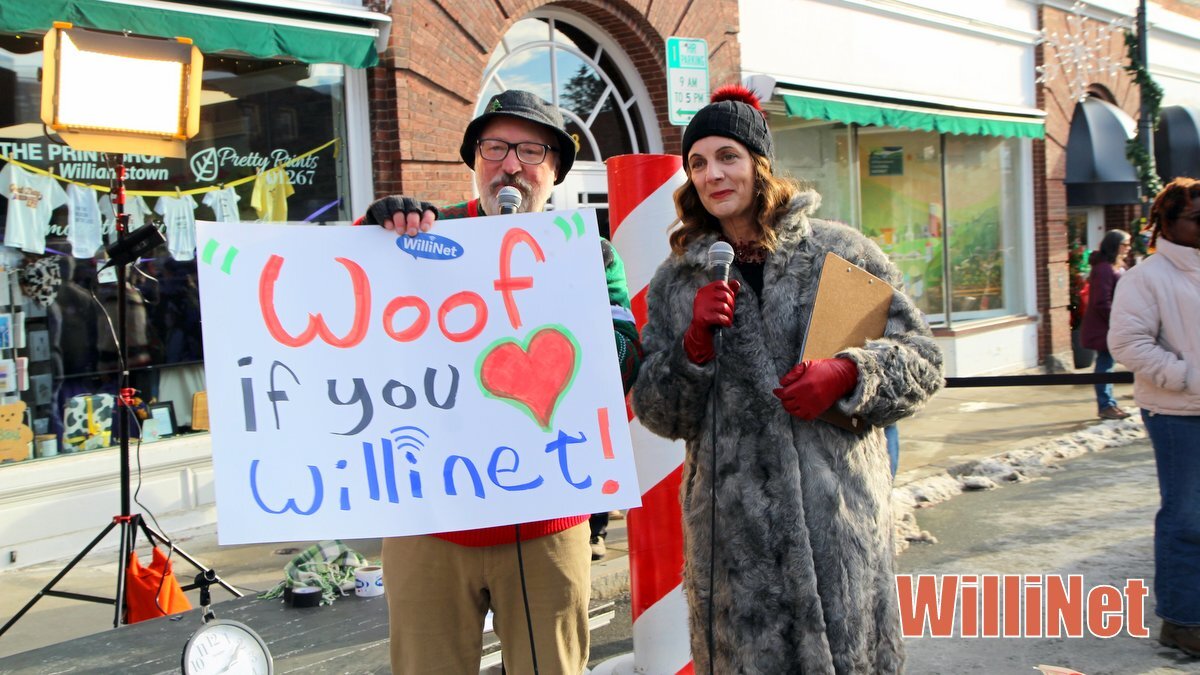
In Williamstown, Willinet, which was incorporated in 1994, is conducting a comprehensive outreach initiative, including surveys of the community to guide its future activities and development.
"We're moving from being only a TV station to being a local media hub, by expanding our portfolio of programming and increasing our engagement with the community," said Teri Yuan, its new executive director. "We recognize that most people see us as primarily as a conduit to government, through our coverage of meetings ... But we don't know how much people are aware of what else we do, and what they would like to see from us. We're collecting data to answer those questions as we move forward."
Another aspect is promoting and expanding its services and roles. Willinet offers free training in media, and makes equipment available to people, similar to the lending services of a library.
"We train people in media and provide tools for them," she said. "We are also collaborating with other organizations."
As an example, she cited their recent coverage of the new Williamstown Jazz Festival. Yuan said these and other initiatives are both an effort to increase its connections with the community, and a response to the need to broaden its financial base. Currently Willinet relies on cable PEG revenue for 75 percent of its budget, with the remaining 25 percent from fundraising, local underwriting, and grants.
"We're making a concerted effort to address structural constraints," she said. "A key structural pressure is the decline in cable funding. The more we can drive our content and engagement, the more we can open up other sources of support."
Several PEG organizations have also branched out into audio programming both with online podcasting platforms, and over-the air and streaming radio.
These radio stations feature music in various genres, including automated playlists and shows by local hosts, as well as regional musicians. They also broadcast spoken-word content, including interviews and discussions, live events, audio documentaries and other programming.
GCM was among the first to venture into radio in 2016, when it established an FM station, now known as WMNB-LP 107.1 FM. As a low-power station. Its signal covers North Adams and adjacent towns. It is also streamed live to wider audiences on Gateway's website.
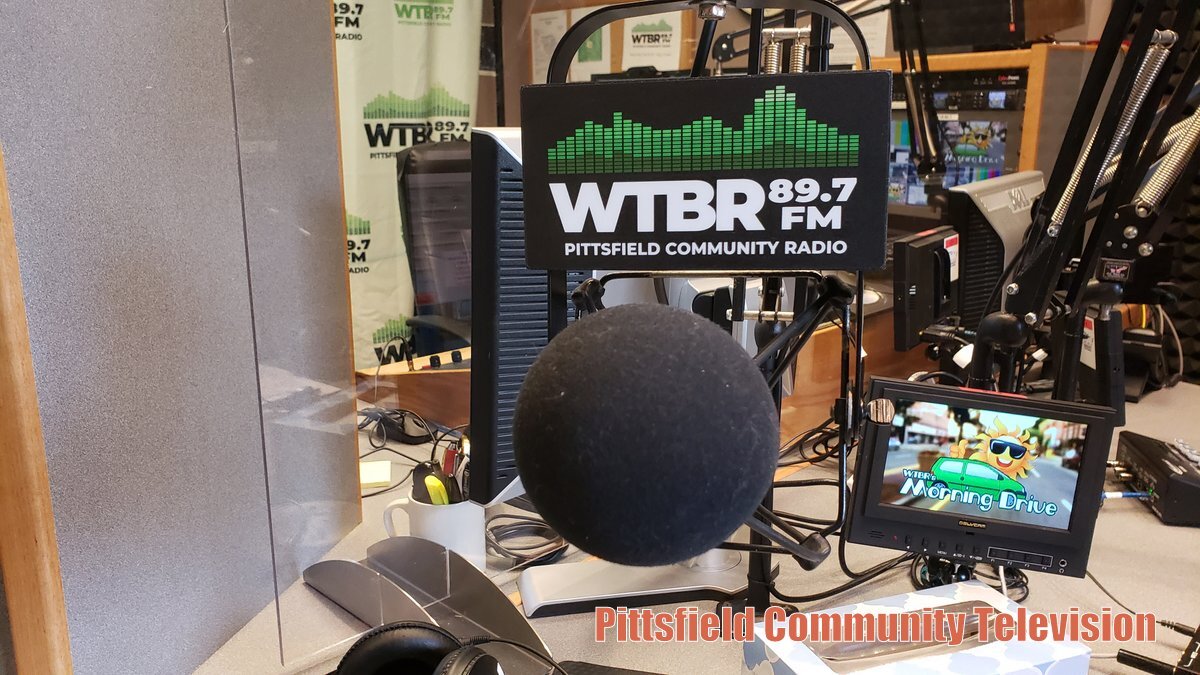
PCTV added radio programming in 2019 with WTBR FM. That station originally was started in 1970 as a student club at Taconic High School. It later became a community radio station. However it was faced with closing in 2018 when the Pittsfield Public Schools, which holds the license, did not include it in plans when it rebuilt the high school. PCTV offered to save the station and made an agreement with the school district to take over its operations, and it returned to the air in 2019. PCTV currently operates two FM stations, WTBR 89.7 in Pittsfield and 88.1 WSBR in Lee which relays the WTBR signal to nearby communities in that section of the county. It also streams on the website wtbrfm.com.
"The radio stations are funded separately through on-air fundraisers and other donations," explained Serre. "They are basically self-sufficient."
More recently, CTSB added a radio station in June, with WGSL-LP 107.3 FM, which is transmitted from its studios in Lee, and carried online at wgslradio.org.
"We learned about the availability of a low-power FM frequency, and we applied and received a license," said Sarah Paul, a staff member at CTSB who formerly worked at National Public Radio and spearheaded the project. "It covers a five-mile radius. It also streams everywhere online."
The station broadcasts a mix of music and other programming, including locally produced shows and podcasts, and some from outside sources such as the "Democracy Now" alternative news program.
"We're still building the schedule," noted Paul.
WGSL was started with an unusual source of funding, which is an array of solar panels at the station's studios. These generate revenue which is now allocated to the radio station. "We like to say the station was built by the sun," said Paul.
While these individual PEG organizations are primarily oriented to serving their local communities, they also share programming of regional interests and work together in other ways.
"We're all cousins and we regularly collaborate and help each other out," said Tucker.
Tags: cable television, deep dive,