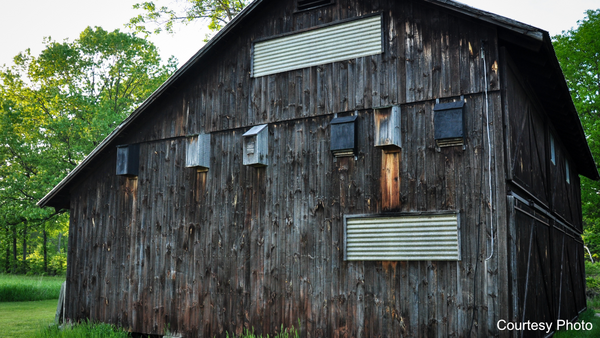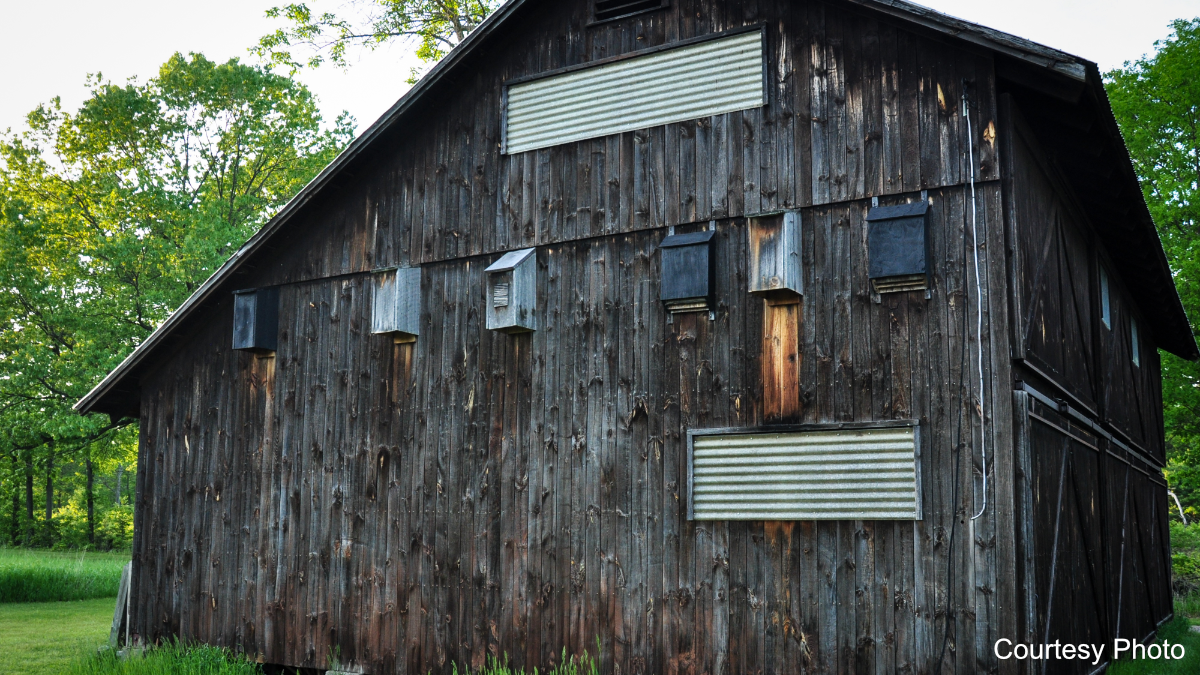
image description
Bat houses are a great alternative for bats you need to evict from your home, but they do require some maintenance in the late fall or winter to clean out abandoned wasp nests and repair any leaks.

VTF&W: Homes for Bats on Halloween

Submitted by Vermont Fish & WildlifePrint Story | Email Story

MONTPELIER, Vt. — The onset of fall sends Vermont's bats into motion, which makes it an important time for conservation-minded Vermonters to learn about and help conserve its nine native bat species.

If you have noticed bats roosting in your attic, barn or office over the summer, fall and spring are the perfect times to safely evict these uninvited guests from your property.  Bats migrate between winter and summer roosts during the fall and spring and do not have vulnerable young at these times.  You can learn how to safely evict bats from your building at the Vermont Fish and Wildlife Department's best management practices page.

You can also help bat conservation efforts by reporting large colonies of bats living in structures to the department's website.  Locations with rare colonies of endangered little brown bats are eligible for free bat houses from Vermont Fish and Wildlife.  Through this successful program, 158 free bat houses have been placed since 2014, with over half already occupied.  More than 1,700 endangered bats have been counted exiting these alternative roost structures.

Bat houses provide an alternative location for safely evicted bats to remain in your yard and continue eating huge quantities of insects that may be forest, agricultural or human pests.  Bats need a variety of roost conditions to raise young successfully, so homeowners should put up two bat houses -- one receiving sun all day in the summer and the other only partial sun.  Bat houses do best on buildings or poles but should not be placed on trees, where they are rarely used by bats.  Information on successful bat house design and placement can be found on the Vermont Fish and Wildlife website.

Bat houses can be put up any time of year but do require some simple maintenance.  Late fall or winter is the time to look up inside your bat house and make sure all the bats have left before cleaning out any abandoned wasp nests and planning any needed caulking or repainting.

"Fall also means Halloween, and scary images of bats, but this presents an opportunity to bring positive attention to bats as well," said Vermont Fish and Wildlife Small Mammals Biologist Alyssa Bennett.  "We celebrate 'Bat Week' in the days leading up to Halloween."  Bat Week takes place Oct. 24-31 and aims to raise awareness about the vital ecological functions of bats and to dispel the many myths and misinformation about them.

Anyone interested in learning more can visit the official Bat Week website at www.BatWeek.org, or email Alyssa.Bennett@vermont.gov for more information about what they can do right here in Vermont to promote bat conservation.

"Vermont is home to several species of threatened and endangered bats that we are working to conserve and recover," added Bennett.  "We hope Vermonters will support these efforts.  "Bats are a very important part of our natural world, and now more than ever they need our help."


Tags: bats,   

If you would like to contribute information on this article, contact us at info@iberkshires.com.

Companion Corner: Benny and June at Second Chance

By Breanna SteeleiBerkshires Staff

ARLINGTON, Vt. — There is a sibling pair waiting for their new home at Second Chance Animal Shelter.

iBerkshire's Companion Corner is a weekly series spotlighting an animal in our local shelters that is ready to find a home.

Benny and June are a brother and sister duo who are eight months old.

Feline program administrator Santana Snyder introduced us to them.

"Benny is quite a bit larger than June," she said. "June went through a little stint when she was little, not really growing, so we do believe she'll probably be a little bit of a petite cat most of her life. Benny, on the other hand, is quite large for his age."

The two have been at the shelter since May after being born outside of the shelter.

"Their mom was a stray kitty and gave birth to the kittens outside," she said. "Someone found them, took them in, and cared for them until they could come here, just because they couldn't care for them long term. They did have other siblings, but the other siblings have been adopted, and mom has been adopted as well." 

The two are bonded and would need to go home together, as being together is their favorite thing.

"They love to play. They are bonded. They do need to go home together," she said. "They love cuddling up in their bed and playing together, cleaning each other. They haven't ventured out onto the patio yet. Since they are little, we try to keep them inside until they're at least a year old. But they like watching out the window. That's for sure." 

The two are quite independent but can go home with other cats and kids and possibly a dog.

"Benny is definitely more outgoing than June," she said. "She's a little bit more reserved, but he definitely helps her come out of her shell. They're both very sweet, a little bit independent for being kittens."

It is important that you keep up with the vet for the two.

"Just because June did go through that stint of not really growing, and she's still growing, but very slowly," she said. "We've done all the tests that we can possibly think of to do for her, and we've not found anything that would cause that to be an issue. But that just seems to be her. So just working with your vet closely to make sure that she continues to grow and doesn't develop any other health issues." 

The two are on a prescription diet that can be a bit expensive, but they will need to stay on it. 

"They are on a prescription diet. They do have some gastrointestinal issues that we've worked through and been able to find something that works well for them. So that is prescription," she said. "You'll have to work pretty closely with your vet to maintain their issues and continue that food. Otherwise, very healthy kitties."

View Full Story

More Vermont Stories