NAHA Board Accepts Director's Resignation, Unlocks Tenants Association Office
NORTH ADAMS, Mass. — The North Adams Housing Authority Board of Commissioners officially accepted the resignation of Executive Director Jennifer Hohn and restored access to the Tenants Association office.
The board held a special meeting Thursday to vote to accept Hohn's resignation and determined that there are currently no plans to replace her.
"We didn't make any final determinations in terms of the executive session so we will schedule another meeting at another time," Chairwoman Leigh Uqdah said after returning from more than an hour session. "Day-to-day operations will continue to be managed as normal by staff."
Per their bylaws, board member Marie Harpin will continue to handle finances, and Uqdah will manage contracts.
Hohn stepped down on Oct. 8 after 24 years leading the agency. Her resignation followed rising tension between her and the NAHA Tenants Association, culminating in the scheduling of a formal grievance hearing between both parties.
The boiling point was the locking of the association's office this summer. Tenants alleged the lockout was retaliation for posting a video on social media depicting improperly functioning door alarms. Hohn claimed the office was locked for tenant safety and to stop the spread of misinformation.
Tenants Association President Corey Fortin asked if Hohn's security access had been removed. Uqdah confirmed her credentials were revoked the day she resigned, meaning she can no longer monitor security cameras remotely.
Jennifer Barbeau, a former city councilor who was liaison to the Housing Authority, asked when the board met to discuss Hohn's severance package. Uqdah stated that Hohn did not have one.
The board also accepted the resignation of Commissioner Richard Lavigne, though they will vote officially on the matter at their next meeting.
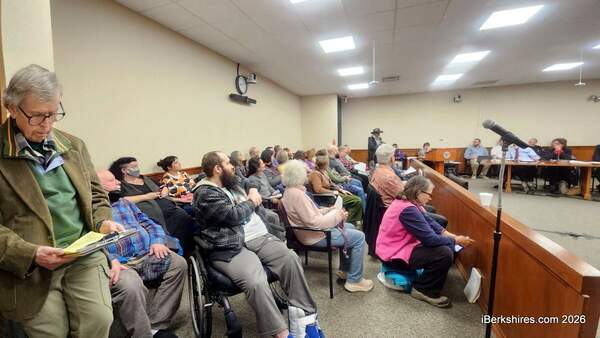
The open portion of the meeting was brief, with nearly an hour and a half spent in executive session. Before entering executive session, the board opened the floor to tenants.
"The tenants requested an opportunity to talk to the board," said Uqdah. "It has been quite a while, but we have decided to honor that."
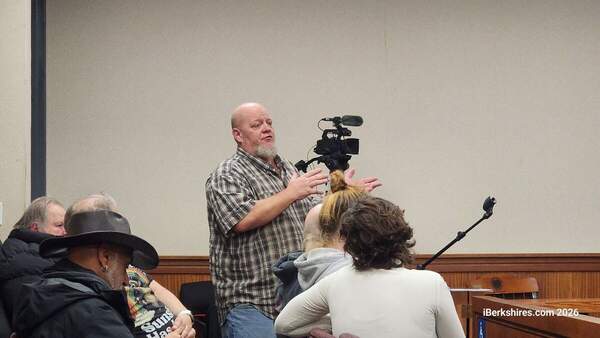
Fortin, who posted the original video to social media, was the first to speak. He was clear in his request: unlock the office door.
"Let's cut straight to the chase tonight. The former resigned Director Jennifer Hohn ordered the office locked," he alleged. "She is gone. The lockout is a direct violation, and the board has a duty to end that tonight."
He cited federal and state laws that mandate the tenants association be provided with office space, including computer and network access.
"We are here with a direct administrative demand. We demand that the board vote tonight to unlock the doors," he said. "Do not let a resigned director's illegal action remain the board's ongoing liability. Open our door tonight, and let us get back to work."
Barbeau, who is not a Housing Authority resident, added that the clock is ticking and that tenants have been locked out of their office for months.
"We sit here, I believe at 60-plus days, in the illegal seizure. It is extremely frustrating ... these people are very politely asking you to open the door, which they are given the right by HUD to have access to," she said. "You are not giving them anything. It is their right under HUD."
She also demanded that the board provide their Certificate of Organization from the secretary of state, arguing that without it, they have no legal authority to make decisions.
Former Tenants Association President Edward King saw this as an opportunity to reset and return to a time when there was a better working relationship among tenants, the board, and NAHA staff.
"I wish all parties would come together and try to figure this out, but I will say if this board cannot do what they are asked to do, you all should resign," he said. "Because you know how important it is to get back to where we were. To have the parties. To be safe at these meetings and outside of these meetings."
Harpin motioned to unlock the doors, a proposal met with applause from attendees.
She requested that the office be reopened over the next few days in the presence of the Tenants Association, staff, and a board member. Harpin emphasized the importance of taking inventory to ensure all items were accounted for. If anything was missing or damaged, she wanted to address it directly with the tenants association.
Although the motion passed, tenants pushed for immediate action.
"I would do the same thing they did to us when they locked the doors," Fortin said. "Maintenance could come here early morning on a Saturday and lock us out of our office and lock us out of the kitchen on weekend. He got overtime; why not give him some more overtime and call him now?"
Although the board originally planned to unlock the office early the following morning, Uqdah ultimately called the on-call maintenance worker that night.
Uqdah noted that while the doors will remain unlocked, she hopes to find a new, permanent space for the tenants office. She explained that their current location still needs to be assessed by IT and maintenance staff.
She suggested the former archival office, but tenants quickly pushed back, pointing out that the space was much smaller and lacked adequate ventilation and climate control.
Uqdah acknowledged that she had never been in the room, but maintained that other arrangements could be explored.
Hannah Evon, a Greylock Apartments resident, stated that while the conversation has centered on Ashland Street, the discussion needs to extend to all NAHA properties. She noted that Greylock houses children, the elderly, and individuals with disabilities who deal with the same issues raised at Ashland Street.
"Tenants at both properties deserve safety, security and fair treatment. Greylock is consistently ignored, forgotten and excluded," she said. "I am trying to help in the best way I know how, but I am deeply afraid of retaliation because my kids depend on me, but so do other people."
Evon shared that nearly 60 Greylock residents have approached her with concerns regarding unaddressed apartment issues. She added that residents who speak up are often threatened with eviction.
She also recalled an incident from that morning, where security footage on a tenant's door camera captured what appeared to be a NAHA maintenance worker spitting on the door. The door belonged to Fortin. (The video, in which you can hear the person spitting, was posted to Facebook by Fortin along with a picture of sputum on the door handle.)
"We as tenants are very grateful for our homes. We are very grateful for the people who do their jobs but ... we have a lot of turmoil, a lot of ignoring of policies and guidelines, and ignoring to tenant voices," she said.
Evon stated that she plans to continue working closely with the Tenants Association.
Tenants also asked if the community kitchen could be unlocked. Uqdah agreed, but noted that guidelines for kitchen use still need to be established.
King concluded by thanking the board for listening to their concerns.
"I just want to thank this board today for standing up for the rights of the tenants ... this clears the room of any illegal stuff," he said. "Now you folks are genuine and are open. We really appreciate that ... letting Corey and his group get back to helping people."
The nearly two-hour meeting adjourned around 7 p.m. Attendees talked in the community room while waiting for the board to finish executive session. Fortin handed out fliers advertising "Know Your Rights Workshop" scheduled for Saturday, Oct. 17, at 5 p.m. in the Ashland Park Community Room, among other things.
Tags: Housing Authority,