Rutledge Defense Seeks Dismissal of Rape Charges Over Statute of Limitations
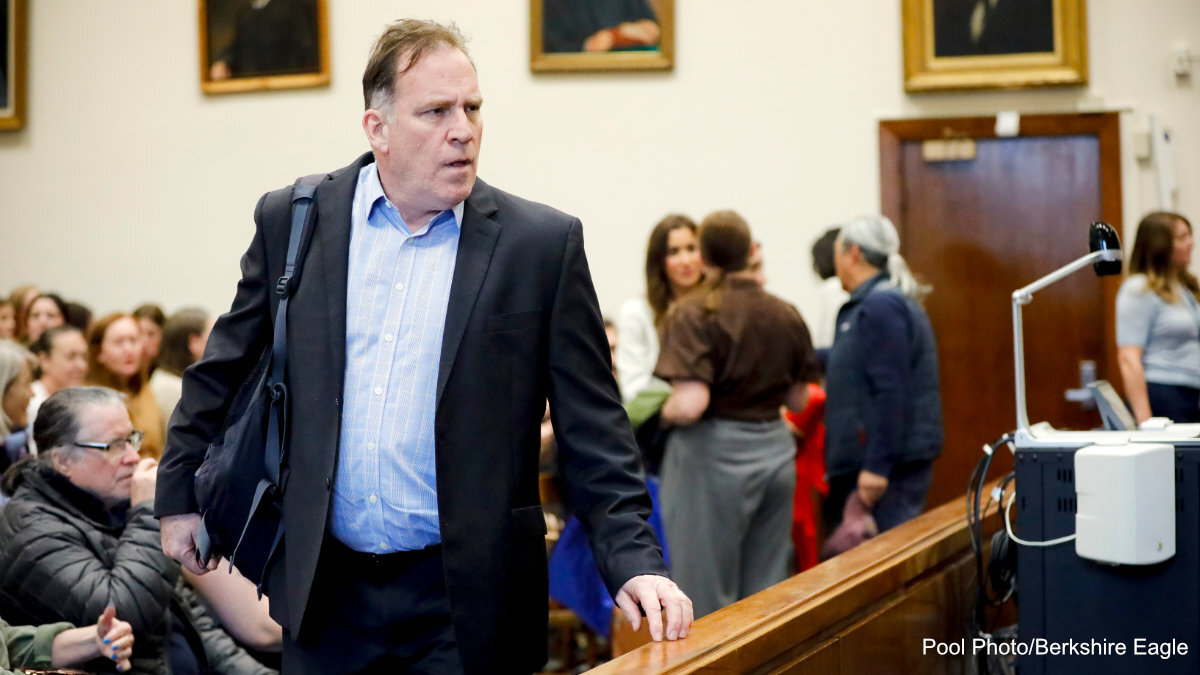
PITTSFIELD, Mass. — The Superior Court courtroom was filled on Thursday as proceedings resumed on the high-profile case against former Miss Hall's School teacher Matthew Rutledge, with the court hearing arguments on his motion to dismiss.
On Thursday, Rutledge, represented by attorney Ryan Schiff, appeared before Judge Michael Callahan to seek dismissal of all three counts, arguing that prosecutors were attempting to circumvent the statute of limitations and had failed to disclose what Schiff characterized as "highly exculpatory evidence."
More than 100 attendees filled the pews, some wearing orange carnations to show solidarity with the accusers, Melissa Fares and Hilary Simon.
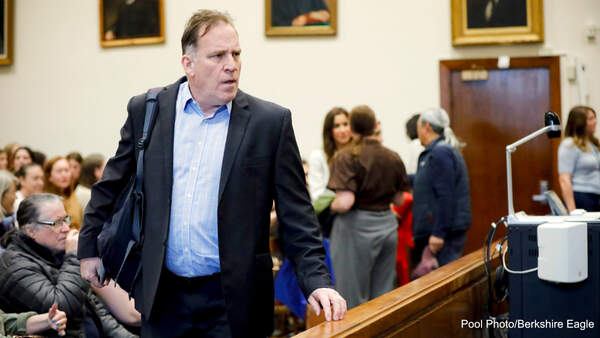
As Rutledge attempted to leave the courtroom following Judge Callahan's departure, several attendees voiced their outrage, shouting "Shame," "You can't hide behind the bad law," and "We know what you did."
Judge Callahan re-entered the courtroom to condemn these outbursts and directed court officers to record their names and bar them from attending future proceedings on this case.
The nearly hour-long hearing centered on competing interpretations of the language and legislative intent behind Massachusetts' statute of limitations, particularly whether Rutledge's temporary absences from the state could extend the time prosecutors have to bring charges.
Following the hearing, state Rep. Leigh Davis, who was instrumental in passing H.4538, pointed to the Rutledge case as an example of why the legislation was needed.
The passed bill aims to prevent educator and guardian sexual misconduct and abuse of children and youth and addresses an imbalance of power between adults in positions of authority and the young people in their care.
She also emphasized the importance of amending the statute-of-limitations legislation, specifically Amendment 110 to S.3141, An Act Enhancing Remedies for Survivors of Childhood Sexual Abuse.
As of July 31, 2026, the proposed amendment is in the committee of conference.
This amendment was filed by state Rep. John Lawn in an effort to eliminate the statute of limitations for civil lawsuits involving childhood sexual abuse.
Had these legislative protections been in place, the case might not be facing the same legal challenges, she said.
Davis sat alongside the accusers during the hearing and reaffirmed her commitment to standing with them, stressing that "trauma does not expire."
During the proceedings, Schiff argued that prosecutors were "cobbling together" brief out-of-state vacations over the course of approximately 17 years to extend the statute of limitations, calling the approach unprecedented in Massachusetts and nationwide.
The tolling provision reads, "any period during which the defendant is not usually, and publicly a resident within the commonwealth shall be excluded in determining the time limited."
The state, represented by Assistant District Attorney Zachary Grube and Second Assistant District Attorney Joseph Yorlano, claimed that Rutledge had resided in his Canadian home for at least 978 days during the relevant time period.
While Schiff claimed that the state's argument overlooks the word "usually" as Rutledge spent approximately 85 percent of his time in Massachusetts, therefore he "usually" lived in Massachusetts and temporary vacations outside Massachusetts did not change Rutledge's residency status.
Prosecutors countered that Rutledge's recurring stays at a second home he owned in New Brunswick, Canada, qualified as periods of residency outside Massachusetts and that a person can have multiple residences.
They also pointed to the statute's historical origins, arguing that the Legislature would have considered recurring international travel and stays at a second residence significant when the law was enacted in the 1800s.
Additionally, Rutledge's recurring stays at his Canadian residence, which he owns, were part of an established routine that would have been "publicly" known to the community. The word "publicly" was also a point of contention.
Schiff warned that the Commonwealth's interpretation could establish a precedent allowing prosecutors to use cellphone location records and other evidence to accumulate even brief trips outside Massachusetts to extend statutes of limitations.
The prosecution maintained that Rutledge's ownership of a second home and regular travel patterns distinguish the trips as residency, not occasional trips across state lines.
Schiff also argued that prosecutors withheld potentially exculpatory evidence from the grand jury regarding the third rape charge.
He claimed that the accuser did not specifically allege rape until after the district attorney's office announced that its investigation had found "no criminal conduct."
"Specifically, the Commonwealth failed to disclose that the alleged victim described her allegations against Mr. Rutledge in detail during a police interview and slated that her last "sexual encounter" with Mr. Rutledge was in 2015 but did not allege that the encounter occurred without her consent or was rape," Schiff argued.
He presented three potential scenarios of what happened: the accuser told the detective that she was raped and the detective left it out of the report, not informing District Attorney Timothy Shugrue; Shugrue knew after meeting with the detective, but still announced that no criminal conduct had occurred; or the accuser did not allege rape in 2015.
Judge Callahan added a fourth scenario, in that the accuser did not use the word "rape" but rather described an incident.
Prosecutors maintained that the accuser had previously reported sexual abuse and argued that decisions can change as investigations develop.
Tags: superior court,