Adams Board of Health Finds No Issues With Dumpster
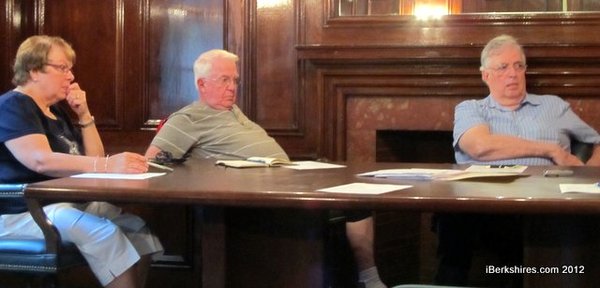
 Code Enforcement Officer Scott Koczela looks at pictures of the dumpster sparking complaints near Big Y. |
Dr. Richard Frost, chairman of the Board of Health, said on Monday that two unannounced visits to the dumpster in question found no odor and no trash lying about.
Frost said the board has been on top of the situation and had spoken to Big Y representatives in Adams and Pittsfield.
"They have taken the steps that I think we would have expected them to take," said Frost. "In these two visits, I have not seen a basis for the complaints."
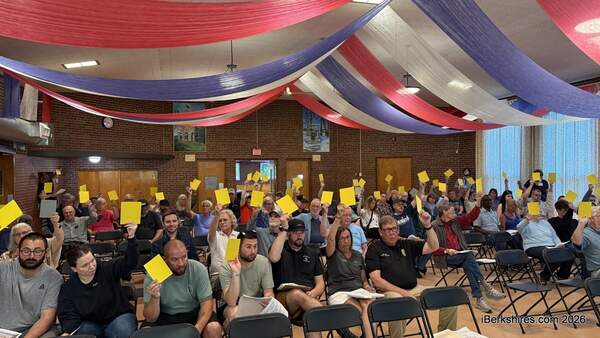
The dumpster had prompted complaints about odors from nearby residents of Myrtle Street, some of whom had attended last week's Board of Health meeting.
Frost said he immediately went to Big Y after the meeting but saw no trash outside the container and that there was barely any odor. A complaint Monday morning led to another visit, but again, he said he found no issues.
Adams Threatens Big Y With Fines For Smelly Dumpster
ADAMS, Mass. — The Board of Health is going to fine Big Y Supermarket $50 for every citation until the company stops its garbage from stinking.According to Code Enforcement Officer Scott Koczela, the Health Department has received two to three calls every week this summer for smelly trash containers. In just the last weekend, four additional complaints were received. Koczela said he has talked with Big Y officials on multiple occasions and the Board of Health feels the store has not done enough to deodorize.
"They've procrastinated too long," Patricia Clarimont, Board of Health member, said on Wednesday. "It needs to be addressed now."
Koczela said he had not received complaints for five years, but suddenly last year, the office was inundated with them. This year, the hot and dry summer produced even more complaints.
"Something changed because we never had these before," Koczela said, adding that he has had difficulty communicating with the company. "They haven't been forthcoming with us about the remedies they've tried."
Koczela said he doesn't know exactly what is causing the garbage to smell — it may not be being emptied frequently enough or the area kept clean — but the company is not doing enough to address it. He said the supermarket did install a deodorizing unit, but that had broken, and was going to put out pellets to combat the smell, but wasn't sure that had been done.
Koczela said he could, if the board wanted, take the company to court to force compliance or set fines. The board voted to impose $50 fines for every substantiated complaint. The complaints are mostly coming from the housing complex behind the market on Dean Street.
Clairmont said she heard an array of stories from residents, including a woman who gets sick to her stomach when she sits outside and another who can't use her air conditioning because it draws the smell into the apartment.
Koczela said he will research what other supermarkets do to solve that problem and continue to work with store managers until it is fixed.
"We're going to talk with Pittsfield and see what the other markets are doing," he told the board.
In other business, Koczela told the board that the buildings behind the former Albert's Hardware on Summer Street are expected to be removed next week. Rodent poison has been laid down and hazardous material abatement has begun, he said, and the contractor will start tearing the buildings down soon. A group that has been working to rescue cats that were living there has trapped all but two. The poison is being laid in a container that cats can not get into but rats can.
Additionally, the awning at the former Duteau Collision building on Commercial Street was removed. The town took property owner Charles "Rusty" Ransford to court recently to force him to demolish the awning, board up windows and fence off access because the building was structurally unsound and people were climbing onto the roof.
Ransford complied but the fence does not keep people out, Koczela said. He apparently filed a rebuttal to the court case alleging that because the town refused to issue a building permit years ago, it was responsible for the building falling into disrepair. A judge modified the initial order but the town will still have to fight the case in court, Koczela said.
Also regarding that building, Koczela said that even without the building permit, roofers started repairing the structurally unsound roof over the weekend and the police were called to remove them from the property. The roofers apparently fixed the most vulnerable part of the roof but the support beams are still too weak, he said.
Tags: demolition, fines, Ransford, smell, trash,