Pittsfield Council Rejects Doughnut Drive-Through Permit
 The Plunkett School has been empty for years. A Dunkin' Donuts franchise has hoped to demolish the building and build a new doughnut shop with a drive-through. The Plunkett School has been empty for years. A Dunkin' Donuts franchise has hoped to demolish the building and build a new doughnut shop with a drive-through. |
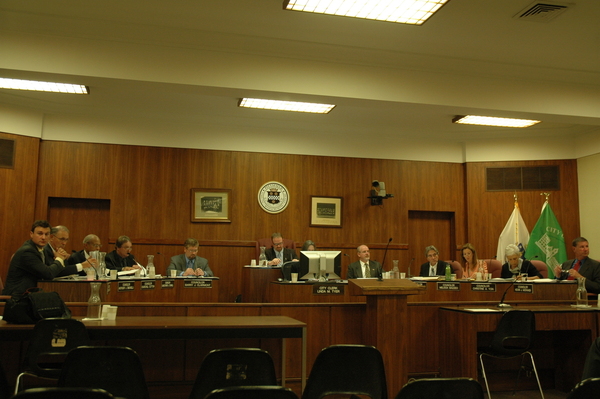
PITTSFIELD, Mass. — The City Council will move to reject plans for a Dunkin' Donuts drive-through at the corner of First and Fenn streets, following the continuation Tuesday of a lengthy public hearing on an issue that has sparked controversy in the community for more than a year.
By 10-0 vote, the council favored a motion to begin crafting a legal rejection of the special permit application for the drive-through proposal from Cafua Management. The company has planned to move its existing operation farther down First Street by demolishing the 104-year-old W.B. Plunkett School and building a new facility.
Several councilors cited concerns about anticipated traffic problems as well as a sense of overall inconsistency with the city's master plan among their reasons for opposing the special permit, which was also opposed by the city's Community Development Board in April.
"For the past 10 years, Pittsfield has aspired to be something better, and to do something better with its downtown," said Ward 6 Councilor John Krol.
Testimony from John Mullin, a longtime professor of urban planning brought in to offer additional consultation to the council at the invitation of the Department of Community Development, bolstered the councilors' concerns.
"This proposal is inconsistent with the city's vision in terms of this site," said Mullin, citing several points of consideration within master plan document, "The [proposed] property is inconsistent with protecting the character of the urban core, the project does not [contribute] to urban revitalization, it does not contribute to the desire for pedestrian movement along this urban core. The project will contribute minimally to the goal of well-paying core jobs, and the project will change the value of past character there."
Representatives of Cafua's proposal have maintained that no such inconsistency exists, and that the project will in fact enhance this corridor as a vibrant pedestrian environment.
"I think there are some important benefits that have come out of this special permit process," said James Scalise of SK Design, who crafted the plan for the proposed facility with several nods to appeasing city concerns, including an outdoor lighting scheme to match that of the Common, and the incorporation of architectural features from the existing historic school building.
"No matter how you dress this up, this is a low-density, highway business activity within the urban core of your city," Mullin told the council.
Only Councilor at Large Barry Clairmont, who left before the final vote, voiced fervent support for the drive through proposal, saying opposition to the permit application would convey an image that Pittsfield is "anti-business."
"We'll be sending a clear message to the business community: 'Stay away.' Don't invest your money, because there is a really good chance we're going to shoot you down."
"This applicant is being a good neighbor," said Clairmont, pointing to the various concessions made by Cafua to make its proposal more palatable, and citing the importance of adding an anticipated five new jobs and additional property tax revenue for the city.
"Why did we do a master plan if we're not going to stick to it and use it?" countered Ward 2 Councilor Kevin Morandi.
Several councilors also expressed fears of traffic problems and pedestrian safety issues, despite a completed traffic study that concluded the proposed site would not have a significant adverse effect.
"I realize the conclusion of the traffic study is that it won't create problems, but if you drill down deeper into the data, it does point to periods of gridlock," said Ward 5 Councilor Jonathan Lothrop. "The purpose of planning is to prevent that."
With the possibility of litigation by Cafua Management looming since the beginning of the council's hearing on the issue last month, councilors conferred extensively with Mark Brobowski, a Concord-based attorney specializing in land use and zoning law, on the criteria for their decision and procedures for crafting a response to the doughnut franchisee's application.
"No one is entitled to a special permit," Brobowski told the council, indicating that it is the council's job as the permitting authority in this case to decide upon the merits of the application, and a judge is unlikely to overturn the decision as long as it is found to have been fairly debated. "You're the last word here, and your discretion is very broad and very deep."
Brobowski said an ideal letter of denial may go through several drafts before being sent out to the applicant. The council has 90 days from the close of the public hearing Tuesday night to issue its letter of denial.
Following the vote to issue a denial, representatives of Cafua did not elect to comment on the council's decision or future plans for pursuing the special permit.
Tags: city council, drive-through, Dunkin Donuts, historical building, school building, special permit, vacant building,