image description
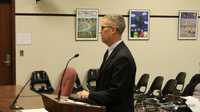
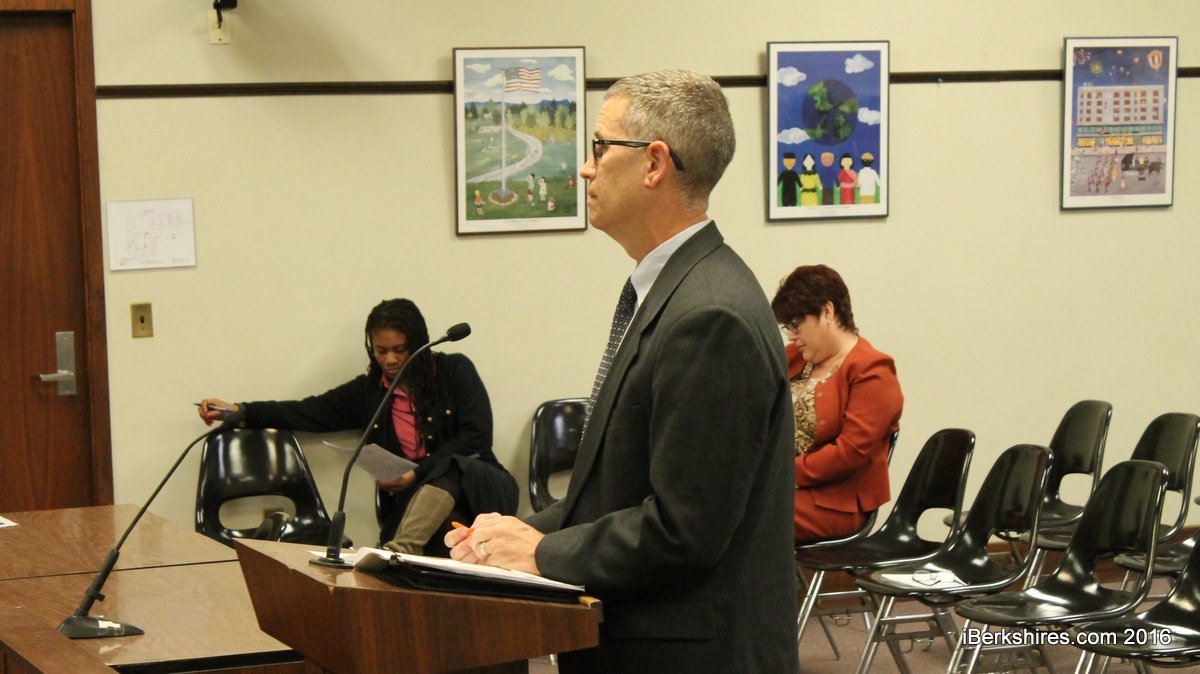
Ken Ryan of Covanta said the money will go to replace a backup boiler and to build an enclosure for the recyclables.

Pittsfield Council Grants $562K to Help Covanta Stay Open
By Andy McKeeveriBerkshires Staff
Print Story | Email Story

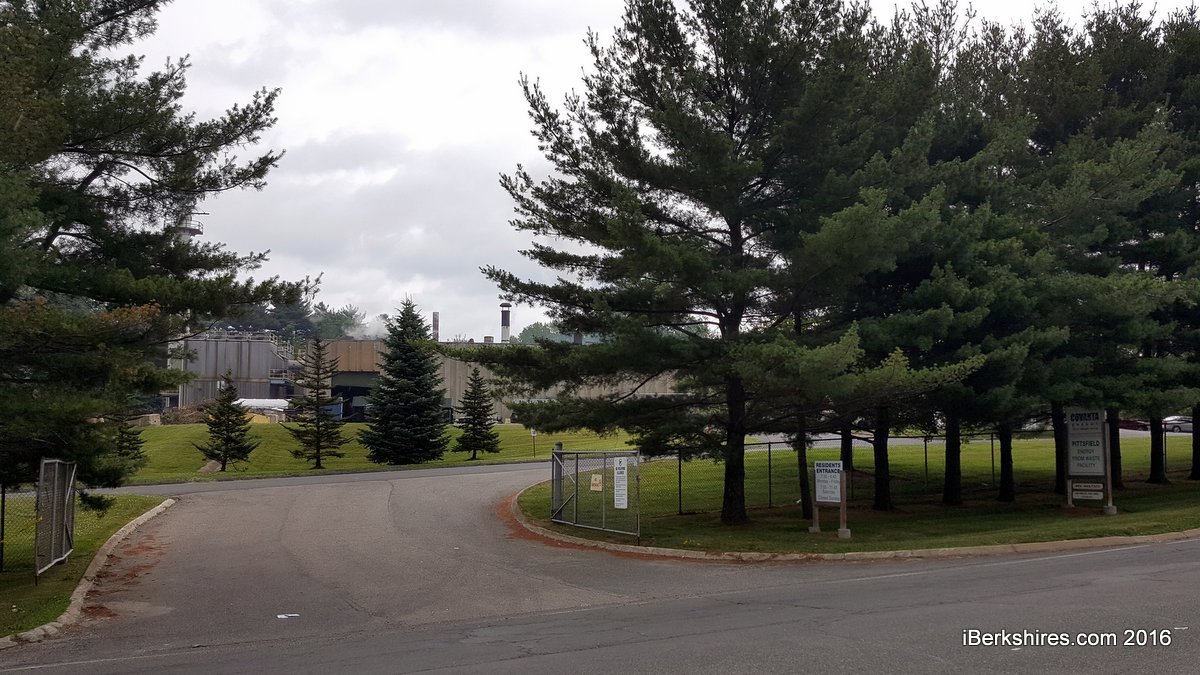
The Hubbard Avenue facility is now expected to remain open following actions from private companies, the city, and the state Legislature to help make it more economically viable. 
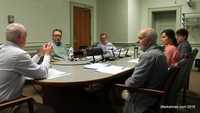
PITTSFIELD, Mass. — Covanta is expected to remain open now that the City Council has granted the waste-to-energy facility $562,000 to help with capital repairs.
 
The council on Tuesday approved the expenditure from the Pittsfield Economic Development Fund, which was created as part of the settlement with General Electric years ago, to help the company replace a boiler, and comply with state regulations to enclose the area where recyclables are sorted.
 
The money is part of what officials called a "three-legged stool" with private companies, the state Legislature, and the city coming together to keep the facility economically viable.
 
Covanta notified its employees earlier this year that the waste-burning plant is eyed to close in March 2017. The plant is one of the smallest and the oldest the company runs nationwide and it was determined that keeping up with the repairs and continuing to run the operation just wasn't financially viable anymore. The Hubbard Avenue facility incinerates 85,000 tons of waste per year and turns it into steam energy, which is then sold to Crane & Co and Neenah Technical Materials. 
 
Republic Services hauls the city's curbside collection there, including recyclables that are stored and later shipped out in bulk to the Springfield Materials Recycling Facility. About 17,000 tons of the trash burned there is from the curbside collection program. Republic Services estimates that with additional miles to travel to the next nearest facility in Canaan, N.Y., and taking more trips with smaller vehicles to Springfield with recyclables would cost an additional $462,000. 
 
Additionally, the city receives about $240,000 a year through a host community fee — a service fee paid to the city for trash brought to the facility from out-of-town haulers — and around $175,000 in taxes and fees such as sewer and water. In total, it is estimated by the Office of Community Development that over the next four years, the closure would cost the city $3,559,951 more, averaging $889,987 per year.
 
"When it is all said and done, $900,000 annually is a huge amount," said Council Vice President John Krol. "That would absolutely bust our budget ... a vote against this is to essentially add $900,000 to our budget every year with no additional services."
 
Greg Yon sits on the city's Resource Recovery Committee and says the $462,000 additional cost just for hauling is a "conservative number" and former City Councilor Jonathan Lothrop said not only would the allocation avoid such budgetary impact but also save 25 blue-collar jobs.
 
"We have the opportunity tonight to spend $550,000, we are partnering with Crane and Neenah, to at least have four more years of low-cost trash disposal," Lothrop said. 
 
Beyond that, there are a number of businesses and landlords who pay for private hauling, which would see an impact on those bills. Lothrop said the expenditure serves both the public interest as well as saving jobs, both criteria for spending the Economic Development Fund money.
 
That money was just part of the plans to keep the plant operating. The state Legislature included new tax incentives for waste-to-energy facilities in its omnibus energy bill. And Crane & Co., which subcontracts the steam energy with Neenah, renegotiated its contract with Covanta to provide the plant with more revenue.
 
"The magnitude on an annual basis is similar to what the city of Pittsfield is looking at on an annual basis," Richard Rowe, president of U.S. Government Products for Crane Currency, said. "We have stepped up to the plate."
 
Rowe said once informed of the closure, the company looked at the expenses of buying a boiler to run on their own and determined it was better to join in on the plans to keep Covanta open. That started with the tax incentives and talking with state Legislatures about the needs. Then, the company renegotiated its contracts, which Rowe did not disclose, and the city was the final piece to the puzzle.
 
In return for the efforts, Covanta promised to stay open for four more years or else pay back money the city granted it. Those four years will take it to the end of the city's current contract and the end of Crane & Co.'s contract. From there, Ken Ryan, Covanta Pittsfield's business manager, said the hope is to continue to run the plant for years to come.
 
Ryan agreed when Krol suggested that Covanta's annual operating cost isn't what is leading to the closure but rather the need for the capital repairs to the boiler and the state Department of Environmental Protection's mandate of an enclosure for the recyclables.
 
"The issue is the capital," Krol said.
 
Councilor at Large Melissa Mazzeo, however, voted against the city's spending the money. She says she has concerns that the city doesn't have a guarantee and that nobody else is joining the council in helping to save the plant. Mazzeo spent much of Tuesday's meeting asking questions from an array of representatives from Crane, from Covanta, and from the city, emphasizing her concerns with the lack of a guarantee the plant will remain open.
 
"If they still close in four years or two or three, we are right back where we started," Mazzeo said. 
 
Mazzeo said the city "panicked" when news broke of Covanta's closing and quickly started looking for a way to save the company without thinking all aspects through. Particularly, she wanted details on the contracts between the private entities and wants other commercial haulers to contribute.
 
"We're really the only one who stepped up and is trying to help," Mazzeo said. "I think everybody has to step up to the table and have a conversation. I really want to put the brakes on a bit until we do have that conversation."
 
Ward 1 Councilor Lisa Tully, however, refuted Mazzeo's claim that nobody else is involved by citing the input from the state and Crane & Co. She added that the Resource Recovery Committee is continuing to examine the city's trash collection to find ways to save money in the future. 
 
"Even if we pass this, it is not going to stop there. We are going to keep on moving forward in how we can save money with garbage," Tully said. 
 
Resource Recovery Committee Chairwoman Rhonda Serre said the closure would throw a massive hitch in the group's efforts to find cost-saving measures with the curbside trash collection. That group was asked by Mayor Linda Tyer to research and issue a report on the city's trash program by December. The group has been most recently looking into moving toward a tote system, as proposed by Ward 3 Councilor Nicholas Caccamo. 
 
"The commission feels these funds are critical," Serre said, calling the financial repercussions of the closure "catastrophic" to the city's finances.
 
Meanwhile, Ward 4 Councilor Christopher Connell wanted more details on the revenues of  the business. He suggested the company could raise the $3.42 per ton community host fee by $2 and pay the city back in a loan-like program for the upfront capital investment.
 
"It is just part of what they pay us, we pay back to the city," Connell said.
 
Ryan responded saying the prices the company sets are determined by the market, so it can't just raise the fees as much as it would want at any given time.
 
"We set our prices based on what we think we can get for that material. If we set our prices too high, they will go to another facility," Ryan said.
 
Other discussion centered on the existing agreement with the city and Covanta regarding the plant. The company was required by contract to provide the city 150 days notice of a closure, which many councilors said they felt was too little. Ryan said the company is willing to amend the contract to provide a full year notice in the future.
 
But ultimately,it came down to basic cost analysis for Councilor at Large Peter White who said spending $140,500 each year for the next fours is $3 million less over the same time period than if the city doesn't give the grant. He said the closure of Covanta impacts the entire city from the taxpayers paying for curbside collection to the businesses to the landlords. 
 
 "We have the chance here to save 25 jobs plus some part-time jobs at a time when we are losing too many jobs in this county," White added.
 
 In the end, only Mazzeo opposed the use of the funds.
 
Related Stories:
image description

Pittsfield Subcommittee Endorses Plan To Save Covanta

Whether it be because of city finances, local jobs and business, or the environment, the Committee on Community and Economic Development feels spending $562,000 to keep Covanta open makes sense. The City Council subcommittee voted 4-1 in favor of allocating the money from the Pittsfield Economic Development Fund to help Covanta replace a backup boiler, and cover the area recyclables are processes to comply with a state requirement. In return, the company promises to stay open for at least the

image description

Pittsfield Weighing All Aspects of Trash Collection

The group looking at a possible overhaul of the city's trash collection is putting nearly everything on the table. The Resource Recovery Committee met for its second thing this month in its ongoing look into changing the way the trash system operates. Currently, the city has a curbside pick up model in which Republic Services collects all of the trash and brings it to Covanta, where it is burned to make energy to sell to Crane & Co. The recycling is transported from Covanta to a recycler who

image description

Pittsfield Considering Major Changes to Curbside Trash...

The city is once again considering changing the way curbside trash is collected Ward 3 Councilor Nicholas Caccamo has filed a petition to require the use of a toter system. Instead of piling up an unlimited amount of garbage on the side of the road, residents would be given two bins — one for recyclables and one for waste. Residents would be restricted to one bin full of each per week.

image description

Pittsfield Notes: Covanta, Handicap Parking, Solar...

City officials are hoping Covanta won't be leaving afterall with the passage of a new tax incentive for those type of operations. Covanta plans to close its Hubbard Avenue facility in March claiming the "high operating costs and the size of the facility have made it increasingly difficult to run the plant profitably," according to company spokesman James Regan. The plant has been in operations since 1981 on 5.8 acres of land and serves as the primary location for Republic Services to dispose

image description

Covanta Plans To Cease Operations Of Pittsfield...

Covanta plans to close its Hubbard Avenue facility in March. Company Spokesman James Regan said the company plans to halt operations of the energy-from-waste in March of 2017. The plant has been operating in Pittsfield since 1981 on 5.8 acres on Hubbard Avenue.


Tags: recycling,   waste collections,   

If you would like to contribute information on this article, contact us at info@iberkshires.com.

BRTA Focuses on a New Run Schedule

By Breanna SteeleiBerkshires Staff

PITTSFIELD, Mass. — The Berkshire Regional Transit Authority is still working on maintaining its run schedules after dropping the route realignment proposal.

Last Thursday's meeting was Administrator Kathleen Lambert's first official meeting taking over the reins; retiring director Robert Malnati stayed during a transition period that ended last month.

Lambert is trying to create a schedule that will lessen cancellations. There was a two-hour meeting the week before with the drivers union to negotiate run bids and Lambert is working with the new operating company Keolis, which is taking over from Transdev.

The board spoke about anonymous emails from drivers, which Lambert said she has not seen. iBerkshires was not able to see those letters, but has received some. 

"They were lengthy emails from someone describing themselves as concerning BRTA employee, and there was a signed letter from a whole group of employees basically stating their concerns. So, you know, to me, it was a set of whistleblowers, and that, what my understanding is that this really triggers a need for some type of process to review the merits of these whistleblowers, not going to call them accusations, but basically expressions of concern," said member Stephen Bannon.

A letter iBerkshires received spoke of unhappy drivers who were considering quitting because of decisions being made without "input from frontline staff," frustration and falling morale, and the removal of the former general manager shortly after Lambert came in.

Lambert said it's difficult to navigate a new change. She also noted many drivers don't want to do Saturday runs and it has been hard negotiating with drivers on the new runs.

"I would like you all to keep in mind that the process of change is super difficult. Transdev has been here for 20 years, and some of these drivers have never known any other operating company, the way some of the operations have been handled has been archaic," she said. "So getting folks up to speed on how a modern transit system works is going to be painful for them. So I don't want to say that I'm unsympathetic, because I am sympathetic, but I am trying to coax people along with a system that's going to seem very strange to them."

The board spoke about better communication between them and Lambert, citing cooperation will be best moving forward.

"There's just a lot of stuff in the air right now, and there are a lot of fires to put out to make this a coordinated effort. And if we don't keep our communications open and be straightforward, then you get blindsided about how you know the input that you could get from us about your position, and how you know what's going on in your direction, and we get blindsided. And I think that we have to make sure that this is a collaboration," said member Sherry Youngkin.

"Both sides have responsibilities, because in the long run, this advisory board is going to have to make decisions as to how we brought forward and if we've gone forward in a fair and helpful way. And I think that's hopefully what everybody is looking for also." 

Transdev and Keolis held a three-day recruiting event interviewing almost 40 candidates and offering jobs to eight, but only three stayed on to start training. Lambert said it was disappointing but she will keep trying to retain more people.

In her first report to the board, she noted that ridership dipped a little over 10 percent, but still remains higher than last year, adding that was because of cancellations of services because of the lack of drivers.

Like the last meeting, some of the advisory board members were torn over the start of the Link413 service, worried that the start of the service took drivers away and the numbers of riders are low.

Lambert, however, said the ridership has doubled from last month.

"As I've spoken before, we have, generally, a six-month adoption for brand-new service before you can really go in and evaluate, are you being successful based on the grant that my predecessor wrote along with the team for PBTA and RTA, we are ahead of schedule, which is pretty good, so I'm hoping that will continue to improve," she said.

Member Renee Wood said the board never approved the service, adding the only thing she could find in the minutes was a vote to accept the equipment. She said it was supposed to be put on the agenda to discuss.

"The Link413 service has been three years in the making. It's been a grant that was accepted and has been working with our partners, PVTA and FRTA, to put into place. So I don't have the entire history of how that process worked, but it's been three years in the making, and did we not understand that once we accept that grant that we were going to put in new service?" Lambert said.

The board discussed if Title VI, the Civil Rights Act, was followed with an accurate review and accurate amount of time for public comment period on the service changes and if its attorney should review if the  grant conditions were properly followed.

Lambert said changes had the 60-day comment period included in the proposed route realignment packet, giving the opportunity for the community to respond to that as well but will look into the legality of the situation with their attorney.

View Full Story

More Pittsfield Stories