PITTSFIELD, Mass. — The state Department of Transportation prioritizes safety when determining which road projects it undertakes.
And that starts by knowing where the most dangerous intersections are located. MassDOT and Berkshire Regional Planning Commission track accidents and create a list of trouble spots.
The ratings use a weighted system. If there is a fatality at an intersection, it is given a score of 10. If the accident causes a non-fatal injury, the intersection receives five points. An accident that only causes property damage receives one point. Over a three-year period, those scores then start to show specific areas that tend to see more and more serious accidents.
Simply put, the higher the score, the higher the number and severity of accidents at that location.
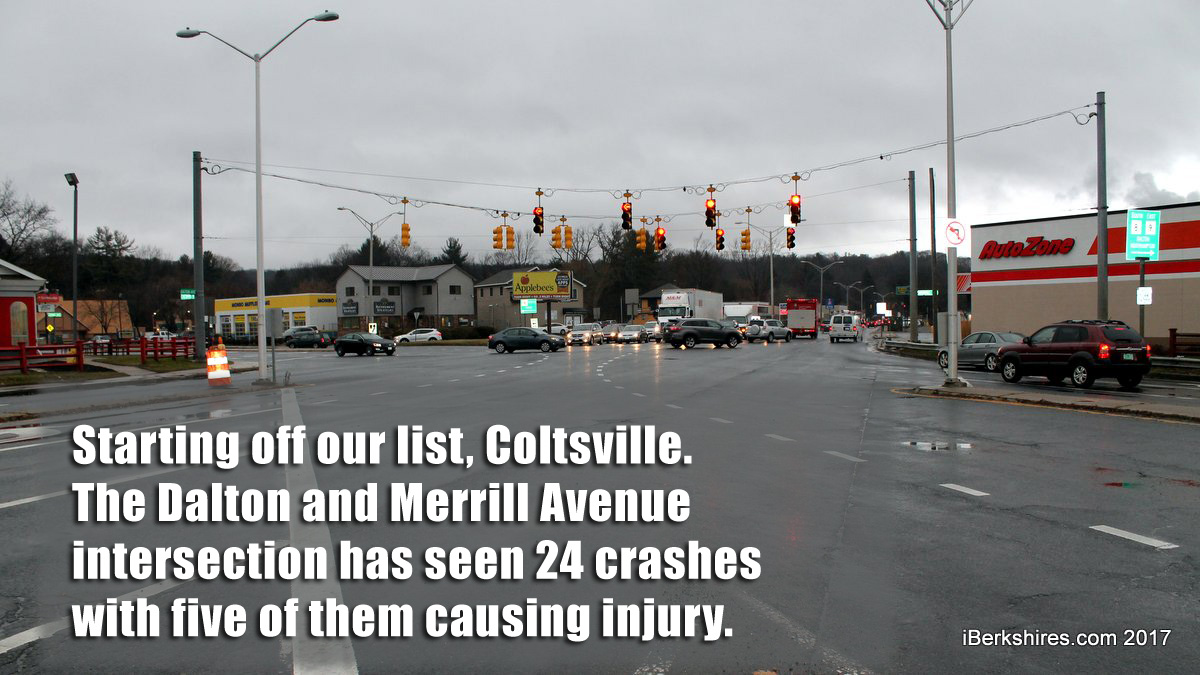
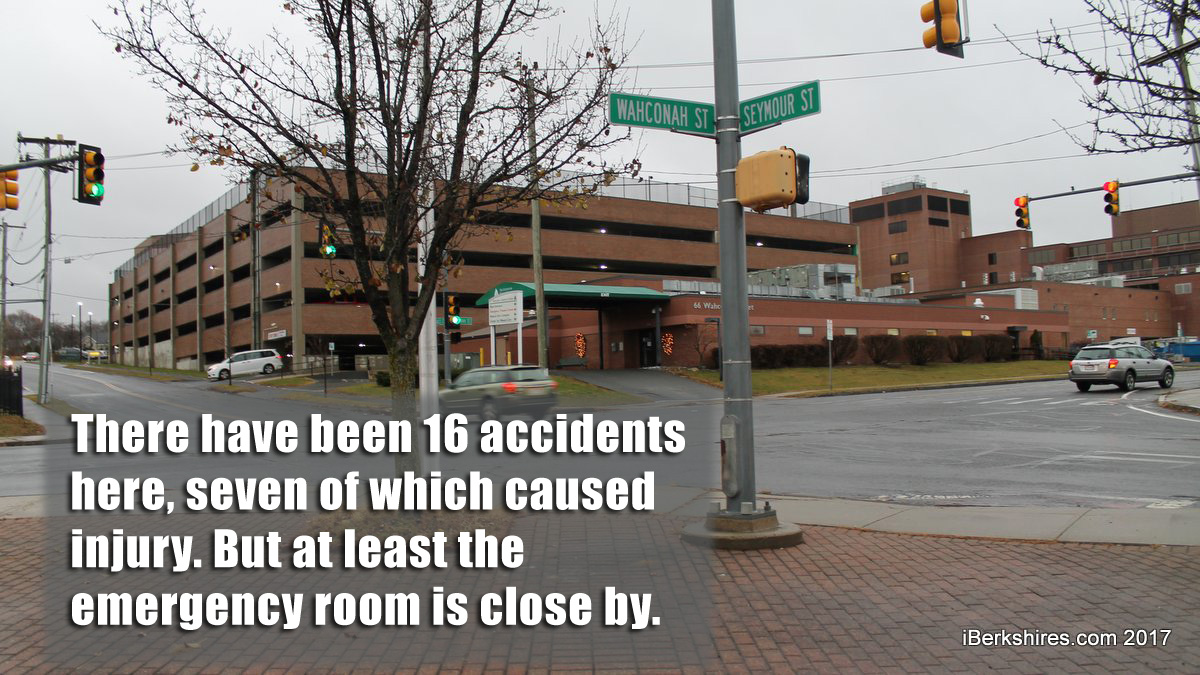
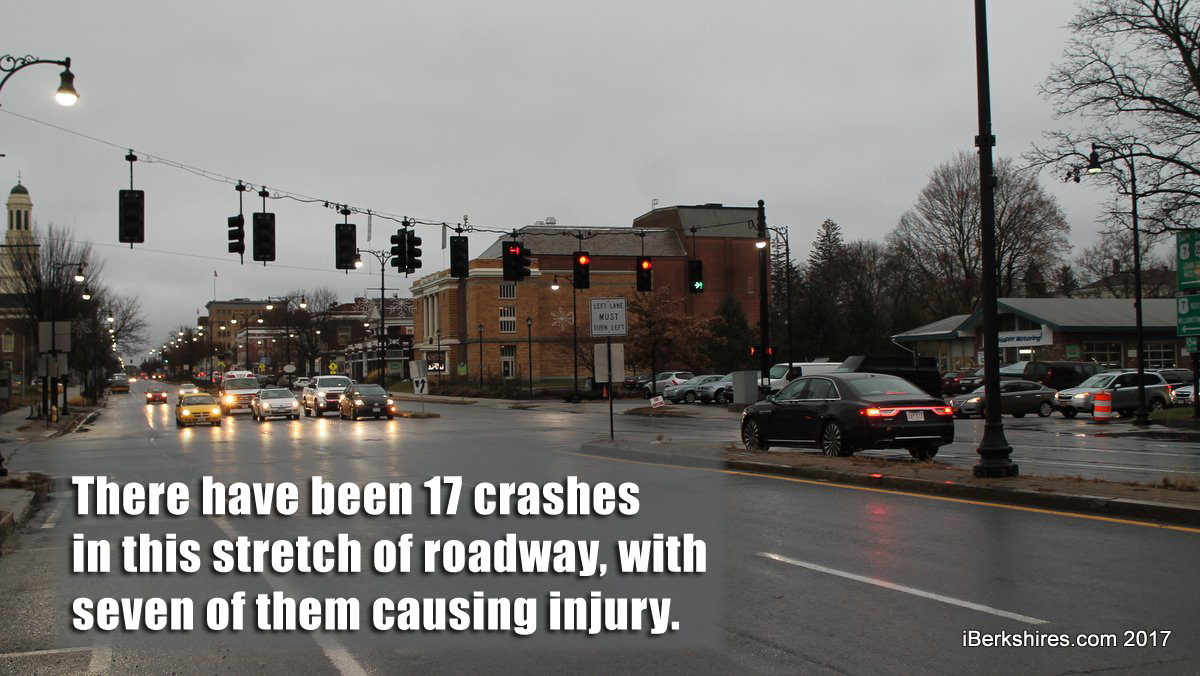
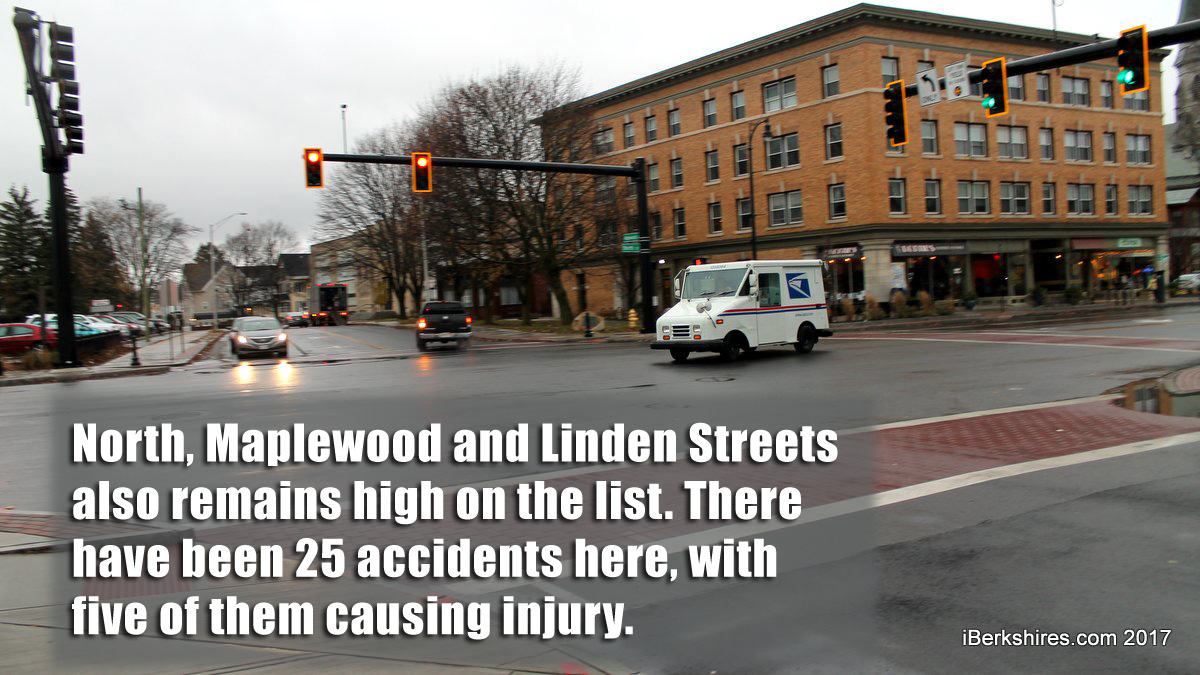
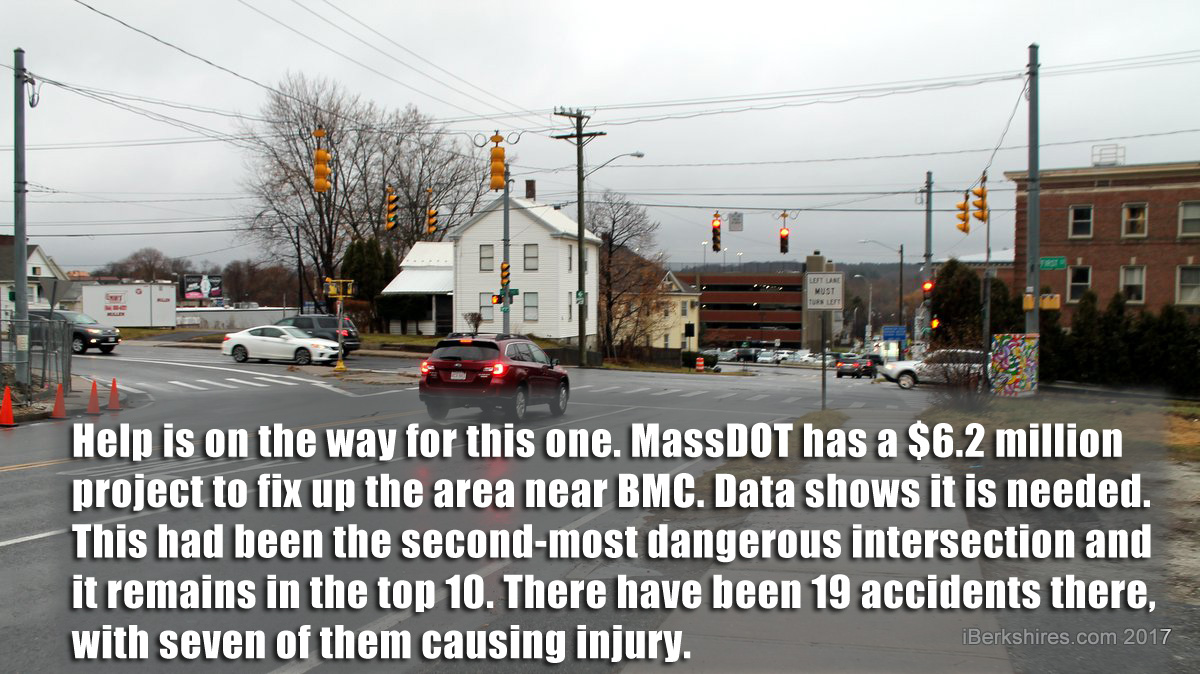
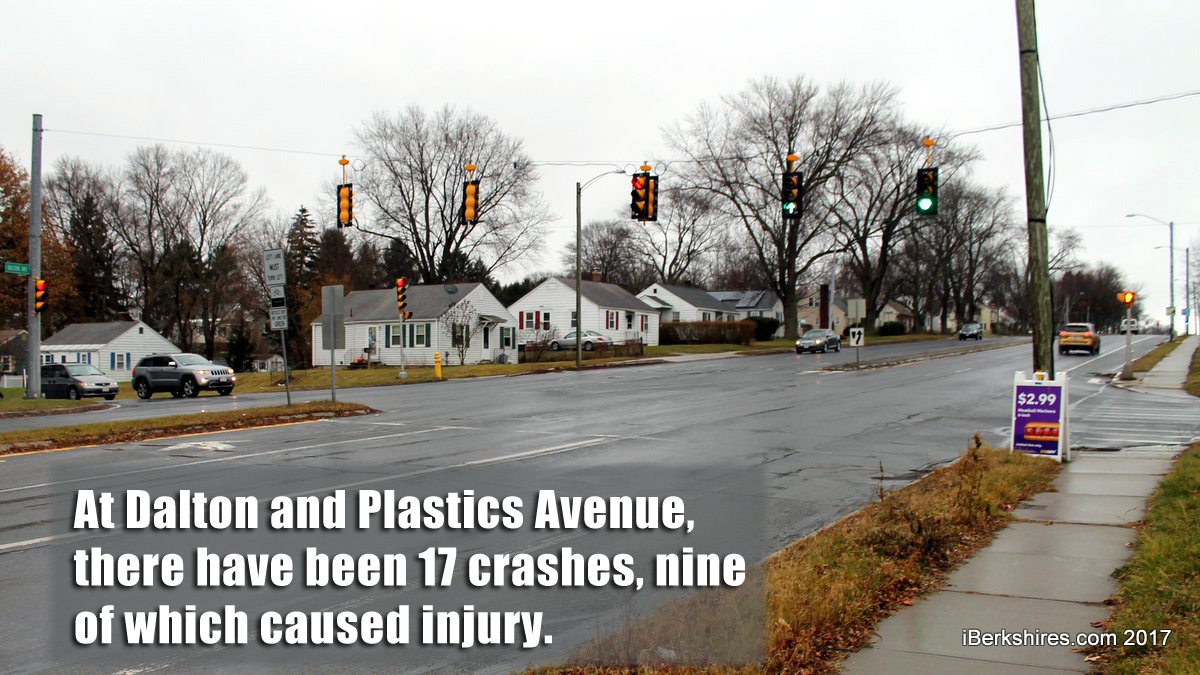
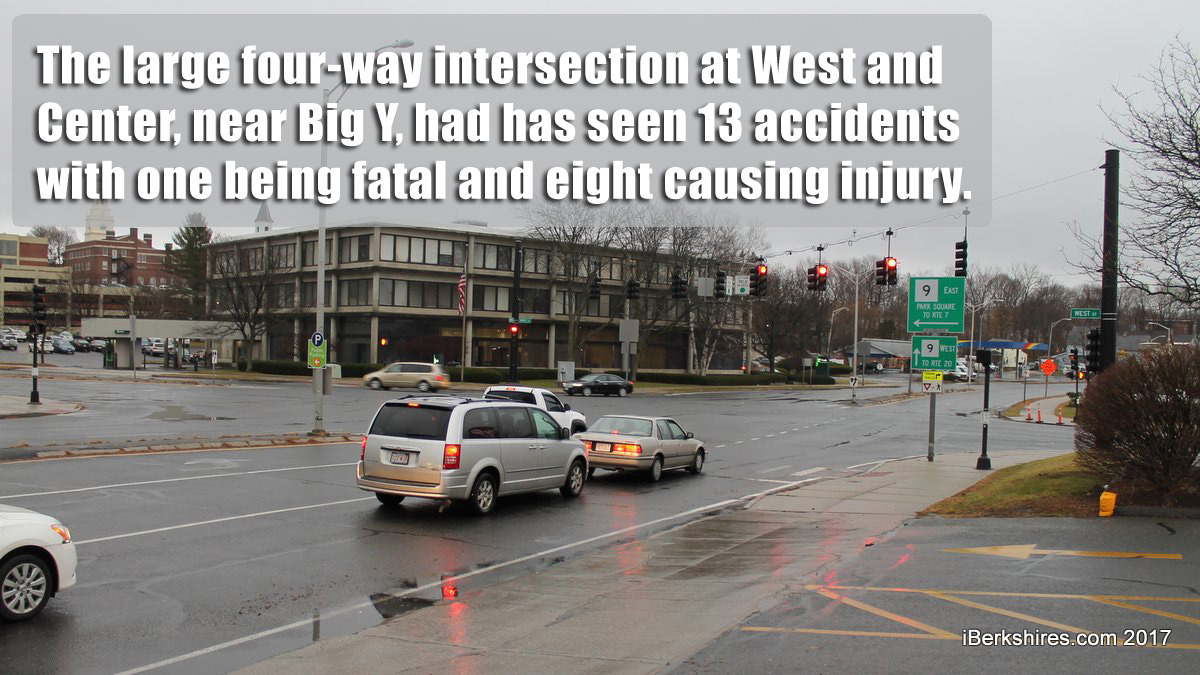
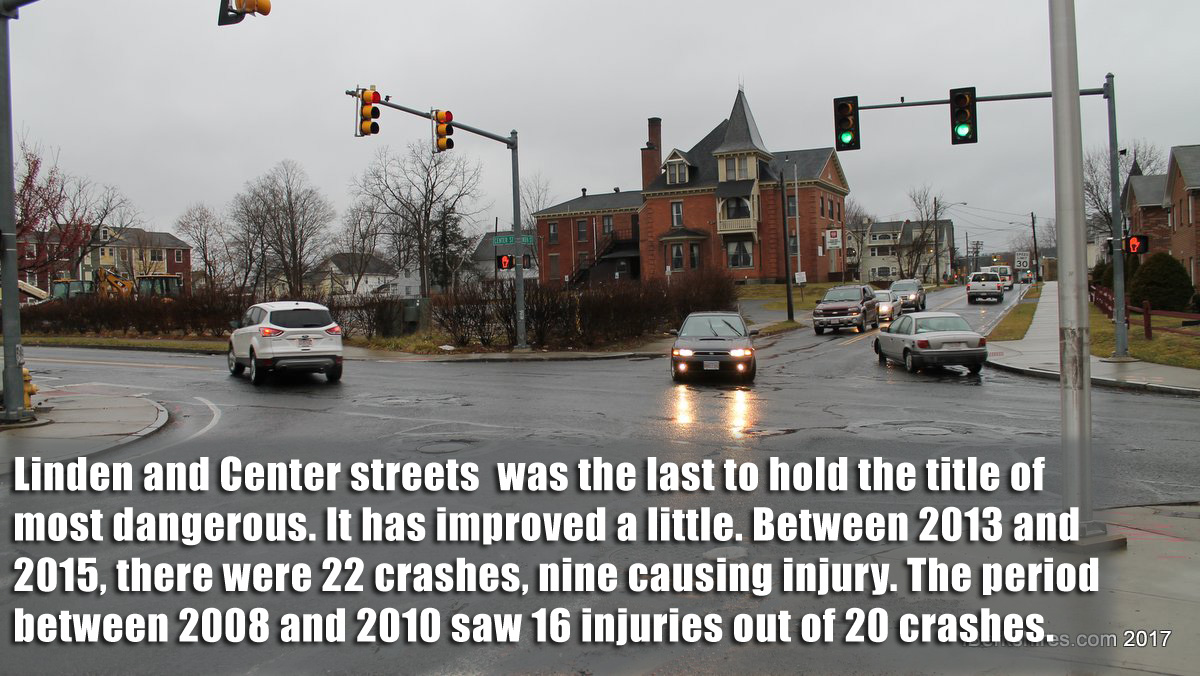
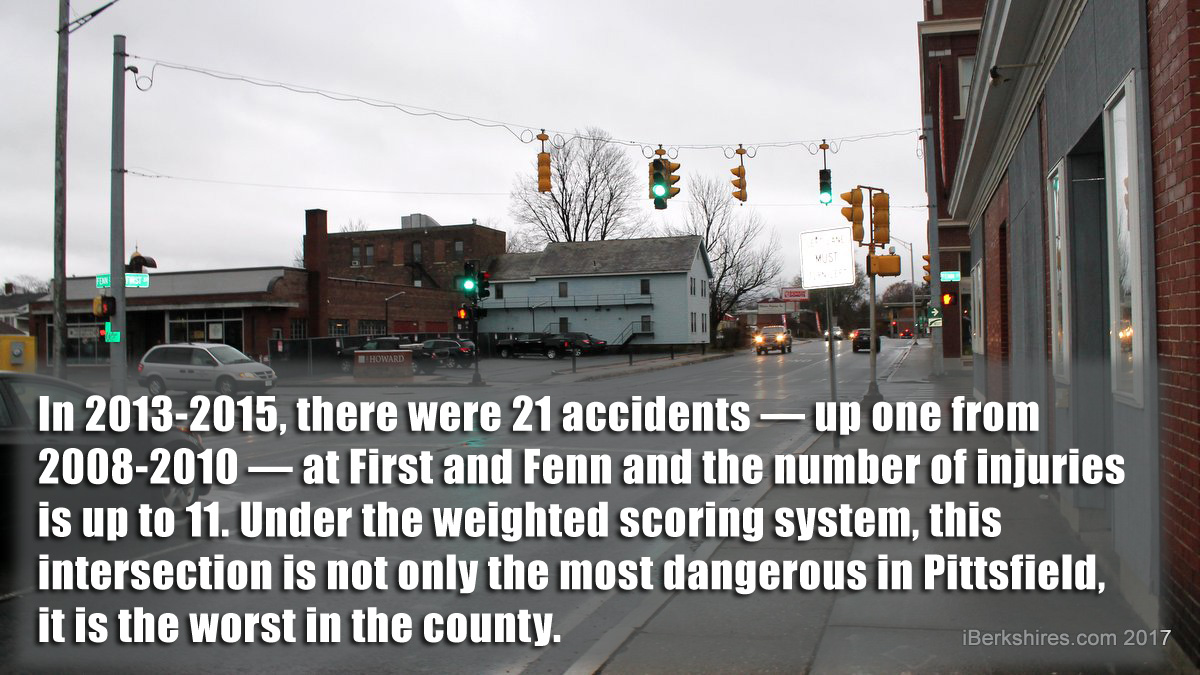
There are projects in the works to ease trouble at many of these. But from 2013 through 2015, the latest data released, here are the top-scoring intersections in the city of Pittsfield.
If you would like to contribute information on this article, contact us at info@iberkshires.com.
Your Comments
iBerkshires.com welcomes critical, respectful dialogue. Name-calling, personal attacks, libel, slander or foul language is not allowed. All comments are reviewed before posting and will be deleted or edited as necessary.
The corner of Springside and North Street should have been added to this list. There is an accident there all the time people have even died there.
PITTSFIELD, Mass. — The City Council approved a couple of "green" items during its meeting last week.
This includes more than $20,000 from the state for recycling initiatives, as well as cell phone recycling automated machines at Cumberland Farms on First Street and in Market 32 at 555 Hubbard Ave.
Pittsfield received $21,000 from the Massachusetts Department of Environmental Protection’s Sustainable Materials Recovery Program, which reinvests a portion of Waste Energy Certificates into recycling programs. More than $4.2 million was distributed across the state this year.
WECs are tradable, unit-specific certificates (1 per MWh) generated by qualified waste-to-energy facilities.
"It's supposed to be this self-sustaining cycle of you bring money in, you can continue reducing trash, increasing recycling, increasing diversion from the landfill, and at the same time, you bring money in and support that effort," Commissioner of Public Services and Utilities Ricardo Morales explained.
In the last two years, the city has seen a slight increase in funds because of its categorization as an environmental justice community, and Morales would like to increase that number even more. Communities of Pittsfield’s size can see up to $50,000 based on a point system for recycling efforts.
The city received points for bulky items, curbside recycling regulation, diversity, equity, and inclusion, organics, and waste prevention outreach and education. These funds are used to purchase products such as the composting bins that Pittsfield sells to residents for half the price.
Morales reported that the city has been saving funds to start a recycling program staffed by a contractor, but that is not being presented "in any way" at this point.
The First's opening was announced on Facebook by Mayor Peter Marchetti, writing that it wouldn't have been possible without the city's ARPA funds, committed in 2022, and all of the partners who stepped up.
click for more
In the worst-case scenario, the town could be forced to reduce staff if projected increases in the school budget, health insurance, and other uncontrollable costs occur. click for more