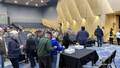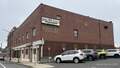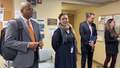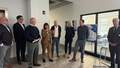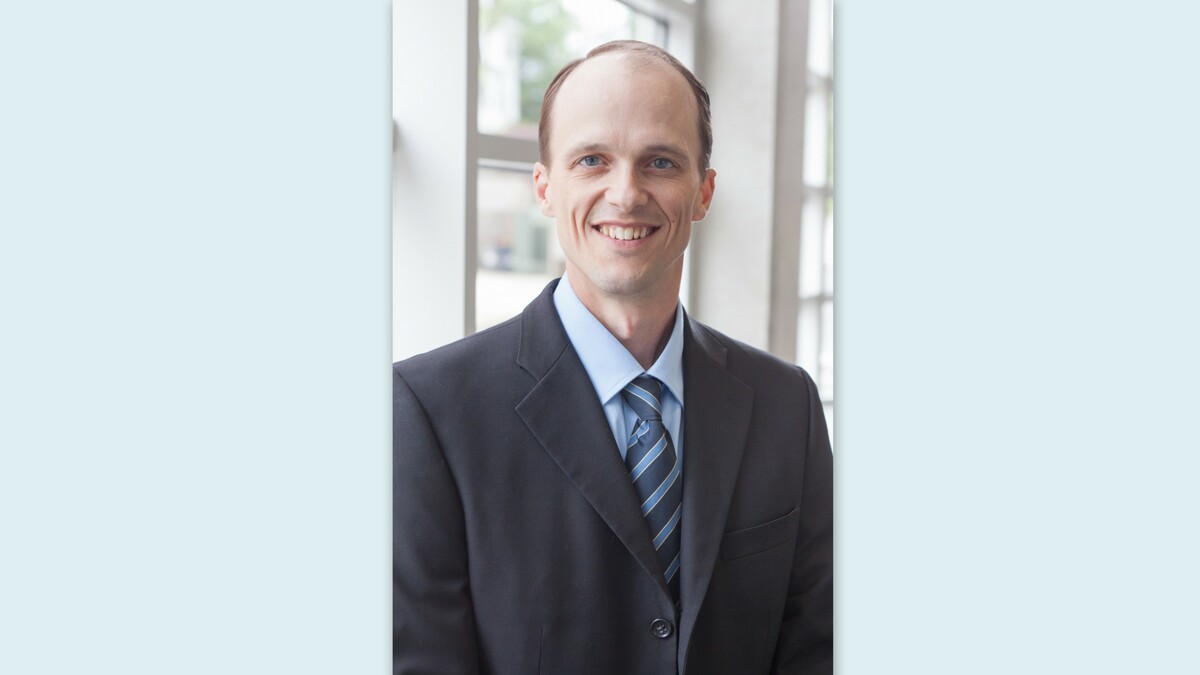
When Trevor Bayliss, MD, was an undergraduate at Williams College and a member of the school's hockey team, he was diagnosed with cancer, a frightening diagnosis for anyone. Despite treatments, his symptoms only got worse, until he was readying himself to accept the inevitable terminal stage. But remarkably a physician steered him to a very common cancer medication that put his illness in remission. His journey made him realize that his career path was going to be in oncology, where he could help people facing similar circumstances and hopefully lead them to their own survivorship.
Dr. Bayliss is now the Medical Director of the Phelps Cancer Center at the Hillcrest Campus of BMC.
"Cancer can be one of the most physically and emotionally challenging realities anyone can face, and patients who have been diagnosed with cancer and their loved ones want and deserve the best care possible," said Dr. Bayliss. "The Phelps Cancer Center is the region's most advanced and comprehensive cancer program in a location that promotes healing and well-being right here in the Berkshires. Our patients will never face their cancer diagnosis alone. Every patient is supported by an entire team of highly skilled, compassionate providers who are trained specifically in cancer care, from physicians and nurses to social workers and therapists. Additionally, all patients are assigned an oncology nurse navigator who will guide them through every step of their cancer journey. Our goal is to eliminate confusion and reduce as much of the anxiety that comes with a cancer diagnosis as possible, so that our patients can focus on getting better."
"At the Phelps Cancer Center, we focus on the 'whole person,' meaning we rely on the latest scientific and technological innovations in cancer diagnosis and care as well as a full range of wellness therapies to achieve the best possible outcomes for our patients," said Dr. Bayliss. "Because different types of cancer behave and respond in different ways to a variety of treatments, we design treatment plans specifically customized to each unique patient."
A Berkshire native, born and raised in Williamstown, Dr. Bayliss returned to the area after fellowship training in Hematology Oncology at Dartmouth-Hitchcock Medical Center in New Hampshire, where he also completed his residency training in Internal Medicine. He is board certified in Medical Oncology Hematology and Internal Medicine and has a medical degree from Albany Medical College.
iBerkshires.com welcomes critical, respectful dialogue. Name-calling, personal attacks, libel, slander or foul language is not allowed. All comments are reviewed before posting and will be deleted or edited as necessary.
No Comments
West Nile Virus Confirmed in Mosquitoes From Pittsfield
Staff Reports
PITTSFIELD, Mass. — The Massachusetts Department of Public Health (MDPH) announced today that West Nile virus (WNV) has been detected in mosquitoes collected from Pittsfield.
The City of Pittsfield has confirmed two isolations at the Pittsfield-Richmond town line on Route 41 and the other at Garland Avenue.
WNV is most commonly transmitted to humans by the bite of an infected mosquito. The mosquitoes that carry this virus are common throughout the state and are found in urban as well as more rural areas. While WNV can infect people of all ages, people over the age of 50 are at higher risk for severe infection.
At the time, there are no confirmed human cases of WNV, but residents are encouraged to take the following actions:
Avoid Mosquito Bites
Apply Insect Repellent when you go outdoors. Use a repellent with DEET (N, N-diethyl-m-toluamide), permethrin, picaridin (KBR 3023), IR3535 or oil of lemon eucalyptus [p-methane 3, 8-diol (PMD)] according to the instructions on the product label. DEET products should not be used on infants under two months of age and should be used in concentrations of 30 percent or less on older children. Oil of lemon eucalyptus should not be used on children under three years of age. Permethrin products are intended for use on items such as clothing, shoes, bed nets and camping gear and should not be applied to skin.
Clothing Can Help reduce mosquito bites. Although it may be difficult to do when it’s hot, wearing long-sleeves, long pants and socks when outdoors will help keep mosquitoes away from your skin.
Be Aware of Peak Mosquito Hours - The hours from dusk to dawn are peak biting times for many mosquitoes. When risk is increased, consider rescheduling outdoor activities that occur during evening or early morning. If you are outdoors at any time and notice mosquitoes around you, take steps to avoid being bitten by moving indoors, covering up and/or wearing repellant.
Mosquito-Proof Your Home
Drain Standing Water – Many mosquitoes lay their eggs in standing water. Limit the number of places around your home for mosquitoes to breed by either draining or getting rid of items that hold water. Check rain gutters and drains. Empty any unused flowerpots and wading pools and change water in birdbaths frequently.
Install or Repair Screens - Some mosquitoes like to come indoors. Keep them outside by having tightly-fitting screens on all your windows and doors.
While the City of Pittsfield and Berkshire County Mosquito Control project continue to work closely with the MDPH and other agencies, locally we are taking the following actions: larvicide application, conducting targeted education programs, distribution of fact sheets on WNV and on reducing exposure to mosquitos and treating catch basins.
Additional information about WNV and reports on current and historical WNV virus activity in Massachusetts can be found on the MDPH website at: www.mass.gov/dph/mosquito.
Seven months after being placed on leave only one officer involved in the fatal police shooting of 27-year-old Biagio Kauvil in January has returned to duty.
click for more
Ranking Berkshire law enforcement officials are putting their weight behind a Springfield lawyer for Governor's Council in the September Democratic primary over North Adams incumbent Tara Jacobs. click for more